Key Takeaways
What it is: a functional trainer is a dual-cable machine with adjustable pulleys that move freely through every plane of motion, rather than along the fixed path of a standard weight machine.
Why people love it: one machine covers hundreds of exercises, is gentle on the joints, needs no spotter, and replaces several separate stations.
What it trains: chest, back, shoulders, arms, and core, plus legs within limits, along with full-body and rotational movements free weights cannot easily mimic.
The key spec: cable ratio decides how the stack feels, with 1:1 giving you the full weight for strength and 2:1 giving you half, with finer increments and more cable travel.
What to buy: look for 11-gauge steel, a stack heavy enough to grow into, the right cable ratio, plenty of pulley positions, and the attachments you need.
What it costs: quality home units start around $1,500 to $2,500 and mid-range models run $2,500 to $3,500, with premium or commercial machines climbing well beyond.
Walk into almost any commercial gym and you will find one piece of equipment in near-constant use: the functional trainer. With two adjustable cable columns and a near-infinite range of motion, it does the work of an entire row of single-purpose machines while taking up a fraction of the space. That mix of versatility and space efficiency, plus the safety of a cable system, has turned the functional trainer into a fixture of serious home gyms and commercial floors alike, along with the personal-training studios in between.
This guide is the complete reference. We cover what a functional trainer is and how its pulleys and weight stacks work, along with the all-important cable ratio, the benefits that make it so popular, a full library of exercises by muscle group, sample workouts you can run today, how it compares with cable crossovers and free weights, and a detailed buying section so you choose the right machine the first time. Whether you are outfitting a home basement or a full commercial facility, by the end you will know exactly what to look for and how to use it.
What Is a Functional Trainer?
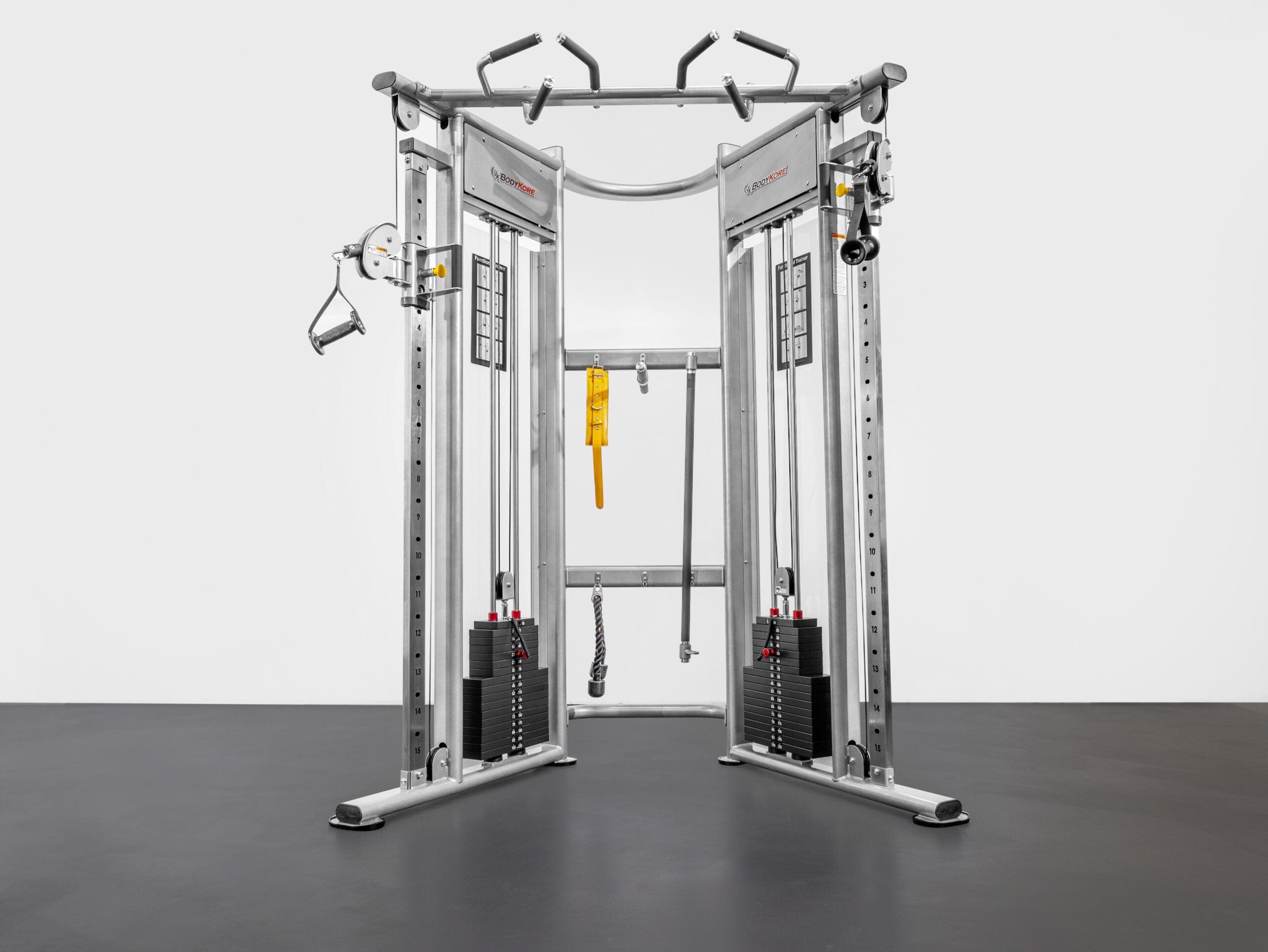
A functional trainer is a cable-based resistance machine built around two adjustable pulleys that travel up and down a pair of sturdy uprights. Each pulley connects through a cable to a weight stack, and you attach handles, ropes, or bars to train against that resistance. The defining feature is freedom of movement. Where a traditional machine such as a seated chest press locks you into a single fixed path, a functional trainer lets you push, pull, squat, lunge, and rotate through whatever path you choose, in any direction.
That freedom is what the name refers to. Because the cables let you move through multiple planes at once rather than a single fixed line, you can train the way your body moves in daily life and sport. Physically, the machine looks like a tall cage or frame loaded with weight stacks and cabled pulleys, and it is often called the most versatile machine in the gym for the sheer number of jobs it handles. A single unit can stand in for a lat pulldown, a cable row, a crossover station, a triceps pushdown, and dozens of other machines, which is why so many gyms are built around it.
How a Functional Trainer Works
Understanding the parts helps you both train smarter and buy wisely, since the components below are exactly what separates a great machine from a mediocre one. A functional trainer is simple in concept, but a handful of design choices shape how it feels and what it can do.
Single and dual weight stacks
Most quality functional trainers come with the weight stacks built in, selected with a pin the way a standard gym machine works. The big choice is single versus dual stacks. A dual-stack system gives each cable its own independent weight stack, which doubles the total resistance available and lets two people train at once on different exercises. Independent stacks also allow true isolateral work, where each arm or side moves on its own, which exposes and corrects strength imbalances. For most buyers, a dual-stack machine is the standard and the better long-term choice. Many trainers also let you upgrade the stacks later, usually in roughly 50-pound sets, so you can add resistance as you grow stronger.
Understanding cable ratio
Cable ratio is the single most misunderstood specification on a functional trainer, and it changes everything about how the machine feels. The ratio describes the mechanical advantage of the pulley system, or how the weight on the stack translates to the resistance you feel at the handle. With a 1:1 ratio, every pound on the stack is a pound in your hand, so you feel 100% of the selected weight. With a 2:1 ratio, you feel about half, so a 150-pound stack delivers roughly 75 pounds at the handle.
Neither ratio is better in the abstract; they suit different goals. A 1:1 ratio is best for heavy strength work, because you feel every pound and can load rows and pulldowns seriously. A 2:1 ratio has its own advantages: the starting weight and the increments are both halved, so you can fine-tune resistance precisely, which suits rehab along with high-rep and isolation work. A 2:1 ratio also doubles the cable travel, giving you a longer range of motion that taller lifters and big sweeping movements benefit from. Some machines now let you switch between 2:1 and 1:1, which gives you both options. Be wary of higher ratios like 4:1, which cut the felt resistance to a quarter of the stack and can feel limited for serious pulling.
Frame and cables
The frame carries everything, so build quality matters. The commercial standard is 11-gauge steel, often in 3-by-3-inch uprights, which provides more weight capacity than almost anyone will ever need. Lighter 14-gauge steel costs less and weighs less, which can suit a budget home setup, though it gives up some durability and stability. The pulleys themselves should run on quality bearings, with aluminum pulleys prized for durability, and the cables should be mil-spec aircraft-grade rated to a high tensile strength so they last under heavy daily use. Finally, check the number of pulley height positions: more positions, often in the range of 17 to 19, mean finer control over the angle of every exercise, and smooth adjustment saves you fighting the mechanism between sets.
The Benefits of Training on a Functional Trainer
The functional trainer earns its popularity by doing several things well at once. Some benefits are about training quality, others about practicality, and together they explain why the machine suits rehab patients and competitive athletes alike. Here is what stands out.
Benefit | Why it matters |
Versatility | Hundreds of pushing, pulling, squatting, and rotating exercises from one station |
Joint-friendly | Smooth cable resistance is gentle on joints, ideal for rehab and longevity |
Space efficiency | Replaces roughly five separate machines in a single compact footprint |
Safety | No barbell to pin you; at failure you simply let go and the stack drops |
Constant tension | Cables load the muscle through the full range, both lifting and lowering |
Scalability | Suits beginners and advanced lifters by adjusting weight and pulley height |
The headline benefit is versatility. A single functional trainer lets you press, row, pull down, curl, extend, squat, lunge, and rotate, covering hundreds of exercises without changing stations. That breadth flows directly into space efficiency: you get the function of five or more dedicated machines in one footprint, which is decisive in a home or studio where floor space is precious.
Then there is how it feels to train on. The cable system delivers smooth, continuous resistance that is gentle on the joints, which makes the functional trainer a favorite for physical therapy and longevity-focused training, where pounding the joints is the last thing you want. That same cable creates constant tension on the working muscle through the entire range of motion, during both the lifting and lowering phases, which keeps the muscle under load longer than a free weight often does and supports strong muscle activation and growth.
Safety is another advantage. There is no loaded barbell to trap you, so when you reach failure you simply release the handles and the stack settles back into its housing, which means you can train hard on your own without a spotter. The machine also scales easily: a beginner and an advanced lifter use the same unit, adjusting only the weight and the pulley height. Because the cables let you move through natural, multi-joint patterns, the strength you build carries over to real-world tasks and athletic movement, along with a steady demand on your core and stabilizing muscles to control each rep.
The Functional Trainer Exercise Library
This is where the machine stands out. Below is a working library of the most effective functional trainer exercises, organized by muscle group, with the key movements and how to approach them. A small change in pulley height or body position can completely change the line of pull, so treat each entry as a family of variations rather than a single fixed move. Across all of them, the golden rule is control: if the weight stack is clanging or swinging, the exercise has stopped doing its job.
Chest
The cable chest press is the staple, a compound push that targets the pecs while recruiting the shoulders and triceps. Set the pulleys near chest height, take a staggered stance for stability, and press the handles forward and slightly inward until your arms are nearly straight. From there the variations open up. Set the pulleys high and press downward for a lower-chest emphasis, or low and press upward to bias the upper chest. The cable fly and cable crossover isolate the pecs through a big arc: with a slight bend in the elbows, bring the handles together in front of you, squeezing the chest, and set the pulleys high or low to hit it from different angles. Single-arm presses add an anti-rotation core demand and expose left-to-right differences.
Back
Few machines train the back as well as a functional trainer. The lat pulldown is the headline vertical pull: set the pulleys high, attach a bar or handles, and pull down toward your chest while squeezing the shoulder blades, using a half-kneeling single-arm version to improve symmetry and lat connection. For horizontal pulling, the cable row, done seated or one arm at a time, builds mid-back thickness as you drive the elbows back and retract the scapulae. Round it out with face pulls for the rear delts and the straight-arm pulldown to isolate the lats without the biceps. Reverse flyes add rear-delt and postural work. The back responds well to the controlled, constant tension that cables provide.
Shoulders
Cables train the shoulders from angles dumbbells struggle to reach. The cable shoulder press drives overhead strength, while the lateral raise, done one arm at a time with a low pulley, keeps tension on the side delt through the whole movement rather than only at the top, the way a dumbbell does. Add front raises for the front delts, plus rear-delt flyes and face pulls for the often-neglected rear delts. Upright rows finish the traps and shoulders. Because the shoulder is a vulnerable joint, the smooth cable resistance and the ability to dial in light, precise loads make the functional trainer a friendly place to train it.
Arms
For biceps, the cable curl keeps continuous tension on the muscle throughout the rep, and you can run it as a two-handed curl, a single-arm curl, a hammer-style curl, or a cross-body curl that emphasizes the outer bicep. A classic intensity trick is a set of 21s, where you do partial reps through the bottom and the top of the curl before finishing with full reps. For triceps, the rope or bar pushdown is the mainstay, with the overhead cable extension to stretch the long head and the single-arm kickback to finish the muscle. The constant cable tension makes arm training feel productive even at moderate loads, which is part of why cables are so popular for building the arms.
Legs
Legs are the one area where a functional trainer has real limits, since you can rarely load them as heavily as a barbell or a leg press allows. That said, the cable options are still useful, especially for single-leg and posterior-chain work. The cable squat, holding a rope or handles at chest height, lets you sit into a deep squat while the cable pulls you forward and forces an upright torso. Reverse and contralateral lunges, where you hold the cable in the opposite hand to the working leg, work the glutes hard and challenge the core. Romanian deadlifts and cable pull-throughs train the hamstrings and glutes through the hip hinge. Glute kickbacks and single-leg deadlifts then target the hips, with ankle-strap abduction adding stability. For heavy lower-body strength, most people supplement the trainer with barbell squats or some bodyweight and plyometric work.
Core and rotational work
This is a category where the functional trainer outclasses free weights. Because the cable provides resistance from a fixed point, it is perfect for the rotational and anti-rotation training that mirrors how the core works in sport. The cable woodchopper, driving high-to-low or low-to-high across the body, builds rotational power through the trunk, with the rotation driven by the hips and torso together rather than just the arms. The Pallof press trains anti-rotation: you press the handle straight out from your chest and resist the cable trying to twist you, which teaches the core to stay stable under load. Add cable crunches for the abs and standing rotations for the obliques, and you have a core program most machines cannot match.
Full-body and functional movements
Because you can move freely, the functional trainer excels at combination lifts that train the whole body in one movement, the kind of patterns that carry over to sport and daily life. The squat to row blends a lower-body squat with an upper-body pull: squat down holding the handles, then drive up and row the handles to your body. The chest press with rotation pushes the handles forward while you rotate your torso, which mimics the act of pushing an object while turning. Lunges paired with a cable pull, and single-leg deadlifts paired with a row, combine balance and lower-body work with a pull in one demanding rep. These full-body movements are time-efficient and build the coordinated, real-world strength the machine is named for.
Matching attachments to exercises
The attachments you clip onto the cables determine which exercises you can do, so a good starter set expands the machine considerably. The table maps the common attachments to what they do best.
Attachment | Best for |
Single D-handles | Unilateral work, presses, rows, curls, and crossovers |
Rope | Triceps pushdowns, face pulls, flyes, and core work |
Straight or lat bar | Pulldowns, pushdowns, rows, and barbell-style curls |
Ankle straps | Glute kickbacks, hip abduction, and other leg work |
Bench (added) | Flat or incline presses and flyes with extra stability |
Sample Functional Trainer Workouts
To turn the exercise library into results, you need a structure. The beauty of the functional trainer is that you can run an entire session without leaving the machine or carrying weights across the room. Below are three ready-made templates, starting with a full-body session and building from there. Rest about 90 seconds to 2 minutes between sets, and pick a weight that makes the last couple of reps hard.
Full-body session
A balanced full-body workout hits a push, a pull, a lower-body movement, and a core drill, which is the simplest effective template on the machine.
Exercise | Sets and reps |
Standing cable chest press | 3 sets x 8-12 |
Half-kneeling single-arm lat pulldown | 3 sets x 10-15 |
Cable squat or reverse lunge | 3 sets x 10-12 each side |
Cable woodchopper | 3 sets x 12 each side |
Pallof press | 2 sets x 30-45 seconds each side |
Push-pull split
For more volume, split your week into push days and pull days. A push day might pair the cable chest press, single-arm presses, a high-to-low fly, lateral raises, and triceps pushdowns. A pull day might run lat pulldowns, seated and single-arm rows, face pulls, rear-delt flyes, and biceps curls. Add a lower-body and core finisher to each day, and you cover the whole body across two sessions you can repeat through the week.
Beginner routine
If you are new to training, keep it simple and learn the movements before chasing weight. Start with one push, one pull, one lower-body exercise, and one core drill: the cable chest press, the lat pulldown, the cable squat, and the Pallof press, for 2 to 3 sets of 10 to 12 reps each. Focus on slow, controlled reps where the stack never crashes down, and add a little weight only once your form is solid. Two or 3 of these sessions a week builds a strong foundation.
Functional Trainer vs Other Equipment
A functional trainer is one of several ways to train with cables or to build strength, so it helps to see how it compares with the main alternatives. The table gives the quick version, and the sections below add detail.
Equipment | Best at | Trade-off |
Functional trainer | Versatility and space efficiency in one compact unit | Limited for very heavy lower-body loading |
Cable crossover | Wide crossover movements with a 1:1 feel | Large footprint; single-purpose; fixed pulleys |
Free weights | Maximal load, power, and coordination | Need a spotter; harder on joints; more space |
All-in-one rack | Cables plus a rack and barbell training together | Higher cost; larger and more complex setup |
Functional trainer vs cable crossover
The two look similar and are often confused, yet they serve different roles. A cable crossover is a larger, standalone machine with two tall uprights spaced wide apart, each with a high and a low pulley, and it is built for the crossover movement, where the cables cross in front of the body. That wide stance gives a great chest stretch, but it demands a lot of floor space and mostly does one job well, usually on a fixed 1:1 ratio. A functional trainer is more compact, has fully adjustable pulley heights rather than fixed positions, and is designed for many exercises. For most home and studio buyers, the functional trainer is the more practical choice; a dedicated crossover makes sense mainly when you have the room and want that specific movement.
Functional trainer vs free weights
This is less a rivalry than a partnership. Free weights, especially barbells, let you load the most weight and build raw strength and power, plus the coordination that comes from stabilizing the load yourself. Cables, by contrast, are joint-friendly and keep constant tension through the full range. They also isolate muscles cleanly and excel at the unilateral and rotational work that free weights cannot easily replicate. The strongest setups use both: heavy compound lifts with free weights for size and strength, and the functional trainer for controlled volume and the isolation or movement patterns barbells miss. Rather than choosing one, most well-rounded gyms give you access to each.
Functional trainer vs all-in-one racks
A growing category integrates the functional trainer directly into a power rack, sometimes with an optional Smith machine, giving you a squat rack and a full cable setup in a single frame, barbell training included. For a home gym that wants to do everything in one footprint, these all-in-one units are compelling, since they combine heavy barbell work with cable versatility. The trade-offs are a higher price and a larger, more complex piece of equipment, but for many buyers the consolidation is worth it, and some systems even let you add a cable attachment to an existing rack rather than buying a whole new frame.
How to Choose the Right Functional Trainer
With the background in place, here is how to choose a machine. Weigh the factors below against your space and budget, plus your goals, and you will avoid the most common buyer's regrets.
Cable ratio and weight stack
Start with the two specs that decide how the machine trains. Match the cable ratio to your goal: pick 1:1 if heavy strength work is the priority and you want to feel every pound, or 2:1 if you value finer increments and a longer range for rehab and high-rep training. A switchable machine gives you both. Then size the weight stack to your strength now and your room to grow. As a rough guide on felt resistance, beginners often work around 40 to 60 pounds per side and intermediate lifters 80 to 120, with advanced lifters at 150 or more, so remember to read those numbers through the cable ratio. Look for at least 150 pounds per stack, and prefer a machine whose stacks you can upgrade later.
Build quality and pulleys
A functional trainer is a long-term purchase, so buy the frame once. Favor 11-gauge steel for commercial-grade durability and stability, stepping down to 14-gauge only for a lighter-duty home setup on a tight budget. Look for aluminum pulleys on quality bearings and mil-spec aircraft-grade cables rated to a high tensile strength, since these are the parts that wear under daily use. More pulley height positions give you finer control over exercise angles, and smooth, easy height adjustment keeps your rest periods short rather than spent wrestling the carriage into place.
Selectorized vs plate-loaded
Functional trainers come in two loading styles. Selectorized machines have built-in weight stacks you change with a pin, which is fast and convenient between sets, and most home and commercial units are selectorized. Plate-loaded machines instead take the weight plates you load yourself, which makes them cheaper up front and lets you reach far higher loads than a typical stack, at the cost of slower weight changes and the need to own and rack plates. If you already own plates and want maximum load for the money, plate-loaded is appealing; if you want speed and simplicity, a selectorized stack wins.
Space and attachments
Measure before you buy. Account for the machine's footprint plus roughly 3 feet of clearance on each side for free movement, and check ceiling height carefully: if the unit has a pull-up bar, add about 15 to 18 inches to the listed height for overhead use, so an 81-inch machine may need around 96 inches of clearance. Confirm which attachments are included, since a machine that ships with a good set of handles and attachments saves you buying them separately, and consider whether you want to add a bench for pressing and flyes. Finally, buy from a reputable brand with a solid warranty and real customer support, because the cables and pulleys benefit from being backed over the years.
What your budget buys
Functional trainers span a wide price range, and knowing the tiers helps you set expectations. The table below is a practical guide for selectorized home and light-commercial machines; full commercial cable crossovers from major brands can run far higher, often $5,000 to $15,000 or more.
Tier | Typical price | What you get |
Budget | $1,500 to $2,500 | Basic dual-pulley system with starter attachments; lighter steel |
Mid-range | $2,500 to $3,500 | Heavier stacks, better pulleys, more attachments, sturdier build |
Premium | $3,500 and up | Commercial-grade build, often with a rack, Smith, or plate-loaded option |
Plate-loaded | From about $500 | Lower entry cost if you already own plates; higher max load |
For long-term training, a mid-range or premium model with expandable features usually delivers the best value, since outgrowing a too-light budget machine in a year costs more than buying once. That said, a plate-loaded unit can be a smart, affordable entry point if you already have plates and want serious load.
Buying checklist
Cable ratio: 1:1 for strength or 2:1 for finer increments and a longer range, with switchable machines offering both.
Weight stack: at least 150 pounds per stack and ideally upgradeable, read through the cable ratio.
Steel gauge: 11-gauge for commercial durability; 14-gauge only for light home use.
Pulley positions: more height settings mean finer control over every exercise angle.
Space and height: footprint plus side clearance, and ceiling room for the pull-up bar.
Attachments and warranty: a good starter set included, from a brand with real support.
Who Should Buy a Functional Trainer?
The functional trainer fits an unusually wide range of users, which is part of its appeal. For the home gym owner, it is arguably the best single purchase you can make, since one machine covers the bulk of a full-body program without filling the room with separate stations. For personal trainers and studios, it supports a huge range of clients and goals on one footprint, with fast exercise changes that keep sessions moving and no dumbbells to haul around the floor. Commercial gyms rely on it as a high-traffic mainstay that members of every level can use safely.
It also serves more specialized needs. The smooth, low-impact resistance makes it a mainstay of physical therapy, and a strong choice for older adults and anyone training for longevity, where joint-friendly loading matters. Athletes use it for rotational power and the unilateral, anti-rotation work that transfers to sport. About the only buyer who should think twice is someone whose sole focus is maximal lower-body strength, who will still want a barbell and rack alongside it. For nearly everyone else, the breadth of the machine is exactly the point.
Setup, Space, and Maintenance
A functional trainer is a substantial machine, so plan its home before it arrives. Give it a stable, level floor, ideally on rubber gym flooring that protects the surface and dampens noise, and leave enough clearance on each side to move freely through wide exercises like crossovers and chops. Confirm the ceiling is tall enough for overhead and pull-up work, and position the unit so you can access both cable columns without obstruction.
Maintenance is modest but worth doing. Wipe down the upholstery and frame regularly, and keep the guide rods and pulleys clean. Inspect the cables now and then for fraying or wear, since cables are the one component that will eventually need replacing on a heavily used machine. Check that bolts stay snug over time and that the pulleys glide smoothly. Treated well, a quality functional trainer built from commercial-grade steel will last many years of daily training, which is a large part of why it is considered such a sound long-term investment.
Putting It All Together
The functional trainer has become a gym staple for good reason. It packs hundreds of exercises into one compact, joint-friendly machine you can use without a spotter, trains your whole body through natural movement patterns, and excels at the rotational and unilateral work that free weights handle poorly. Understanding how its weight stacks and cable ratio work turns it into a tool you can use with intent, and the exercise library gives you more than enough to build a complete program.
When it comes time to buy, match the cable ratio and weight stack to your goals, insist on a solid steel frame and good pulleys, measure your space, and choose the attachments you will use. Do that, and you end up with a machine that grows with you for years. For the home gym and the commercial floor alike, the functional trainer remains one of the most versatile and valuable pieces of strength equipment you can own.
Frequently Asked Questions
Is a functional trainer worth it for a home gym?
For most home gyms, yes. A single functional trainer replaces multiple separate machines, covers hundreds of exercises, trains the whole body, and is safe to use alone without a spotter. If you want one main piece that does the most in a compact footprint, it is one of the best investments available, particularly when paired with some free weights for heavy lower-body work.
What is the difference between a 1:1 and 2:1 cable ratio?
The ratio sets how much of the stack weight you feel at the handle. With 1:1, you feel the full weight, which is best for heavy strength training. With 2:1, you feel about half, which gives you finer weight increments and double the cable travel, useful for rehab and high-rep work, and for taller lifters. Some machines switch between the two and give you the strengths of both.
Can you build muscle with a functional trainer?
Yes. The cables keep constant tension on the muscle through the full range of motion, during both the lifting and lowering phases, which drives strong muscle activation and growth. With enough resistance and progressive overload, a functional trainer builds muscle effectively across the upper body and core, and respectably in the legs, though many lifters add free weights for maximal lower-body loading.
How much does a functional trainer cost?
Quality selectorized home machines generally start around $1,500 to $2,500 and mid-range models run $2,500 to $3,500, with premium or commercial units beyond $3,500, especially those with a rack or Smith machine built in. Plate-loaded trainers can start lower, around $500 or more if you already own plates. Full commercial cable crossovers from major brands can reach $5,000 to $15,000 or more.
Are functional trainers good for legs?
They help, but with limits. You can train legs with cable squats, lunges, Romanian deadlifts, pull-throughs, glute kickbacks, and single-leg work, which is useful for the glutes and hamstrings, and for stability. The constraint is maximal load: you usually cannot load the legs as heavily as a barbell or a leg press allows, so for serious lower-body strength most people supplement with barbell squats or some bodyweight and plyometric work.
How much space does a functional trainer need?
Plan for the machine's footprint plus roughly 3 feet of clearance on each side so you can move freely through wide exercises. Ceiling height matters too: if the unit has a pull-up bar, add about 15 to 18 inches to its listed height for overhead use, so a machine listed at 81 inches may need close to 96 inches of clearance. Always measure your room against the model's specifications before buying.
Is a functional trainer the same as a cable crossover?
Not quite. A cable crossover is a wider, standalone machine with fixed high and low pulleys built mainly for crossover movements, and it needs more floor space. A functional trainer is more compact, with fully adjustable pulley heights and a design meant for many different exercises. For versatility in a limited space, the functional trainer is usually the better pick; the crossover suits those who want that specific wide movement and have the room.
Trending Now
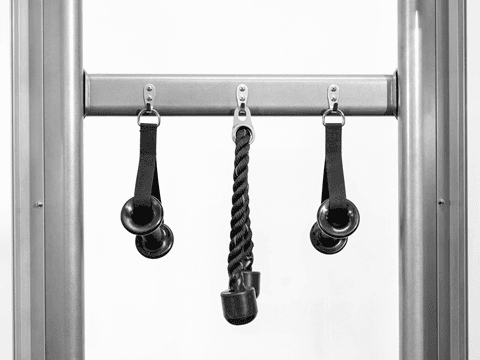
25 Best Functional Trainer Exercises for a Full-Body Workout
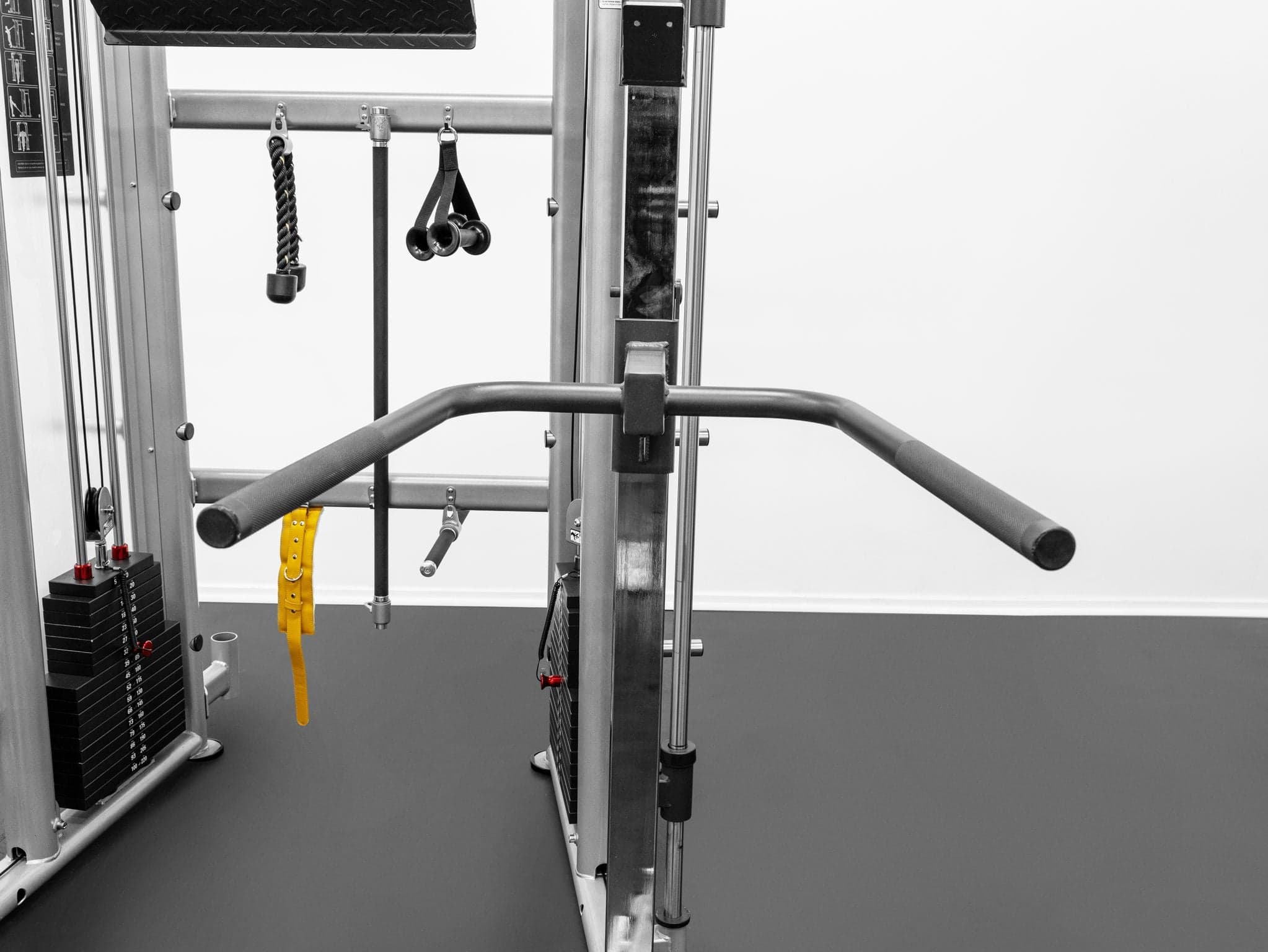
Functional Trainer Leg Exercises: The Complete Guide
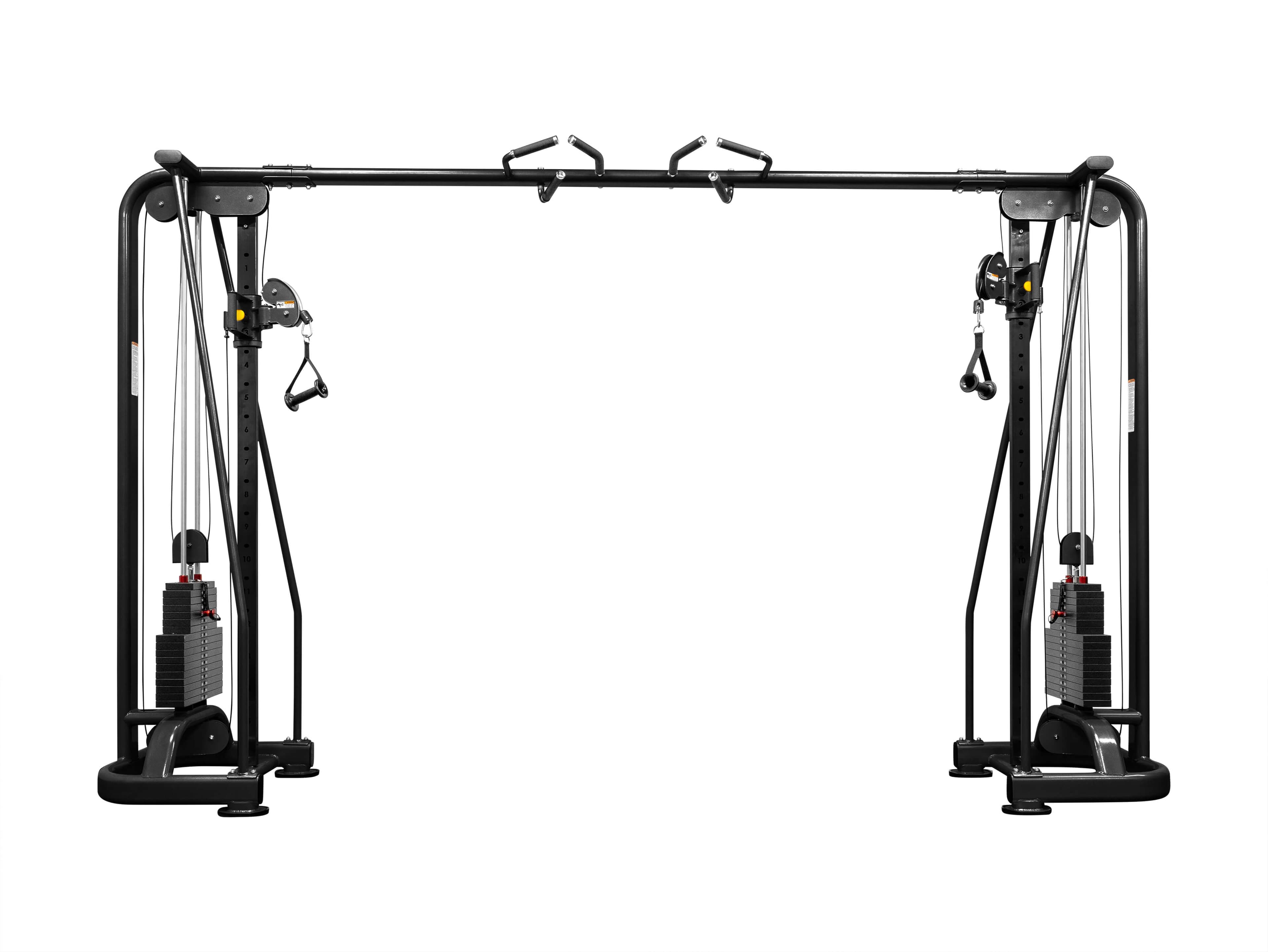
Beginner Cable Machine Workout Plan: 8 Weeks
Newsletter
Enter your email and be the first to get the latest blog posts, news, product launches and more from BodyKore.
Stay in the Know
Enter your email and be the first to get the latest blog posts, news, product launches and more from BodyKore.