The Quick Rundown
Organized by muscle group: the 25 exercises are grouped into chest, back, shoulders, arms, legs, core, and full-body so you can build a balanced session.
Control beats weight: the main rule across all of them is smooth, controlled reps where the stack never crashes down.
Pulley height changes everything: a small change in pulley position alters the line of pull, turning one exercise into several.
Built for a full-body workout: a push, a pull, a lower-body movement, and a core drill from this list make a complete session.
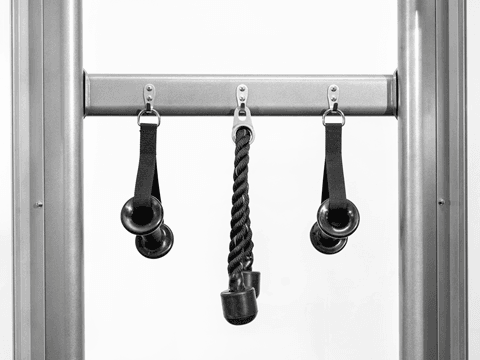
Attachments expand the list: handles, a rope, a bar, and ankle straps unlock the full range of these movements.
The functional trainer is the most versatile machine in most gyms, and the reason is simple: with two adjustable cables, it can train every muscle in your body through hundreds of movements. The cables keep constant tension on the muscle through the full range of motion and work in directions a dumbbell cannot, while staying gentle on the joints, which is why the machine suits beginners and athletes alike.
This guide collects the 25 best functional trainer exercises, organized by muscle group so you can build a complete program. For each one you get the muscles it works and how to perform it, plus a tip to get more from it. Whether you want to train your whole body on a single machine or fill gaps in an existing routine, these movements span heavy compound pulls and precise isolation, plus rotational core work.
Chest Exercises
1. Cable Chest Press: a compound push for the chest, with help from the shoulders and triceps. Set the pulleys at about shoulder height and take a staggered stance, then press the handles forward and slightly together until your arms are nearly straight. Keep your core braced so your torso stays still as you press.
2. Cable Fly: the premier chest isolation move, working the pecs through a long arc. With a slight bend in your elbows, start with your arms open wide and bring the handles together in front of your chest, squeezing at the end. Set the pulleys high to bias the lower chest or low for the upper chest, with a mid setting for the middle.
3. Single-Arm Cable Chest Press: a chest press that doubles as anti-rotation core work, since one cable tries to twist you. Press one handle forward from a split stance while bracing hard to keep your shoulders square. It also exposes and corrects strength differences between your left and right sides.
Also Read: Functional Trainer vs Cable Crossover Machine: Which Should You Buy?
Back Exercises
4. Lat Pulldown: the staple vertical pull for wide lats. Set the pulleys high and attach a bar or handles, then pull down toward your upper chest while driving your elbows down and squeezing your shoulder blades. Avoid leaning back or shrugging at the top.
5. Half-Kneeling Single-Arm Lat Pulldown: a single-arm pulldown that improves left-to-right symmetry and your mind-muscle connection with the lat. Kneel on one knee under a high pulley and pull the handle down to your side, keeping your torso upright rather than twisting into it. Keep the shoulder down and back throughout.
6. Seated Cable Row: a horizontal pull that builds mid-back thickness in the rhomboids and traps. Sit facing the machine and pull to your stomach by driving your elbows back and squeezing your shoulder blades. Extend your arms fully on the return, and avoid heaving with your lower back.
7. Straight-Arm Pulldown: a lat isolation move that works the lats without much help from the biceps. Stand facing a high pulley with your arms straight, and pull the bar down in an arc to your thighs using only your lats. Brace your core and resist leaning forward.
Shoulder Exercises
8. Cable Shoulder Press: an overhead press for total shoulder strength. Set the pulleys low and start with the handles at shoulder height, then press straight overhead until your arms extend. The cable path keeps tension on the delts at the top, where a dumbbell tends to unload.
9. Cable Lateral Raise: the best way to build the side delts with constant tension. Using a low pulley and one arm at a time, raise the handle out to the side to about shoulder height, leading with your elbow. The cable keeps the delt loaded through the whole movement rather than only near the top.
10. Cable Rear-Delt Fly: a targeted move for the rear delts, which most people under-train. Set the pulleys high and cross the cables, then pull your hands apart and back in a reverse-fly arc, squeezing the rear delts. Keep the weight light and the motion smooth.
11. Face Pull: a posture and shoulder-health staple that hits the rear delts and upper back. Set a rope at face height and pull it toward your forehead while flaring your elbows high and out, squeezing at the end. It helps counter the rounded-shoulder effect of too much pressing.
Arm Exercises
12. Cable Biceps Curl: a curl with constant tension that many lifters find better than dumbbells for growth. Stand facing a low pulley with your elbows pinned at your sides, and curl the bar or handles up without swinging. Lower under control to keep the biceps working on the way down.
13. Cable Hammer Curl: a curl variation that targets the brachialis and forearms for thicker arms. Use a rope on a low pulley and keep your palms facing each other as you curl up, holding that neutral grip. Keep your elbows still and let the biceps and forearms do the work.
14. Triceps Pushdown: the classic triceps builder, done with a rope or a bar on a high pulley. Keep your elbows tucked at your sides and push the attachment down until your arms are fully locked out, then return slowly. Focus on a full lockout for the strongest triceps contraction.
15. Overhead Cable Triceps Extension: an extension that stretches and loads the long head of the triceps. Face away from the machine with a rope on a high pulley, keeping your elbows close to your head as you extend your arms forward and up. The overhead position puts the long head under a deep stretch.
Leg Exercises
16. Cable Squat: a squat that builds the quads and glutes while the cable keeps you upright. Hold a rope or handles at chest height from a low pulley, then sit into a deep squat and drive back up through your heels. The forward pull of the cable reduces strain on the lower back compared with a loaded barbell.
17. Cable Reverse Lunge: a single-leg builder for the quads and glutes with a strong core demand. Hold the cable in the hand opposite your working leg, then step back into a lunge and drive through the front heel to return. The opposite-side load forces your core to resist rotation.
18. Cable Romanian Deadlift: a hip hinge that trains the hamstrings and glutes through the back of the body. Hold the handles from a low pulley and push your hips back with a soft knee bend, feeling the stretch in your hamstrings before driving your hips forward. Keep your back flat throughout.
19. Cable Pull-Through: a glute and hamstring move that teaches a powerful hip hinge. Face away from a low pulley with the rope between your legs, hinge at the hips letting the rope travel back, then snap your hips forward and squeeze your glutes. Keep the motion at the hips rather than the lower back.
20. Cable Glute Kickback: an isolation move for the glutes using an ankle strap. Attach the strap to a low pulley and hold the frame for support, then drive one leg back and up while keeping a slight bend in the knee. Squeeze the glute at the top and avoid arching your lower back.
Core and Rotational Exercises
21. Cable Woodchopper: a rotational power move that trains the obliques and the whole trunk. Set a pulley high and pull the handle down and across your body to the opposite hip, letting the rotation come from your hips and torso together. Reverse the angle, going low-to-high, to work the other direction.
22. Pallof Press: the definitive anti-rotation exercise for a stable, strong core. Stand side-on to a mid pulley with the handle at your chest, and press it straight out while resisting the cable's pull to twist you. Hold the extended position briefly before returning, keeping your hips and shoulders square.
23. Cable Crunch: a loaded crunch that builds the abs with real resistance. Kneel below a high pulley holding a rope behind your head, then crunch down by flexing your spine and contracting your abs rather than pulling with your arms. Keep your hips still so the abs do the work.
Full-Body Exercises
24. Squat to Row: a combination lift that trains the legs and back in one movement. Hold the handles from a low-to-mid pulley and squat down, then drive up and row the handles to your torso as you stand. It is time-efficient and builds the coordinated strength the machine is named for.
25. Single-Leg Deadlift with Row: a full-body challenge to your balance and the posterior chain, plus the back. Standing on one leg, hinge forward while rowing the handle to your body, then return to standing under control. It combines stability and posterior-chain work with a pulling motion in a single demanding rep.
How to Get the Most From These Exercises
A few principles separate productive cable training from wasted reps. Control is first: move the weight smoothly in both directions and never let the stack slam down, because a swinging stack takes tension off the muscle. Use a full range of motion, getting a complete stretch and a full contraction on every rep, which is where the cable's constant tension pays off most.
Remember that pulley height is a tool. Raising or lowering the pulley changes the line of pull and therefore the part of the muscle you emphasize, so a single exercise becomes several with one adjustment. Brace your core on standing movements to keep your torso stable, and apply progressive overload over time by adding weight or reps, the same principle that drives any strength gain. Match your attachments to the job, since a rope, handles, a bar, and ankle straps each suit different exercises on this list.
A Sample Functional Trainer Workout
To turn the list into a session, pick one exercise per movement pattern and run it as a circuit or as straight sets. The full-body workout below pulls from the 25 above and hits every major muscle group in about 45 minutes. Rest roughly 90 seconds to 2 minutes between sets.
Exercise | Sets and reps |
Standing cable chest press | 3 sets x 8-12 |
Single-arm cable row | 3 sets x 10-12 each side |
Cable Romanian deadlift | 3 sets x 10-12 |
Cable lateral raise | 3 sets x 12-15 |
Rope triceps pushdown | 3 sets x 10-15 |
Cable biceps curl | 3 sets x 10-15 |
Pallof press | 3 sets x 30-45 seconds each side |
Putting It All Together
These 25 exercises show why the functional trainer is the one machine that can run an entire program. Between the chest presses and flyes, the pulldowns and rows, the shoulder and arm work, the cable squats and hip hinges, and the rotational core movements, you can train every muscle in your body with constant tension and joint-friendly resistance, all from a single station.
Start with the compound movements, then add the isolation and core work that fits your goals, keeping your reps controlled and your range full. Vary the pulley heights and attachments, progress the load over time, and these exercises will keep challenging you for years. The functional trainer rewards variety and consistency, and these 25 movements give you plenty of both.
Frequently Asked Questions
Can you get a full-body workout on a functional trainer?
Yes, easily. A functional trainer trains the chest, back, shoulders, arms, legs, and core, so a single session built around a push, a pull, a lower-body movement, and a core exercise covers the whole body. The sample workout above is one example, and the machine's versatility means you can vary it endlessly to keep progressing.
How many functional trainer exercises should I do per workout?
For a balanced full-body session, around 6 to 8 exercises covering each major movement pattern works well, performed for 3 sets each. If you train with a split, you might do 5 or 6 exercises focused on the day's muscle groups. Quality matters more than quantity, so prioritize controlled reps over piling on more movements.
Are functional trainer exercises good for building muscle?
Very. The cables keep constant tension on the muscle through the full range of motion, which drives strong activation and growth, and many lifters find cable curls and flyes superior to dumbbells for hypertrophy. With enough resistance and progressive overload, the exercises on this list build muscle effectively across the upper body and core, and to a slightly lesser degree the legs.
What attachments do I need for these exercises?
A small set covers nearly everything on this list. Single handles cover presses, rows, curls, and flyes. A rope handles triceps and core work, plus face pulls. A straight or a lat bar covers pulldowns and pushdowns, and ankle straps unlock the glute and leg moves. Most functional trainers include a starter set, and adding a bench expands your pressing options.
Which functional trainer exercises are best for beginners?
Start with the straightforward compound movements: the cable chest press, lat pulldown, seated row, cable squat, and a core drill like the Pallof press. These are easy to learn and hard to do wrong, and they build a strong foundation. Focus on light weight and clean form first, then add the isolation and rotational exercises as your confidence grows.
Also Read: How Much Space Does a Functional Trainer Require?
Trending Now
Functional Trainer Leg Exercises: The Complete Guide
Beginner Cable Machine Workout Plan: 8 Weeks
Newsletter
Enter your email and be the first to get the latest blog posts, news, product launches and more from BodyKore.
Stay in the Know
Enter your email and be the first to get the latest blog posts, news, product launches and more from BodyKore.