Most lifters undertrain their shoulders by accident. The bench press hits the front delts. Heavy rows catch the rear delts on the way through. The lateral head, the muscle that actually makes shoulders look broad, gets nothing unless someone trains it on purpose.
That's the structural problem with treating shoulders as an afterthought. The deltoid is three muscles wearing a single name. The anterior head presses, the lateral head abducts, the posterior head pulls. Each one needs a different angle of resistance to grow, plus each one fatigues differently. A shoulder workout that only includes overhead pressing leaves two-thirds of the muscle understimulated.
Our shoulder machines collection is built to fix that. Every machine on this page targets a specific deltoid head or pressing pattern, so home gym owners and commercial operators can build a shoulder station that hits all three heads rather than hoping the bench press handles it.
Different deltoid heads ask for different machines. The lineup splits into pressing, isolation, plus combination units that handle multiple angles at once.
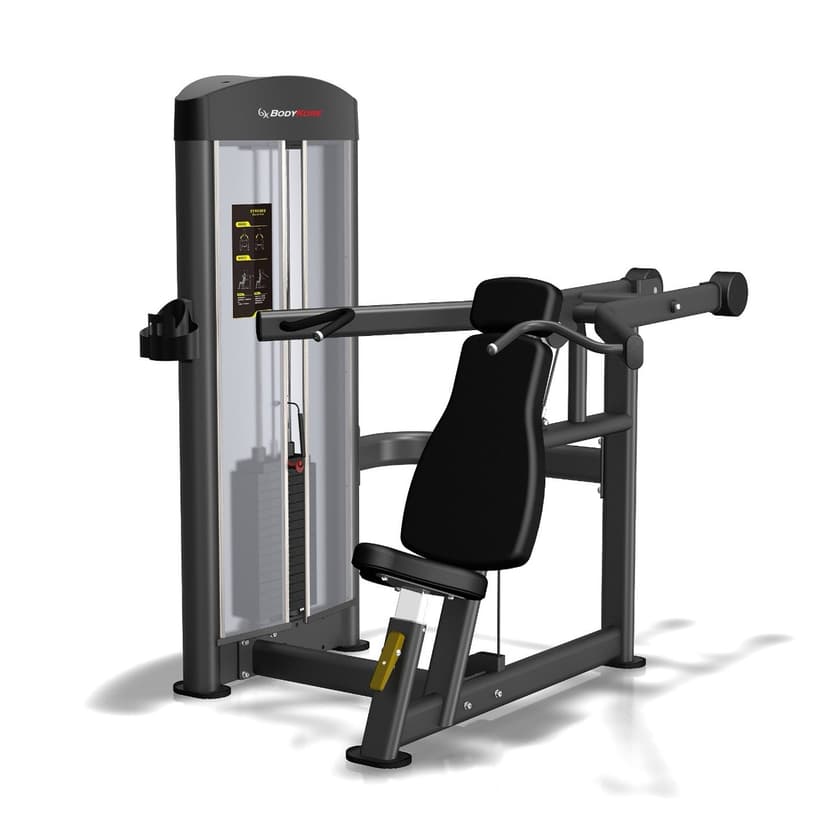
Selectorized shoulder presses: The GR604 Selectorized Shoulder Press is the workhorse for vertical pressing. Pin-loaded 220lb stack (upgradeable to 340lb), six adjustable starting positions, plus independent arms that follow each user's natural pressing arc. Members in a busy commercial facility can change weight between sets without leaving the seat, which keeps station turnover fast at peak hours. Browse the full bench and shoulder press machines page for related selectorized pressing options.
Plate-loaded shoulder presses: The GR803 Plate Loaded Shoulder Press is built around independent movement arms with a converging motion path that mimics seated military presses. Oversized handles spread the load across the hands rather than pressing into a narrow grip. Plate-loaded means unlimited capacity (no 220lb ceiling), which is why heavier lifters in home gyms tend to prefer it over selectorized. The full plate-loaded machines collection covers more options across chest, back, shoulders, plus lower body.
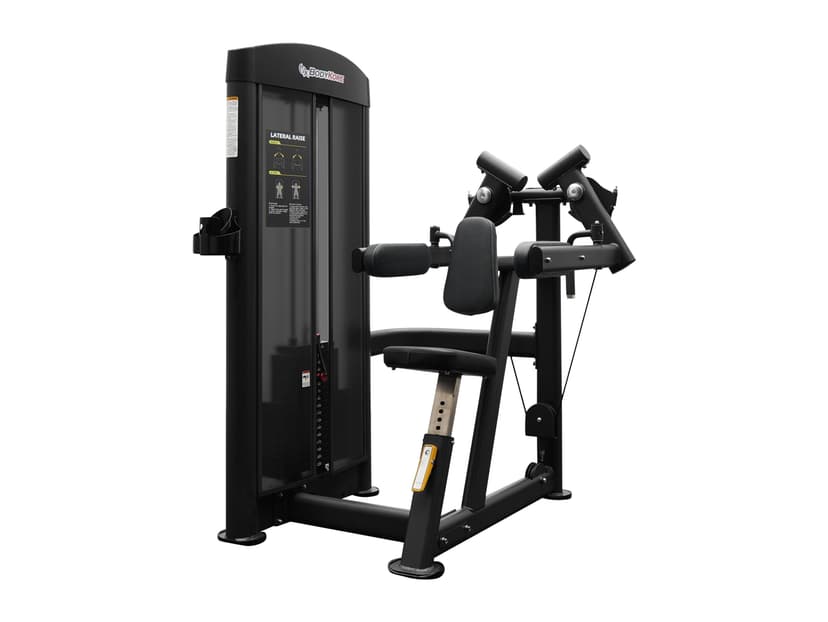
Lateral raise machines: The GR605 Lateral Raise isolates the middle deltoid through pure abduction, the movement most lifters butcher with dumbbells. Sitting in a fixed pad eliminates the cheating swing that turns a lateral raise into a partial front raise plus trap shrug. For shoulder width specifically, this is the most direct machine in the catalog.
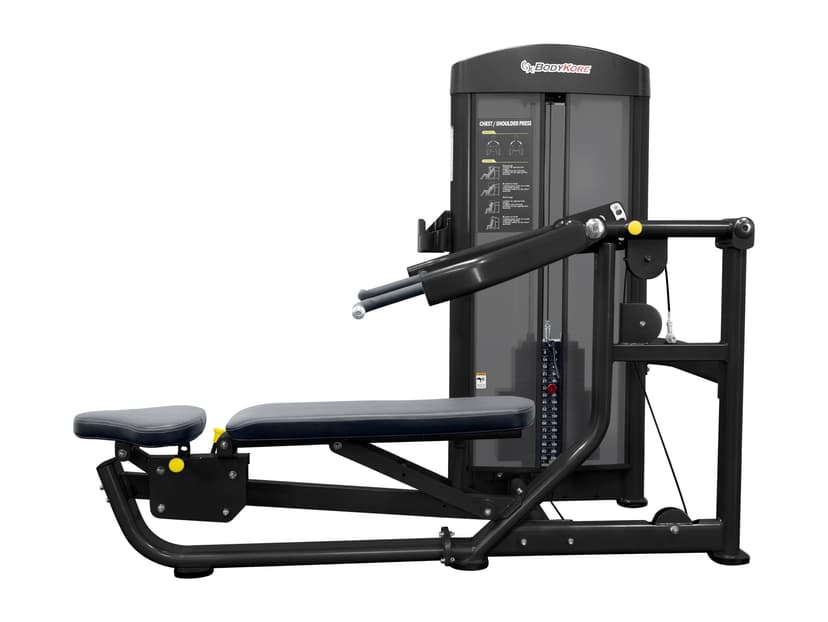
Multi-position press machines: The GR640 MultiPress combines four pressing angles in one station, covering lower chest, mid chest, upper chest, plus shoulders. Users adjust the seat back to switch between an incline press position and an overhead press position without leaving the seat. For home gyms with limited floor space, this single station replaces both a chest press and a shoulder press machine.
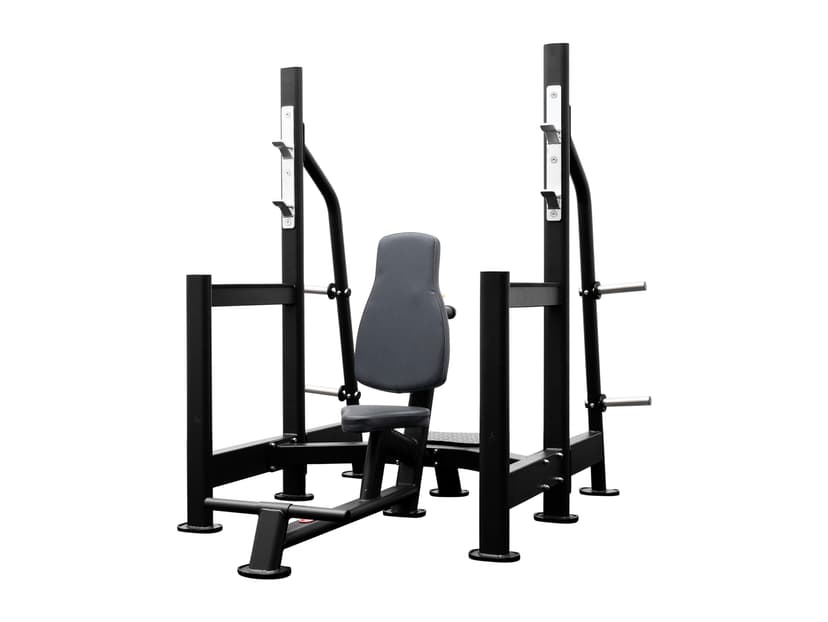
Olympic-loaded shoulder stations: The G254 Military Press is a free-weight pressing station for seated barbell military presses. Adjustable bar hooks at multiple heights, rated to hold over 1,000lbs, plus a wide A-frame design for stability under heavy loads. Best paired with Olympic plates and a hard-chrome bar.
Three deltoid heads, three different jobs. Knowing which head a machine actually trains makes the difference between balanced shoulder development and a front-delt-dominant pressing program.
Anterior (front) deltoid: Located at the front of the shoulder, attached to the clavicle. It handles shoulder flexion (raising the arm forward) plus assists with internal rotation. This is the head that pressing movements train, which is why most lifters have plenty of front-delt development. Overhead presses, military presses, plus chest pressing machines all hit this head heavily.
Lateral (middle) deltoid: The side of the shoulder, attached to the acromion. Its primary job is shoulder abduction, lifting the arm out to the side. This is the head responsible for shoulder width, the visual look that makes lifters appear broad. Lateral raises, dedicated lateral raise machines, plus wide-grip upright rows train this head specifically.
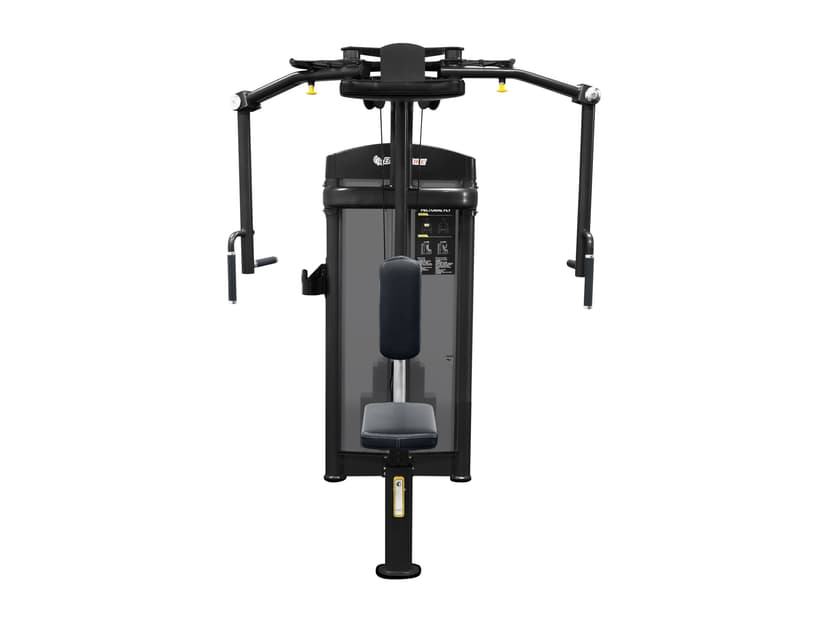
Posterior (rear) deltoid: The back of the shoulder, attached to the spine of the scapula. It handles shoulder extension plus horizontal abduction (pulling the arm backward and outward). This is the head most lifters skip. Rear delt flys, reverse pec deck movements, plus face pulls are the primary training tools.
A complete shoulder station should address all three. Pressing equipment alone covers the anterior head adequately, leaves the lateral head behind, plus does almost nothing for the posterior head. The combination of a press machine, a lateral raise machine, plus a rear delt option (often the reverse position on a pec deck) covers everything the deltoid needs.
Home gyms rarely have room for three separate shoulder stations. Smart space planning matters more than buying every isolation piece.
The first decision is pressing hardware. A dedicated GR803 plate-loaded shoulder press or a GR640 MultiPress handles overhead pressing. Lifters who already own a G252 Olympic Incline Bench plus a G251 Olympic Flat Bench can skip a dedicated press machine entirely, since seated dumbbell presses on an upright incline cover the same movement.
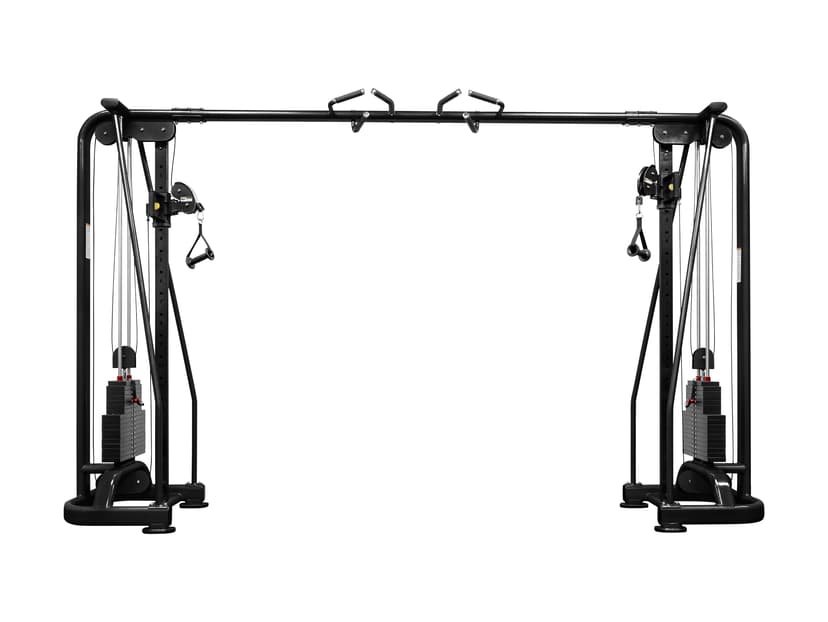
Lateral and rear delt work is where most home gyms cut corners. A pair of dumbbells from the dumbbells category handles lateral raises, rear delt flys, plus front raises with no machine required. A 5-50lb rubber hex set covers most lifters from beginner through intermediate. A cable setup like the G502 Cable Crossover opens up cable lateral raises plus face pulls, which give constant tension throughout the movement that dumbbells can't match.
For lifters wanting one machine that handles shoulders alongside everything else, the MX1162 Universal Trainer integrates a counterbalanced Smith machine with a dual adjustable pulley system. Overhead Smith presses, cable lateral raises, cable face pulls, plus dumbbell rear delt flys can all run through a single piece of equipment. For garage and basement setups under 200 square feet, that consolidation is often the difference between a usable layout and a cramped one.
Shoulder training noise matters in shared buildings. Selectorized stacks rattle at heavy loads, plate-loaded machines clank, and dropping dumbbells on a wood floor wakes the upstairs neighbor. Rubber-coated dumbbells plus a cable-based shoulder station make noticeably less noise than free-weight pressing.
Commercial buyers think differently. The question isn't "what fits my space," it's "what survives 8 sessions a day across 5 years."
A commercial shoulder section typically needs three stations minimum: a selectorized shoulder press for fast turnover, a lateral raise machine to handle the volume members generate during shoulder days, plus either a rear delt station or a pec deck that converts to reverse fly. The GR604 Selectorized Shoulder Press, GR605 Lateral Raise, plus a Pectoral Fly/Rear Delt machine cover that triangle.
Selectorized matters more in commercial environments than at home. Members change weight between sets faster on a pin-loaded stack than they do swapping plates on a plate-loaded press, which means more reps per hour and less plate clutter on the floor. Plate-loaded equipment still has a place in commercial settings, especially in strength-focused facilities, but the high-traffic stack work usually goes selectorized.
Hospitality fitness centers (hotels, condos, corporate wellness rooms) face a different constraint. They need shoulder coverage in a space measured in dozens of square feet, not hundreds. The GR640 MultiPress handles both chest and shoulder pressing in one footprint, making it ideal for facilities that can only fit one upper body station. BodyKore offers hospitality fitness equipment packages with custom upholstery plus powder coating to match property branding.
Buyers planning a facility opening can pre-order out-of-stock shoulder equipment to lock in pricing without waiting for restocks, plus financing terms make multi-station orders manageable on a build-out budget.
Not every overhead press is the same movement. The grip width, arm path, plus seat angle change which deltoid head dominates the lift.
Vertical military press: Bar or handles travel straight up, palms facing forward. Trains anterior plus medial deltoids heavily, less posterior. Best executed on the GR803 Plate Loaded Shoulder Press or the G254 Military Press station.
Neutral grip overhead press: Palms facing each other. Tends to be easier on the shoulder joint than a pronated press, which makes it the right pick for lifters with pre-existing shoulder issues. Many BodyKore press machines include a neutral grip handle option alongside the standard pronated grip.
Arnold press: Starts with palms facing the lifter, rotates outward through the press. Trains all three heads in a single movement, which is part of why it's a staple for bodybuilders. Requires dumbbells from the dumbbells category plus a sturdy seated bench like the G206 Adjustable Bench.
Push press: A leg-driven overhead press, used for moving heavier loads than a strict press allows. Best on a barbell at the G254 Military Press or in a squat rack with safety arms set just below the press starting position.
Landmine press: A barbell anchored at one end, pressed at an angle. Catches the anterior plus medial heads with a unique arc that strict overhead pressing misses. Compatible with most squat racks plus the MX1162 Universal Trainer when fitted with a landmine attachment.
The complete shoulder program rotates between strict pressing for strength, dumbbell pressing for stabilizer recruitment, plus machine pressing for volume work without form breakdown.
Most equipment marketing focuses on weight stack capacity. The boring details are where machines actually win or fail under daily use.
Frame material: BodyKore selectorized shoulder machines use heavy-duty commercial-grade steel tubing protected by an electrostatic powder coat finish. Lower-grade frames flex under load, which makes the press feel mushy at heavy weight plus creates rattle that gets worse over time. The 11-gauge oval steel construction across the lineup eliminates that.
Pulley systems: Fiberglass-strengthened nylon pulleys with sealed ball bearings handle daily use without wearing out the cable groove. Cheaper plastic pulleys flatten out, then start fraying the cable from inside. A cable that breaks under a 200lb stack is a serious injury hazard, which is why our pulley spec is non-negotiable on selectorized machines.
Cable rating: Our cables are 2,000lb tested, nylon-coated, high-tensile aircraft cable. That capacity is roughly 9x the working load on a 220lb stack, leaving substantial safety margin even after years of use.
Seat adjustment range: A 6-point or 8-point adjustable seat fits users from roughly 5'0" to 6'5" without forcing tall lifters into a cramped position or short lifters to perch on the edge of the seat. Single-position seats only fit one body type properly, which is fine in a private home but disastrous in a commercial setting where members come in every shape.
Handle material: High-density urethane composite handles stay comfortable across long sets without tearing skin or absorbing sweat. Foam-wrapped handles compress, then start splitting at the seams within a year of commercial use. Urethane lasts roughly 5x longer.
A balanced shoulder session covers all three deltoid heads plus rotator cuff work. Here's how the equipment maps to a session.
Compound press first: Strict overhead press on the GR604 Selectorized Shoulder Press or the GR803 Plate Loaded Shoulder Press. This is the heavy lift of the session, run in lower rep ranges (5-8) for strength or moderate ranges (8-12) for hypertrophy.
Lateral isolation second: GR605 Lateral Raise machine sets at moderate weight, 12-15 reps, controlled tempo. The middle deltoid responds best to higher rep ranges plus strict form, since cheating the weight up shifts work to the traps.
Rear delt work third: Reverse pec deck position, cable face pulls on the G502 Cable Crossover, or dumbbell rear delt flys on a G206 Adjustable Bench set to a low incline. 12-20 reps, strict form, focus on the squeeze at peak contraction.
Optional finisher: Cable lateral raises, dumbbell front raises, or a giant set combining all three deltoid raises back-to-back. The cable machines collection covers tools for this stage.
Run shoulders twice per week for hypertrophy, with 48-72 hours between sessions for recovery. Strength-focused programs may run heavy presses once weekly with a lighter lateral and rear delt session midweek.
Shoulder equipment ships out of our California warehouse, palletized, via LTL freight. Standard transit runs between 3 and 14 days depending on destination. Local pickup is available by appointment at any of our warehouse locations, plus our showroom and dealer network spans nationwide.
Pre-orders are accepted on out-of-stock items so commercial buyers planning a facility opening can lock in pricing without waiting for restocks. Financing is available through our standard application, with monthly payment plans designed to keep multi-machine purchases manageable on a build-out budget.
Cancellations are accepted any time before shipment. Once an order ships LTL, freight charges apply, so timing matters.
Most home lifters start with a multi-press unit like the GR640 MultiPress since it handles both chest and shoulder pressing in one footprint. Add a lateral raise option (machine or dumbbells) plus a cable setup for rear delt work, and the deltoid is fully covered.
Commercial floors usually need three pieces minimum: a selectorized shoulder press (fast turnover), a GR605 Lateral Raise, plus a rear delt station or convertible pec deck. Volume matters more than variety, since busy facilities need enough stations that members aren't waiting between sets.
Selectorized is faster between sets, which makes it the right pick for high-traffic commercial gyms plus home users who value convenience. Plate-loaded has unlimited capacity (no stack ceiling), which matters for serious lifters pressing more than 200lb overhead. Many advanced home gyms include both.
Yes. A G252 Olympic Incline Bench set upright handles seated dumbbell presses, the G254 Military Press covers barbell pressing, plus dumbbells from the weights catalog handle lateral raises and rear delt flys. Machines accelerate progress through guided form and quick weight changes, but they're optional for free-weight-focused lifters.
For most home users, the standard 220lb selectorized stack is more than enough for shoulder work, since shoulders fatigue faster than chest or back at heavy loads. Commercial facilities or advanced lifters can upgrade to a 340lb stack on most BodyKore selectorized machines for extra headroom.
The BodyKore warranty philosophy is lifetime on machine frames and 5 years on parts, with shoulder-machine-specific coverage detailed at the product level on each listing.
Most lifters end up with overdeveloped front delts, undertrained side delts, plus barely-trained rear delts. The problem isn't programming, it's equipment. Pressing alone trains one third of the muscle, and most home gyms only have pressing equipment.
Browse the full BodyKore shoulder machine lineup above to compare selectorized presses, plate-loaded presses, lateral raise machines, plus multi-position press stations. If you're a home gym builder spec'ing the right combination for your space, or a commercial operator outfitting a facility from scratch, our team is ready to walk through it. Financing makes commercial-grade shoulder equipment accessible at the home gym budget level, plus our nationwide dealer network means there's a showroom not far from most US zip codes.
Press heavier. Lift wider. Build the shoulders the front-delt-only crowd never gets.