
$3,599.00
Financing options...
Note: Limited Availability - Inquire to Order.
$3,499.00
Financing options...
Note: Limited Availability - Inquire to Order.
$3,499.00
Financing options...
Note: Limited Availability - Inquire to Order.
Upper back development comes from two distinct pulling patterns: vertical pulls (lat pulldowns, pull-ups) that build lat width and shoulder-to-waist ratio, and horizontal pulls (rows) that build the mid-back thickness, rhomboid density, and trap development that fills out the back from side and rear angles. Neither movement pattern covers what the other does. A training section built around both produces a balanced, fully developed upper back rather than one that looks wide from the front and flat from behind.
BodyKore's upper back category covers both patterns across selectorized machines, plate-loaded stations, free weight benches, and cable systems. Every piece shares the same commercial build baseline: 11-gauge steel, electrostatic powder coat, precision-cut weight stacks, and industrial galvanized cables rated to 2,000 lbs tested. The warranty is lifetime on the frame and five years on parts and upholstery.
The latissimus dorsi is the broadest muscle in the back, running from the mid-spine and pelvis up to the upper arm. It pulls the arms downward and inward, and it is the primary driver of upper body width. Wide-grip lat pulldowns target the outer lat fibers to build the V-shape visible from the front. Narrow and neutral-grip variations shift emphasis toward the lower lats and mid-back, extending the lat fullness down toward the waist. Reverse-grip pulldowns bring the biceps into the movement more aggressively and allow a longer pulling path for most users.
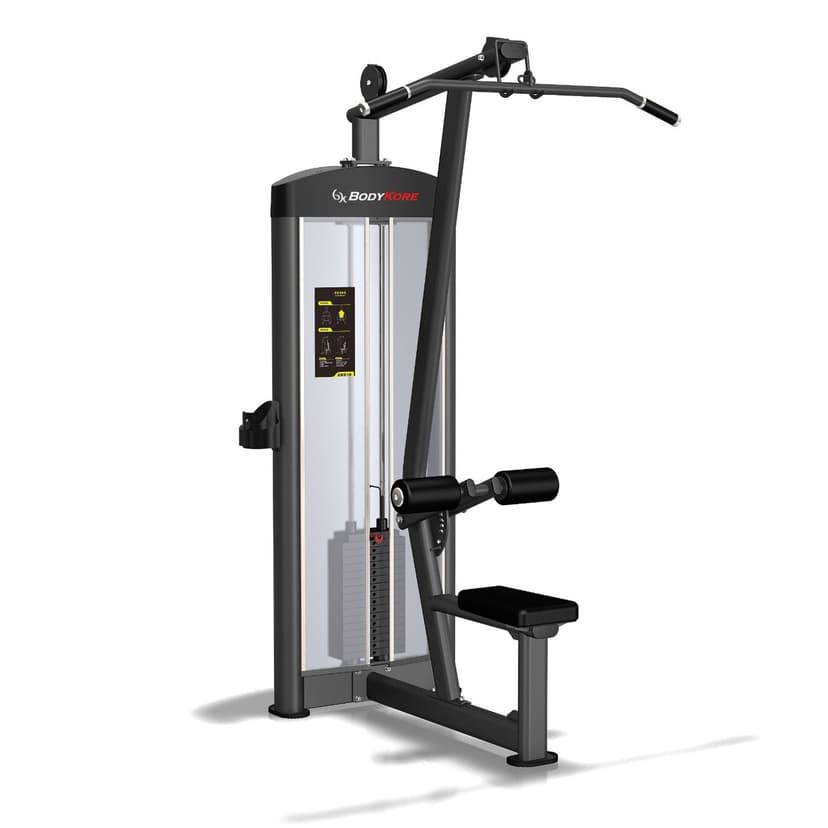
The GR602 Lat Pull Down is BodyKore's dedicated commercial lat station. It carries a 220 lb weight stack, adjustable thigh pads to lock the user in place during heavy sets, and a cable pulley system designed for smooth, consistent resistance through the full downward arc. For commercial floors, a dedicated lat pulldown station is a fixture on any upper body circuit because it is one of the most accessible back exercises available across every fitness level, from a beginner pulling 50 lbs to an advanced lifter working toward bodyweight variations.
The GR619 Selectorized Lat Pulldown is a second selectorized lat pulldown option in the lineup, suited to facilities that run multiple back stations simultaneously or that want a dedicated lat machine separate from a combo unit. Both the GR602 and GR619 work with standard lat bar, narrow grip, and rope attachments so members can vary grip width and training angle without changing machines.
For plate-loaded lat pulling, the GR806 Plate Loaded Pull Down takes standard Olympic plates directly onto the machine rather than using a weight stack. The load ceiling is meaningfully higher than any selectorized lat pulldown, and the direct resistance feel through the lever arms is closer to what a heavy barbell movement delivers. Advanced lifters who have worked through a selectorized stack often gravitate toward plate-loaded variations precisely because the resistance does not top out.
Rows build back thickness in a way that pulldowns and vertical pulls cannot. The rhomboids, middle trapezius, and posterior deltoids respond to horizontal pulling, drawing the elbows back and squeezing the shoulder blades together. Without consistent rowing volume, the upper back can develop width from lat training while remaining flat from behind, a common gap in programmes built around vertical pulling only.
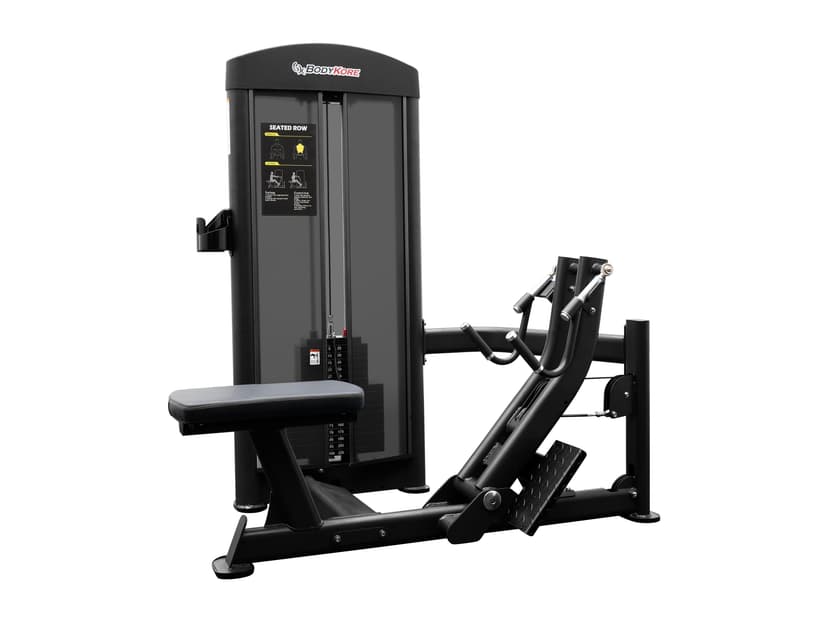
The GR603 Selectorized Seated Row uses rotating handles and a 1:1 pulley ratio to deliver smooth, consistent resistance across the full rowing arc. An extended seat pad and sturdy footplates stabilise users of different heights and builds, and the 220 lb stack upgrades to 340 lbs for lifters who need a heavier ceiling. Rotating handles matter for row machines because they let the wrists and elbows follow a natural path rather than being locked into a fixed grip angle throughout the set.
For plate-loaded rowing, the GR802 Plate Loaded Seated Row runs independent movement arms on diverging pulling angles, which means each side moves separately and the path of the row converges naturally rather than following a fixed straight line. That diverging angle mirrors the way free weight dumbbell rows feel, keeping the shoulder blade free to move through full retraction rather than being constrained by a fixed-path cable. A regressive strength curve reduces force at the bottom of the movement, protecting the shoulder at its most vulnerable position and letting lifters work through a complete range of motion at heavy loads.
The GR638 Lat Pulldown/Low Row Combo is the most space-efficient upper back machine in the category. A single 220 lb stack (upgradable to 340 lbs) powers both exercises; the seat converts between the lat pulldown position (upright, pulling overhead) and the low row position (forward-leaning, pulling horizontally) through a straightforward reconfiguration. Four-position adjustable foam rollers and footrests keep the user stable in both positions. For home gyms with limited floor space and for compact commercial setups that need two pulling patterns from one footprint, the GR638 is the clean answer.
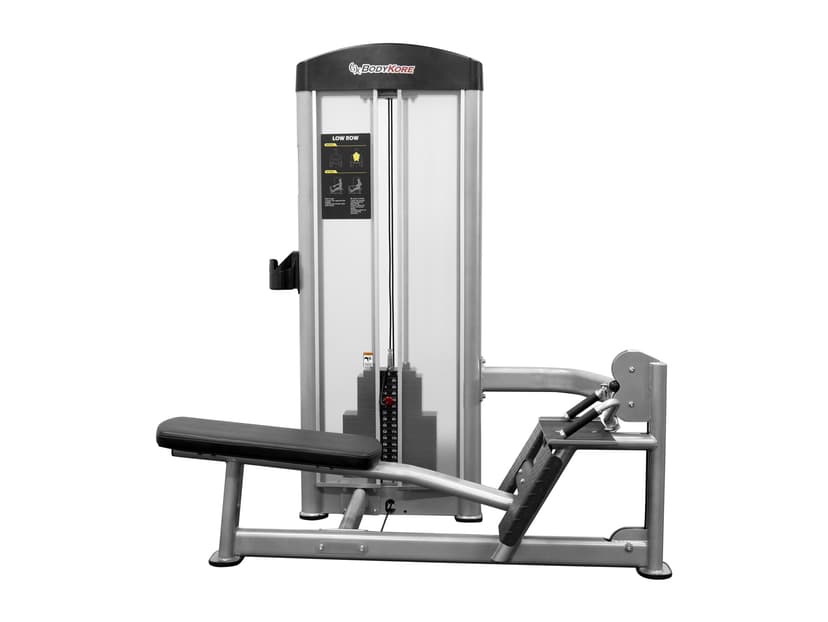
The GR616 Selectorized Low Pull rounds out the selectorized pulling lineup as a dedicated low-pulley station, suited to facilities that want a separate low row and cable station without combining it with a lat pulldown. Low pulley stations also open up face pull variations, cable curls, and rotational core exercises from the same anchor point, which makes them more useful on a commercial floor than a single-purpose row machine.
The T-bar row is one of the most effective mass-building movements for the mid and upper back. It allows heavier loads than most machine rows and recruits the lats, traps, rhomboids, and rear delts simultaneously in a compound pull. The challenge is that heavy free T-bar rows put significant compressive load on the lumbar spine, a problem that chest-supported variations solve by removing the need to hold the torso angle under load.
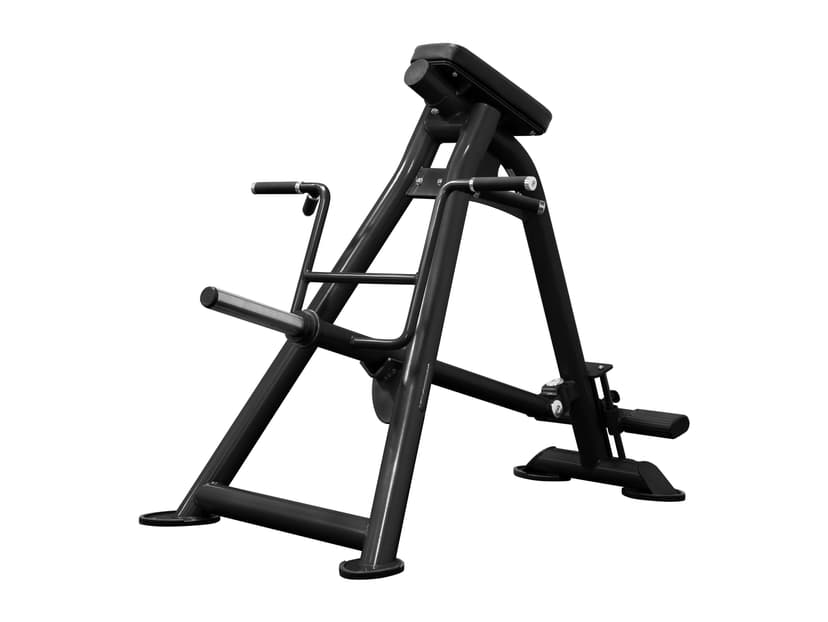
The CF2173 Elite Series Standing T-Bar Row addresses that directly. The built-in chest support pad takes the load off the lower back by letting the user rest the chest against the pad rather than holding a hinge position for the entire set. Multiple grip settings let the user target inner lats (close, neutral grip) or outer lats (wide overhand grip) within the same session, producing more complete back development than a single-grip row station delivers. For commercial facilities, the chest-supported design also makes the CF2173 safer and more accessible to members who avoid heavy rowing because of lower back concerns.
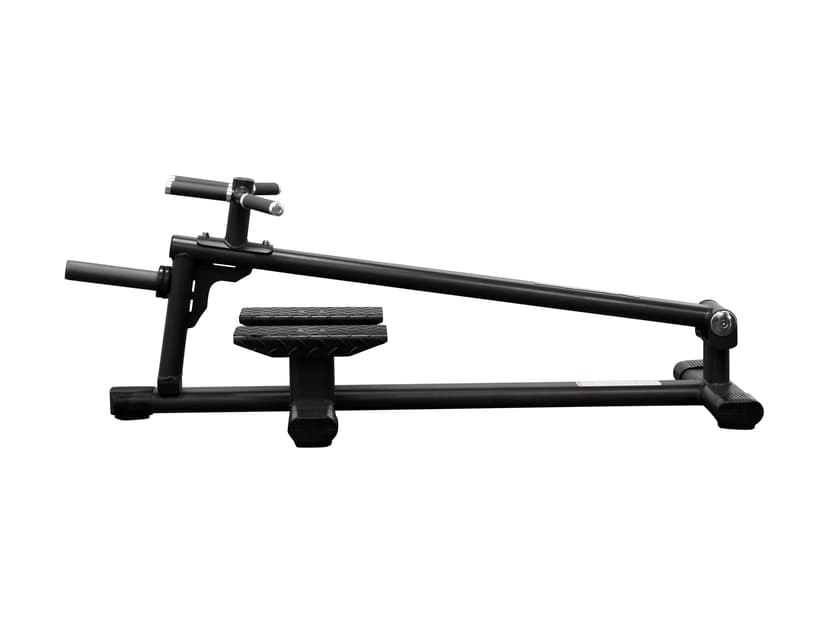
The G273 Signature Series T-Bar Row is a plate-loaded T-bar station for lifters who want the feel of a free T-bar pull with Olympic weight plates. Multiple grip settings again allow users to shift between inner and outer lat emphasis without changing the setup. For serious strength athletes and powerlifters, the G273 is the T-bar option that delivers the closest feel to a barbell row from a dedicated machine platform.
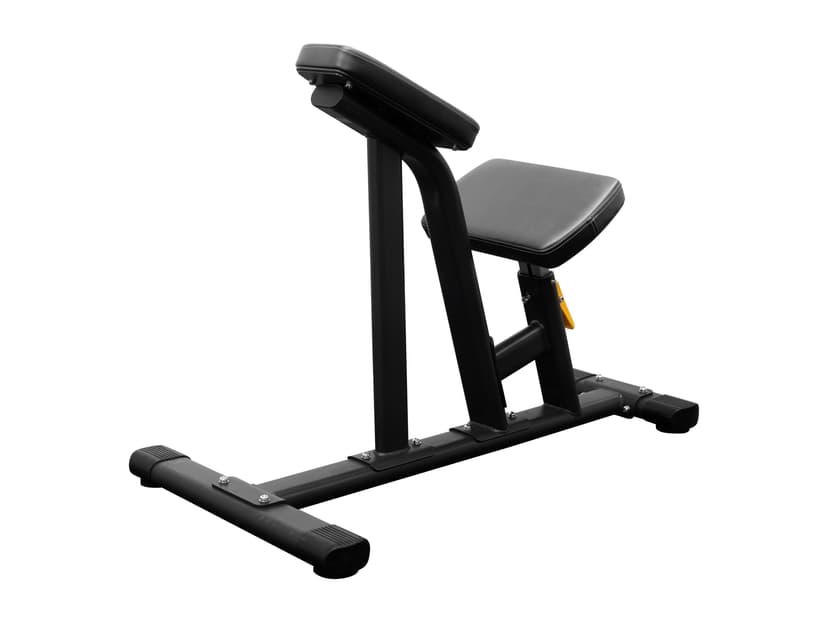
Free weight prone rows produce a different training stimulus than machine rows because the lifter must stabilise the torso independently and control the load through the full range without a cable or lever path guiding the arc. The G214 Seated Row Bench is designed for this purpose. The user lies prone on the angled pad and rows dumbbells or a barbell from below the body, keeping the chest supported so the lower back stays neutral throughout. The prone position removes trunk swing from the equation, producing a stricter contraction in the mid-back than standing or bent-over row variations permit. Pair the G214 with dumbbells or a barbell from BodyKore's free weights category and it becomes one of the most effective mid-back isolation setups available at any price point.
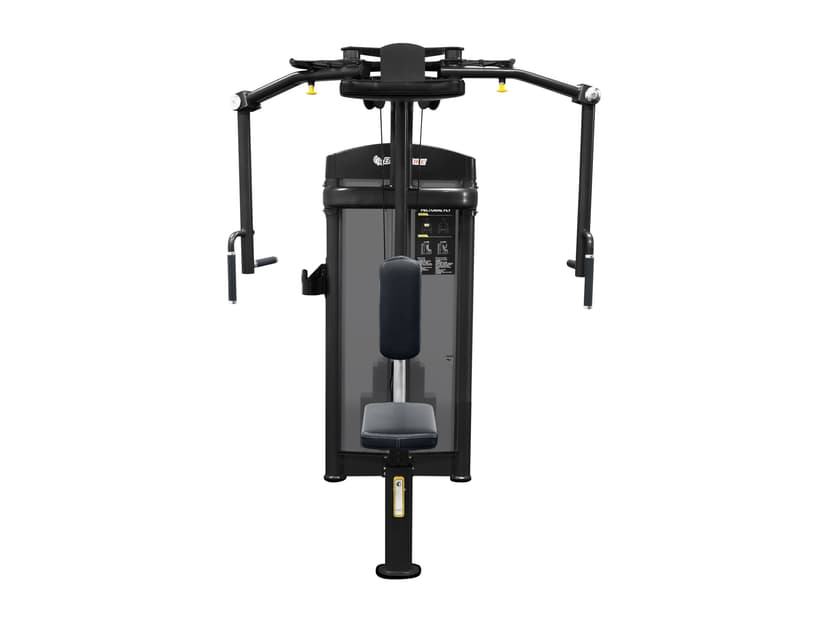
The posterior deltoid (rear delt) connects the upper arm to the scapula and sits at the back of the shoulder. It fires in every rowing movement, but it is rarely trained to the same degree as the lats or rhomboids. Weak rear delts create a visible imbalance: the shoulders roll forward, upper back posture deteriorates, and pressing performance drops because the shoulder joint loses stability from behind. The GR633 Pectoral Fly/Rear Delt flips the user's seat orientation to switch between pec fly and reverse pec deck for rear delt isolation. In the rear delt position, the user faces the seat pad and moves the handles in a wide reverse arc, targeting the posterior deltoid and upper trap fibres without loading the lower back. It is among the most effective isolation stations available for rear delt work and sits naturally alongside the row machines in an upper back training section.
Cable machines bring two things to upper back training that fixed machines cannot match. First, constant tension across the full pulling arc, so the muscle stays loaded even at full extension and full contraction rather than experiencing slack at either end. Second, angle variability: a cable can pull from high, mid, or low pulley positions, creating different pulling angles that hit the lats, mid-back, and rear delts in different proportions within the same session.
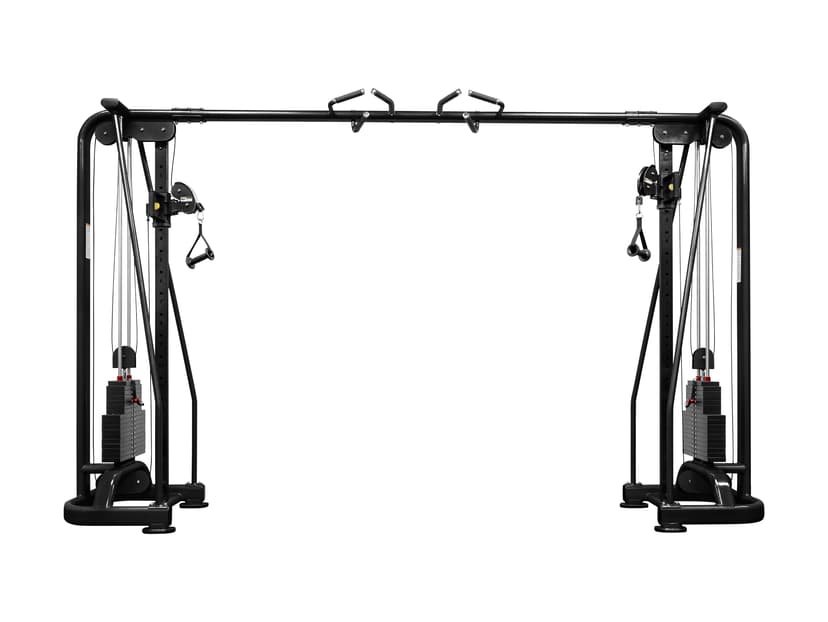
The MX1161 Functional Trainer carries dual adjustable pulleys and dual 220 lb stacks (rated for over 1,000 lbs total), covering the full range of cable back exercises from a single station. High-pulley straight-arm pulldowns isolate the lats without recruiting the biceps. Mid-pulley single-arm rows correct left-right strength imbalances that fixed bilateral machines often mask. High-pulley face pulls, with the hands pulling toward the face from a high anchor, target the rear delts, traps, and external rotators simultaneously, making them one of the most complete upper back health exercises available. The MX1161 also covers chest, shoulder, arm, and leg exercises, which makes it the most versatile single machine in the BodyKore lineup for a home gym or small commercial setup.
The MX1162 Universal Trainer extends the MX1161 concept by adding a counterbalanced Smith machine and vertical leg press, making it BodyKore's most complete all-in-one system. For a home gym that wants Smith machine rowing alongside cable back work from a single platform, the MX1162 covers it. The G502 Cable Crossover is the full-size commercial cable station in the lineup. Extending 150 inches wide with dual 220 lb stacks, it handles cable rows, face pulls, straight-arm pulldowns, and single-arm variations at full commercial scale alongside its chest and shoulder crossover work.
The right starting point for a home gym upper back section depends on how much floor space is available and whether the lifter prefers machine-guided resistance or free weight and cable training.
For a dedicated machine that covers both vertical and horizontal pulling from one frame, the GR638 Lat Pulldown/Low Row Combo is the most space-efficient answer in the category. One station, two exercises, a 220 lb stack, and a compact footprint. It suits a garage gym or a dedicated home gym room where floor space is measured carefully.
For a lifter who wants cable versatility beyond a fixed pulldown station, the MX1161 Functional Trainer covers lat pulldowns, cable rows, face pulls, straight-arm pulldowns, and single-arm work from one station. Add the G214 Seated Row Bench for prone dumbbell rows and the combination covers every major upper back pulling pattern without needing a separate lat machine and row machine.
For serious back training with a plate-loaded feel, the GR802 Plate Loaded Seated Row paired with the GR806 Plate Loaded Pull Down gives a home gym the same pulling equipment found on the strength floors of serious training facilities. Both machines use existing Olympic plate inventory rather than adding a separate weight stack to the room. Add the CF2173 Standing T-Bar Row and the setup covers vertical pulling, horizontal rowing, and T-bar pulling across plate-loaded equipment throughout.
Financing is available across the upper back lineup. Monthly payments start from as low as $30 per month on the G273 T-bar row and scale by machine and term.
A commercial upper back section needs to serve a range of members simultaneously. Beginners gravitate toward selectorized stations with clear resistance increments and guided movement paths. Intermediate lifters rotate between lat pulldowns and row machines for volume work. Advanced members load up plate-loaded stations or hit cable face pulls and single-arm rows at the end of heavy sessions. No single machine covers all three groups.
A well-stocked commercial upper back section typically includes at least one dedicated lat pulldown machine (GR602 or GR619), a dedicated seated row machine (GR603), a plate-loaded pull-down (GR806), a plate-loaded row (GR802), a T-bar row station (CF2173), and a cable system for face pulls and single-arm work.
For facilities with constrained floor space (boutique studios, hotel gyms, corporate fitness centres), the GR638 Lat Pulldown/Low Row Combo replaces the standalone lat pulldown and seated row in a single footprint. Pairing it with a CF2173 T-Bar Row and the MX1161 Functional Trainer for cable work gives a compact facility three distinct back training tools in a tight floor plan.
BodyKore offers full gym solutions for commercial buyers covering layout consultation, financing, and installation. For a complete upper body pulling section, the turn-key path handles equipment selection, floor plan, and delivery coordination as a single project rather than as a series of independent purchases.
Upper back training falls most naturally into pull days on a push/pull/legs split, or into upper body days on an upper/lower split. The principle across both structures is the same: pair vertical pulling with horizontal pulling in each back session rather than filling the session with only one pattern.
A practical back session structure runs: one vertical pull movement (lat pulldown, pull-up), one horizontal pull movement (seated row, T-bar row), one rear delt or upper trap movement (face pull, reverse pec deck), and one unilateral or cable movement to address side-to-side imbalances. That covers the four major upper back training demands without overlap or redundancy. Rep ranges of 8 to 15 per set work well for most upper back machines because the muscle groups involved are large enough to handle moderate loads but respond to time under tension on the controlled eccentric.
For competitive athletes and strength sport competitors, the GR802 Plate Loaded Seated Row and GR806 Plate Loaded Pull Down allow progressive overload well past what a selectorized stack permits. Both machines work with existing Olympic plate inventory, so the only ceiling on load is the lifter's own strength.
Every machine in BodyKore's upper back category shares the same construction spec. Frames are 11-gauge steel rated to hold over 1,000 lbs. Finishes are electrostatic powder coat for long-term corrosion resistance under daily use. Selectorized weight stacks are precision-milled. Cables on pulley-based machines are industrial galvanized steel, tested to 2,000 lbs. The GR638 frame is built from 3.5-inch oval rolled steel tubing rated over 1,000 lbs. The GR603 runs high-tensile aircraft cable rated to the same standard.
The warranty covers the frame for life and parts and upholstery for five years across the lineup. Machines ship LTL freight from BodyKore's California warehouse, with transit times of 3 to 14 business days for in-stock items. Equipment arrives palletised, boxed or crated, and unassembled, with installation videos available at bodykore.com/installation-videos.
Upper back training does not exist in isolation. The lats, rhomboids, and traps work as pulling muscles in direct opposition to the pressing muscles trained through chest equipment. Balanced pressing-to-pulling ratios protect the shoulder joint and maintain the postural alignment that heavy bench pressing alone tends to disrupt. Pair the upper back section with shoulder machines for direct overhead pressing and lateral raise work, and with arm machines for the bicep isolation that complements the secondary bicep work produced by every pull movement.
Round out the full body setup with leg machines for lower body strength and functional trainers for the multi-planar movement work that builds the kind of back strength that carries over into sport and daily life.
The GR638 covers both lat pulldown and seated row from one 220 lb stack by converting the seat between two positions. It suits home gyms and lower-traffic facilities where one footprint needs to do two jobs. The GR602 and GR603 are dedicated standalone stations, one for lat pulldowns and one for seated rows, so both are available simultaneously on a busy commercial floor without waiting or configuration changes. Facilities with the floor space and the member traffic typically run both dedicated stations alongside a combo unit or functional trainer.
Selectorized machines (GR603, GR638) use a pin-loaded weight stack, making resistance changes fast and the experience tidy on a commercial floor. Plate-loaded machines (GR802 Plate Loaded Seated Row) use Olympic plates directly on the machine arms, producing a more direct resistance feel and a higher load ceiling. Most selectorized stacks top out at 220 to 340 lbs. Plate-loaded machines are rated to hold over 1,000 lbs of total load, which accommodates the heaviest advanced lifters without running out of resistance.
The CF2173 is specifically built to address this. The chest support pad allows the user to rest the torso against a padded surface during the entire set, removing the need to hold a hip-hinge position under load. Lower back compressive force drops significantly compared to a standing or unsupported T-bar row, which makes the CF2173 one of the safer heavy rowing options available for members with lower back sensitivity. That said, anyone with a diagnosed back condition should consult a medical professional before performing loaded rowing movements.
For a home gym or low-volume setup: yes, largely. The MX1161 Functional Trainer covers high-pulley lat pulldowns, mid-pulley rows, low-pulley straight-arm pulldowns, face pulls, and single-arm variations from adjustable pulley positions. For a high-traffic commercial floor where multiple members need to use back stations simultaneously, dedicated machines are the better choice because the functional trainer serves one user at a time.
A general population commercial gym typically needs at minimum: one lat pulldown, one seated row machine, one cable system for face pulls and unilateral work, and one T-bar or plate-loaded row for heavier lifters. Larger facilities add duplicate lat pulldown stations during peak hours and plate-loaded alternatives for strength-focused members. The right answer depends on member count, peak floor traffic, and the proportion of members who train back seriously versus members who use the floor for general fitness.
Wide overhand grip emphasises the outer lat fibers and builds the V-shape visible from the front. Narrow neutral grip shifts emphasis to the lower lat and mid-back, giving a longer pulling path for most users. Reverse underhand grip (supinated) recruits the biceps more aggressively and produces a different feel at the bottom of the pull. Rotating through all three grip variations across a training week hits the lat from multiple angles and produces more complete lat development than any single grip alone.
Yes. Monthly installment options are available across the upper back lineup, with payments starting as low as $30 per month on select models and scaling by machine and term length. Financing details are listed on each individual product page.
BodyKore ships LTL freight from a California warehouse. In-stock items typically arrive in 3 to 14 business days. Machines are palletised and arrive boxed or crated, unassembled, with installation videos at bodykore.com/installation-videos.