$1,799.00
Financing options...
Note: Limited Availability - Inquire to Order.
$1,979.00
Financing options...
Note: Limited Availability - Inquire to Order.
A complete chest workout hits the pectoralis major from multiple angles: flat for total mass, incline for the clavicular (upper) head, decline for the sternal (lower) fibres, and flys for adduction and squeeze. BodyKore's chest category is built around that principle. You'll find pressing machines, pec decks, cable crossovers, Smith-style options, and Olympic benches engineered to cover every angle a serious lifter trains. Each piece is rated for commercial gym traffic and finished to the same spec, so a home gym buyer gets the same frame and bearings as a 24/7 facility.
What separates BodyKore from low-cost imports: 11-gauge steel frames rated to hold over 1,000 lbs, precision pivot bearings that let the resistance feel like the plates and not the machine, electrostatic powder coat that holds up to sweat and humidity, and a lifetime frame warranty backing the whole lineup. Whether you're equipping a 12,000 sq ft commercial floor or a 400 sq ft garage gym, the construction is the same.
Plate-loaded machines are the workhorse of any serious chest training floor. They accept standard Olympic plates, deliver a more direct resistance feel than weight-stack equipment, and accommodate the heaviest lifters in the building without running out of weight. A typical selectorized stack tops out around 220 to 300 lbs. A BodyKore plate-loaded chest press is rated to hold over 1,000 lbs.
The GR801 Plate Loaded Chest Press is the flagship horizontal press in the lineup. Independent movement arms with precision pivot bearings allow unilateral training for fixing left-right strength imbalances, and the step-in design means lifters don't fight the machine to get into position. Nickel-plated weight horns resist corrosion under heavy use, while the high-density urethane foam grips stay comfortable through long sets.
For upper chest development, the GR804 Plate Loaded Incline Chest Press attacks the clavicular head of the pec at a fixed incline angle. The oversized pivot point keeps the lift smooth even at heavy loads, and the guided press path means a lifter training without a spotter can push to failure safely. This is the machine to pair with the GR801 if you want full chest coverage on a single training day.
The GR805 Wide Chest Press takes a different approach. Where horizontal and incline presses use a converging path, the wide chest press emphasises a broader pressing angle that hammers the outer pec. It's a popular choice in commercial gyms because members feel the chest activation immediately, especially lifters who struggle to feel their pecs on a standard press.
Selectorized (pin-loaded) chest presses use an integrated weight stack rather than plates. Members select the resistance with a pin, sit down, and start pressing within seconds. Plate loading, plate storage clutter, and the risk of a member leaving plates on the machine all disappear. For high-traffic commercial floors with general fitness members, selectorized often makes more operational sense than plate-loaded, even though serious lifters tend to gravitate toward plate-loaded for the heavier ceiling.
The GR601 Selectorized Chest Press ships with a 220 lb weight stack (upgradable to 340 lb), six adjustable starting positions, multi-grip handles, and a sleek black or silver finish that fits modern facility design. The six start positions matter more than they sound. Tall members and shorter members both need the press arm to begin in a position that doesn't compress the shoulder, and a fixed-start machine creates problems for one or the other.
The GR621 Dual Axis Chest Press introduces a second movement axis that lets the press arms move independently in both horizontal and converging planes. Dual-axis design has become a serious trend in commercial chest training because it more closely mimics the path of free weight pressing while keeping the safety of a guided machine. For a commercial gym building a premium strength floor, the GR621 reads as a higher-end station that members notice.
A press hits the chest, but it also recruits the front delts and triceps. A pec deck or pectoral fly isolates the chest by removing those secondary movers and forcing pure adduction, which is the action of bringing the arms across the body. For most lifters, that's where the deep contraction and the visible inner-chest development come from.
The GR620 Pectoral Fly is a dedicated chest fly station with a 220 lb weight stack and a smooth resistance curve through the full arc. Adjust the seat, grip the handles, and squeeze the chest at the centre. There's no momentum to cheat with, no balance correction to worry about, and the joint-friendly path makes it a popular machine with members who have shoulder issues that limit their pressing tolerance.
For facilities that want two muscle groups out of a single footprint, the GR633 Pectoral Fly/Rear Delt flips the user's seat orientation to switch between chest fly (facing back of seat) and reverse pec deck for rear delts (facing front). This is a smart pick for a small commercial gym or a serious home setup where one machine needs to do double duty. Rear delts are often the most underdeveloped muscle on the upper body, so combining them with a fly station tends to get them trained more often.
Cable machines bring something to chest training that fixed machines can't: constant tension across the full range of motion, multi-angle pressing, the ability to train one side at a time, and a fully stretched starting position when the lifter faces away from the stack. Most experienced lifters use cables as a finisher after pressing, hitting high-to-low crossovers for the lower chest and low-to-high crossovers for the upper chest.
The G502 Cable Crossover is a full-size commercial cable cross designed for the centre of a strength floor. It extends wide enough for full chest fly arcs without the cables binding, and the construction holds up under daily commercial use. A cable crossover is also one of the few chest stations that lets a lifter face away from the machine and press, which puts the chest in a fully stretched starting position and creates a stimulus that fixed machines can't match.
For tighter spaces, the PC1801 Dual Cable Cross is the same idea in a more compact footprint, with adjustable pulleys that handle dozens of chest variations alongside back, shoulder, and arm work. Functional trainers like the MX1161 Functional Trainer and the MX1162 Universal Trainer push that versatility further. Both handle chest fly, chest press, crossover, and roughly a hundred other movements from a single station, which is the reason they've become the cornerstone of so many home gyms.
The MX1161FX Dynamic Trainer is the Universal Trainer's smaller sibling, with most of the same features in a slightly more accessible price range. The MX1174 Universal1 is a single-station adjustable pulley setup ideal for a home gym that needs cable training without a full functional trainer footprint.
Free weight chest training matters for any serious lifter. The bench press is still the single most-trained upper body movement in the world, and Olympic benches are how you train it. BodyKore's bench press machine category covers every angle.
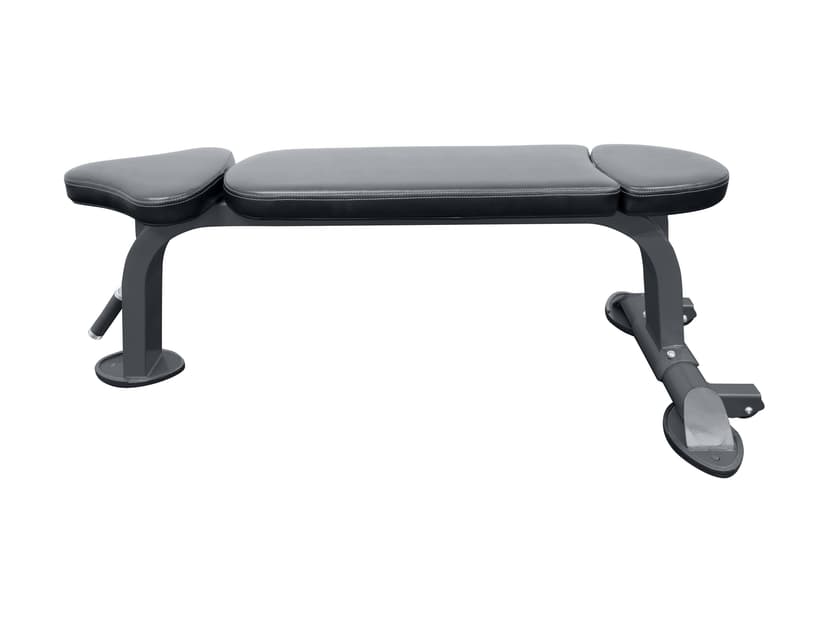
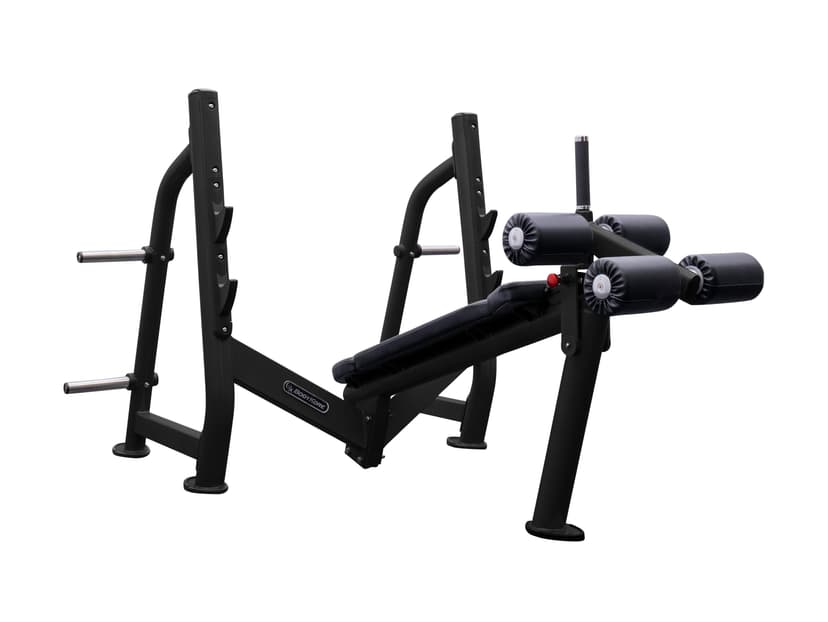
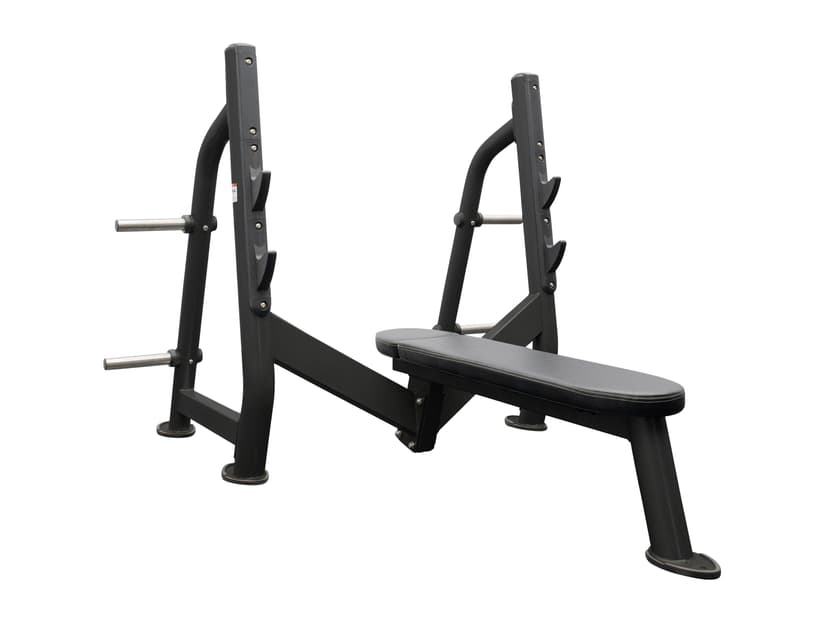
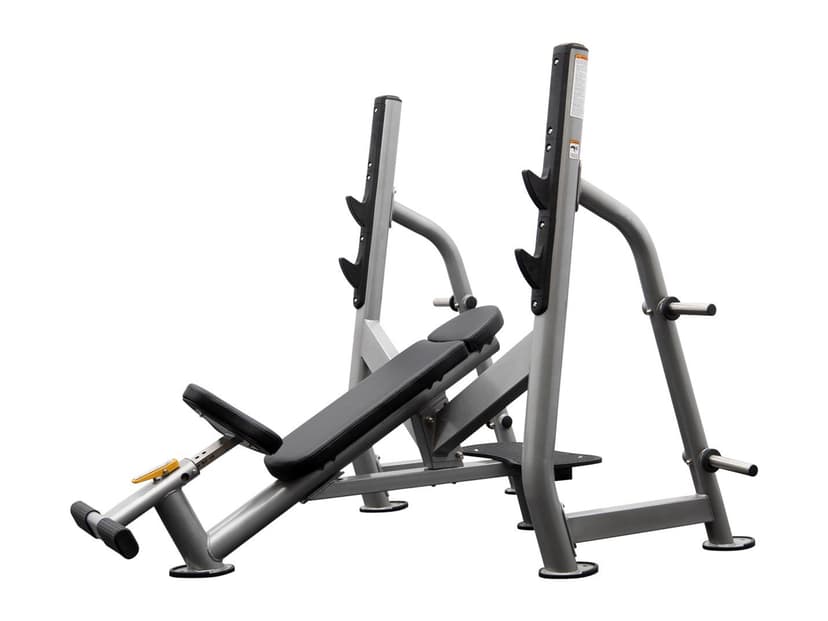
The CF2151 Olympic Flat Bench handles flat barbell bench press, the staple movement for chest mass. The CF2152 Olympic Incline Bench sets the bar at a fixed incline for upper chest emphasis, while the CF2153 Olympic Decline Press targets the lower chest fibres at a downward angle. Together those three benches cover every barbell pressing angle a strength program asks for. Earlier-generation Olympic benches like the G251 Olympic Flat Bench, G252 Olympic Incline Bench, and G253 Olympic Decline Bench remain in the lineup as well.
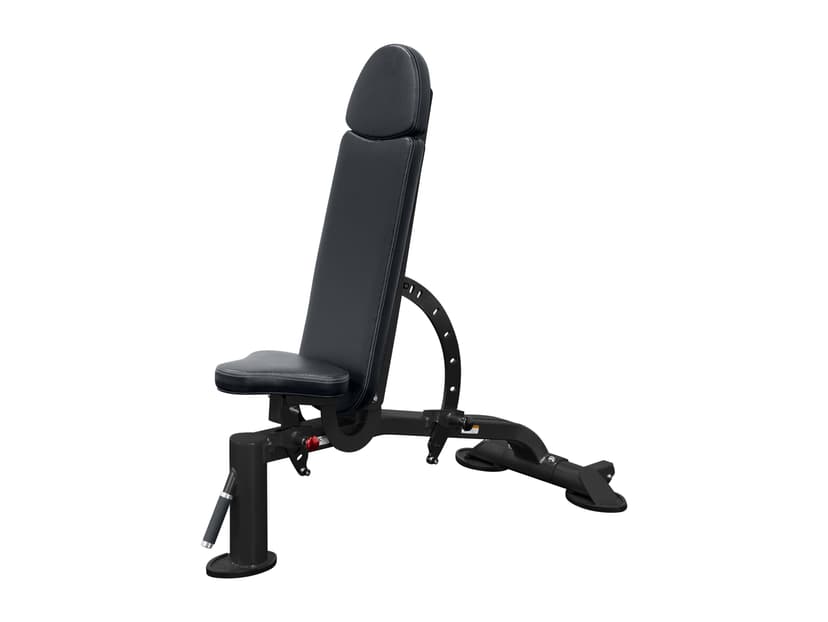
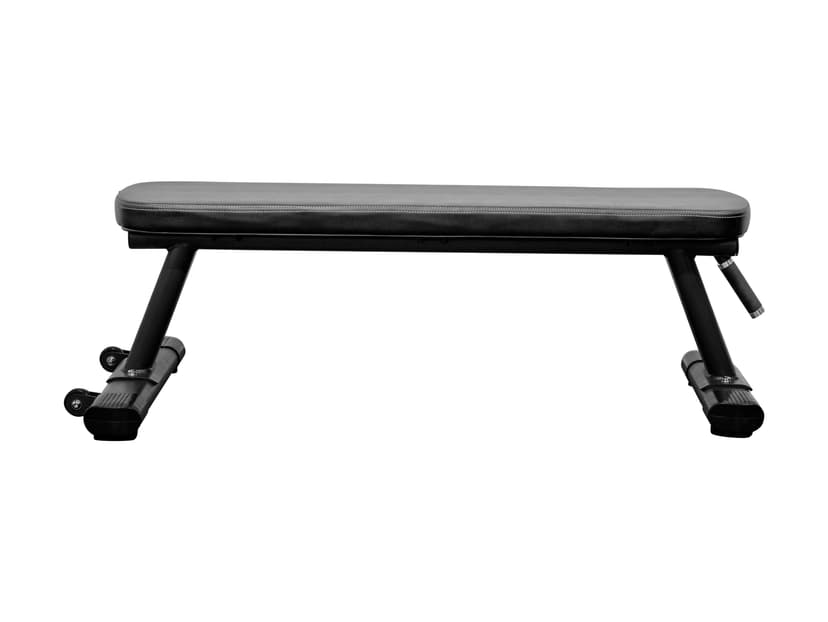
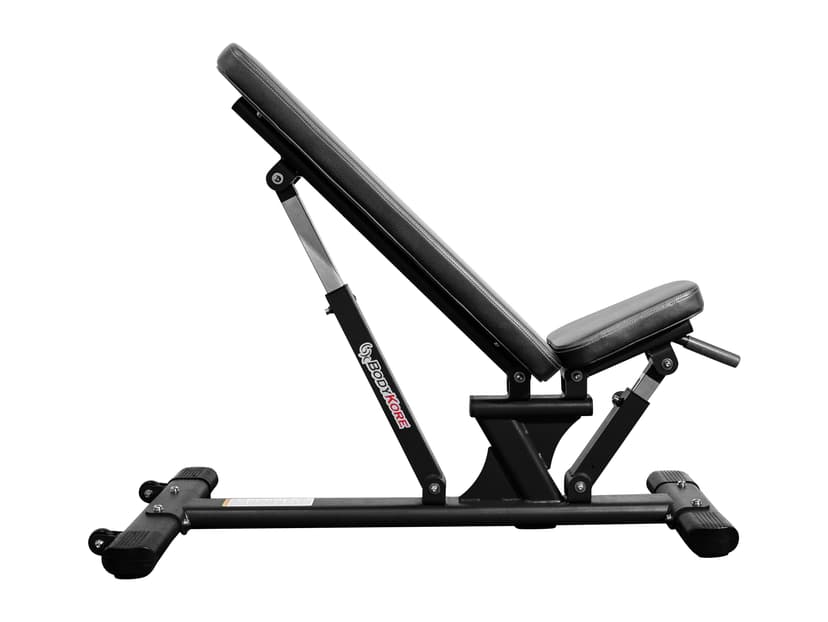
For dumbbell pressing and adjustable angle work, FID (flat/incline/decline) benches give a lifter the freedom to move through any pressing angle on the same bench. The CF2106 Adjustable Bench, G206 Adjustable Bench, G704 Commercial Adjustable Bench (3x3), and MX1169 Universal Bench all give multi-angle adjustability with commercial-grade construction. The MX1179 Universal FID Bench v2 is the heaviest-duty option, designed to pair with Universal Trainers for plate-loaded press variations. Standalone flat benches like the CF2101 Flat Bench and G201 Flat Bench round out the bench category for lifters who only press flat.
A bench is only as good as the rack you press in. Pair any of these with a squat rack or a Smith machine for safe heavy pressing without a spotter. The Smith machine deserves special mention for chest training: its guided bar path makes it possible to train to true failure on bench press without risking a missed rep, which is something a free weight setup can't deliver alone.
Floor space drives equipment selection in nearly every gym project. A serious chest training section can take up 200 to 300 sq ft if you spec a press, an incline press, a fly station, a cable crossover, and three Olympic benches. For boutique studios, hotel gyms, in-home setups, and apartment buildings, that's not realistic.
The GR640 MultiPress solves the space problem with a single station that adjusts through four angles: lower chest, mid chest, upper chest, and shoulder press. Members get the equivalent of a flat, incline, decline, and shoulder press machine in roughly the footprint of one. With a 220 lb stack (upgradable to 340 lb) and commercial 1,000 lb frame rating, it's a serious piece of strength equipment built for daily use.
The MTI4201 Multi-Gym Chest Press/Lat Pull Down goes further. It's a three-station unit covering chest press/lat pulldown, leg extension/curl, and an abdominal crunch station, with each station equipped with its own 220 lb weight stack. For a small commercial gym or a high-end home setup, the MTI4201 replaces three to four separate machines.
Not every chest exercise requires loaded resistance. Dips work the lower chest as well as any decline press, and they build the kind of triceps and front delt strength that makes pressing easier. The CF2110 Chin Dip Tower is a dedicated bodyweight station with parallel dip handles and chin-up bars, suited for both home and commercial use.
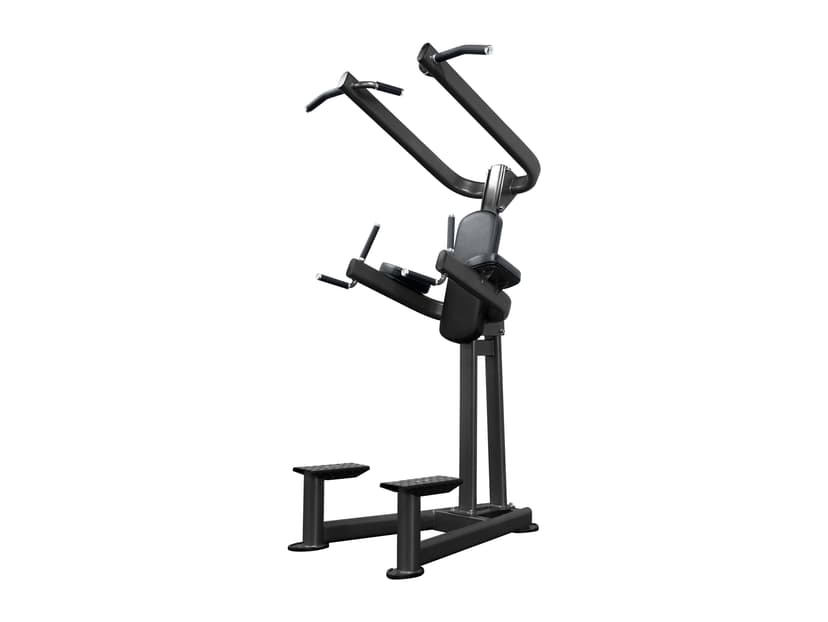
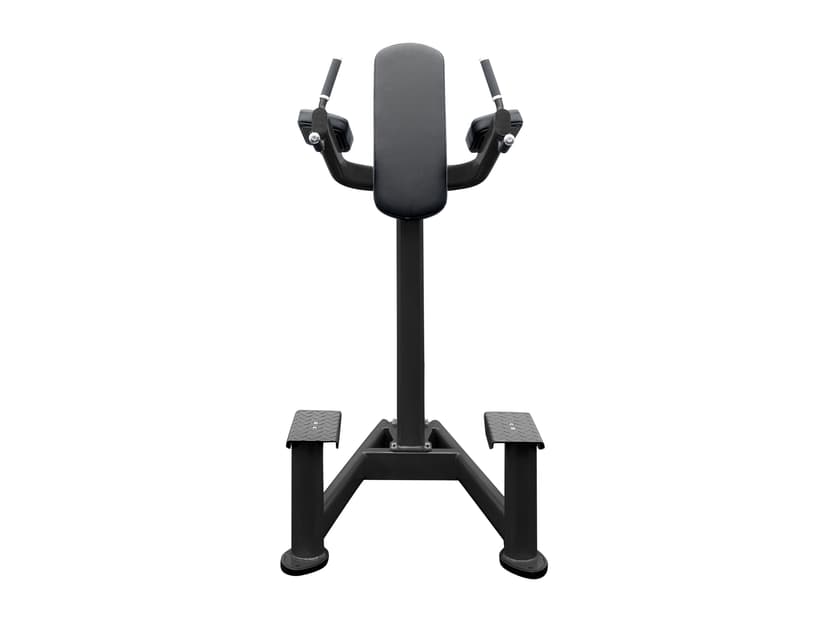
For lifters who can't yet hit full bodyweight dips and pull-ups, the GR636 Chin/Dip Assist uses a counterweight stack to offload some of the bodyweight, which means a member can train these movements through a full range of motion before they have the strength for unassisted reps. The CF2107 Vertical Knee Raise is a related station that combines dip, chin, and knee raise positions for a full upper body bodyweight setup.
Home gym buyers face a different equation than commercial buyers. Floor space is fixed, the budget has a ceiling, and one piece of equipment usually has to cover three or four training jobs. The right starting point depends on what kind of lifter lives in the house.
If the priority is heavy pressing on a budget, an Olympic flat bench paired with a squat rack covers flat, incline (with an adjustable bench), and decline barbell pressing without a dedicated machine for each. Add an adjustable bench like the CF2106 Adjustable Bench and a set of dumbbells and benches and a single rack covers most chest training needs.
If the priority is variety and full-body training in a small space, a functional trainer like the MX1161 Functional Trainer or the MX1162 Universal Trainer is hard to beat. A single Universal Trainer handles chest press, chest fly, crossover, lat pulldown, row, and squat work in roughly the footprint of a Smith machine. For lifters who don't want to load and unload plates, the cable system makes it fast to move between exercises.
If the priority is a dedicated chest machine that feels like a commercial gym press, the GR801 Plate Loaded Chest Press or the GR601 Selectorized Chest Press brings that experience home. Pick the GR801 if you already own Olympic plates, want a heavier ceiling than 340 lbs, prefer the direct feel of plate-loaded resistance, and don't mind loading plates between sets. Pick the GR601 if you want pin-loaded simplicity and a tidy stack.
BodyKore offers financing across the chest lineup, with monthly payments as low as $58 to $148 depending on the machine. That makes a commercial-grade home setup more accessible than the sticker prices suggest.
For commercial gym owners, the calculation flips. Equipment runs eight to fourteen hours a day, often under heavy load, and any machine that breaks down is a member experience problem before it's a repair bill. Build quality and uptime matter more than they do in any home gym scenario.
A complete commercial chest training section typically includes:
Pressing: Flat bench press, incline bench press, plate-loaded chest press (GR801), incline plate-loaded chest press (GR804), and at least one selectorized chest press (GR601 or GR621). Larger facilities add the GR805 Wide Chest Press for variety and a Smith machine for unspotted heavy pressing.
Isolation: A pec deck or pectoral fly station like the GR620 Pectoral Fly or the dual-purpose GR633 Pectoral Fly/Rear Delt. Most experienced lifters expect a pec deck on the floor.
Cable: A full-size G502 Cable Crossover anchors the cable section. Larger facilities also add functional trainers and the PC1801 Dual Cable Cross to handle peak floor traffic.
Bodyweight: A CF2110 Chin Dip Tower and a GR636 Chin/Dip Assist. The assist machine is often the most-used piece in this category because it bridges the gap for newer members who want to train dips and pull-ups but can't yet do them unassisted.
For smaller commercial spaces (boutique studios, hotel gyms, corporate fitness centres), the MTI4201 Multi-Gym Chest Press/Lat Pull Down and the GR640 MultiPress are smart picks because they replace three or four stations with one.
BodyKore also offers full gym solutions for commercial buyers, including layout consultation, financing, and white-glove install. For a new gym build or a major refresh, that turn-key path is faster than sourcing each piece individually and saves on the kind of integration headaches that come with multi-vendor builds.
Every BodyKore chest machine shares the same construction baseline. The frames are 11-gauge steel rated to hold over 1,000 lbs, finished with an electrostatic powder coat for adhesion and corrosion resistance. Pivot bearings are precision-cut, weight horns are nickel-plated, and the foam grips are urethane composite to handle daily commercial use without breaking down.
The warranty matches the build. BodyKore commercial machines carry a lifetime guarantee on the frame and five years on parts and upholstery, which is consistent with what you'd expect from a serious commercial brand. Shipping runs LTL freight from BodyKore's California warehouse, with typical lead times of 3 to 14 business days for in-stock items.
A chest training session never happens in isolation. Most lifters train chest alongside triceps and front delts on the same day, and many programs build chest, back, shoulders, and arms into a single upper body session. Round out the chest setup with back equipment for balanced development, shoulder machines for the deltoid work that complements pressing, and arm equipment for the triceps work that supports lockout strength on every press.
For full-body programming, pair the chest section with a leg press or squat rack for lower body, and a functional trainer for accessory work. A complete strength floor doesn't need to be expensive, but it does need to be balanced.
A plate-loaded chest press uses Olympic weight plates loaded onto the machine's arms. A selectorized (pin-loaded) chest press uses an integrated weight stack with a pin to select resistance. Plate-loaded machines hold more weight (BodyKore plate-loaded presses are rated over 1,000 lbs versus 220 to 340 lbs on a selectorized stack), feel more direct, and tend to cost less, though they require plates and plate storage. Selectorized machines are faster between sets and tidier on a high-traffic gym floor.
Yes. Every chest machine in the BodyKore lineup is built to commercial spec, with 11-gauge steel frames rated to hold over 1,000 lbs, electrostatic powder coat finishes, and precision pivot bearings. The same machine that ships to a commercial facility ships to a home gym customer.
Plate-loaded chest presses (GR801, GR804, GR805) are rated to hold over 1,000 lbs of total load. Selectorized chest presses (GR601, GR621, GR640) ship with a 220 lb weight stack, upgradable to 340 lbs.
For balanced chest development, yes. A chest press hits the pec along with the front delts and triceps. A pec deck or pectoral fly isolates the chest by removing those secondary movers, which produces a deeper contraction in the inner chest. Most serious lifters train both, and most commercial gyms stock both.
For lifters with limited space, the GR640 MultiPress is the strongest single-piece pick because it adjusts through four angles (lower chest, mid chest, upper chest, shoulder press) on one frame. For lifters who want more than just chest training, the MX1161FX Dynamic Trainer or the MX1162 Universal Trainer handles chest press, fly, crossover, and another hundred-plus exercises from one footprint.
Yes. BodyKore offers monthly installment options on every chest machine in the catalogue, with payments starting as low as $58 per month depending on the model and term. Financing details are available on each product page.
BodyKore ships LTL freight from a California warehouse. Typical transit times run 3 to 14 business days for in-stock items. Items are palletised and arrive boxed or crated, unassembled, with installation videos available on the BodyKore site.zzzz