$5,999.00
Financing options...
$3,649.00
Financing options...
Note: Limited Availability - Inquire to Order.
Squats get the glory. Hip work gets skipped.
It's a strange pattern, given that the gluteus maximus is the single largest muscle in the human body by volume and is responsible for more athletic output than any other structure in the lower extremity. Sprint speed, vertical jump, hip extension strength under load: all of it runs through the glutes. A 2015 Journal of Applied Biomechanics study found the barbell hip thrust produced 2 to 3 times higher gluteus maximus activation compared to the back squat at comparable loads. Squats build quads. Hip extension movements build glutes. Those are different training stimuli, and most programs weight them wrong.
The hip musculature also extends well beyond the gluteus maximus. Gluteus medius and minimus control pelvic stability during every single-leg movement (walking, running, cutting, landing). A 2022 study in the Journal of Biomechanics found the hip abduction machine produced the highest gluteus medius activation ratio relative to tensor fascia latae of any exercise tested, outperforming both clamshells and side-lying cable abduction. Rotary hip work loads the internal and external rotators that keep the femur tracking correctly through the knee joint.
Put differently: a gym that stocks 8 leg press variants but one hip machine is missing most of what the hip complex actually needs.
Our hips category covers every movement pattern the glutes require (hip extension under load, abduction, adduction, rotation, plus isolated rear kickback) so a lifter or facility can build a complete hip section rather than hoping compound work covers the gaps.
What makes hip training different from leg training is how many separate movement planes the hip joint operates across. A leg press is one plane. The hip operates in at least four. These six machines map to those planes.
Selectorized Hip Thrust (GR624): Arguably the most direct gluteus maximus builder in the lineup. The pivoting back pad on the GR624, replicates the horizontal loading vector of a barbell hip thrust, placing maximum resistance at full hip extension where the gluteus maximus generates peak force, without the setup time, bar bruising, or lateral instability of a loaded barbell. A swinging lever arm makes entry and exit easy, which commercial gyms will appreciate across hundreds of daily sessions. Pin-loaded 220lb stack, upgradeable to 340lb, accessible from the seated position between sets.
Plate Loaded Hip Thrust / Glute Builder (FL1844): For lifters who want more than a selectorized stack allows, the FL1844 accepts up to 360lbs across its four-plate-per-side loading posts. An upper body pivot bench provides full spinal support through the movement, a padded waist belt secures hip engagement without restricting range of motion, and dual safety catches on both sides allow solo training at maximal loads without a spotter. The oversized angled foot platform fits users across a wide height range. Serious strength athletes and competitive bodybuilders working toward true maximum glute output will hit the ceiling of a selectorized machine; the FL1844 does not have one.
CF8131 Glute Press: Patented. Nothing else on the market combines a leg press sled with a full hip thrust machine in one station. On the CF8131, the hydraulic bench adjusts between a leg press angle and a hip thrust position, so a user moves from pressing weight upward to driving hips forward against the same resistance without changing machines. A secure seat belt provides hip engagement for the thrust movement, the dual-angle footplate adjusts for varied targeting, plus smooth rollers along the guide rods make the transition between movements seamless. For commercial floors with limited space, a station that does two things well is worth twice the floor area it occupies.
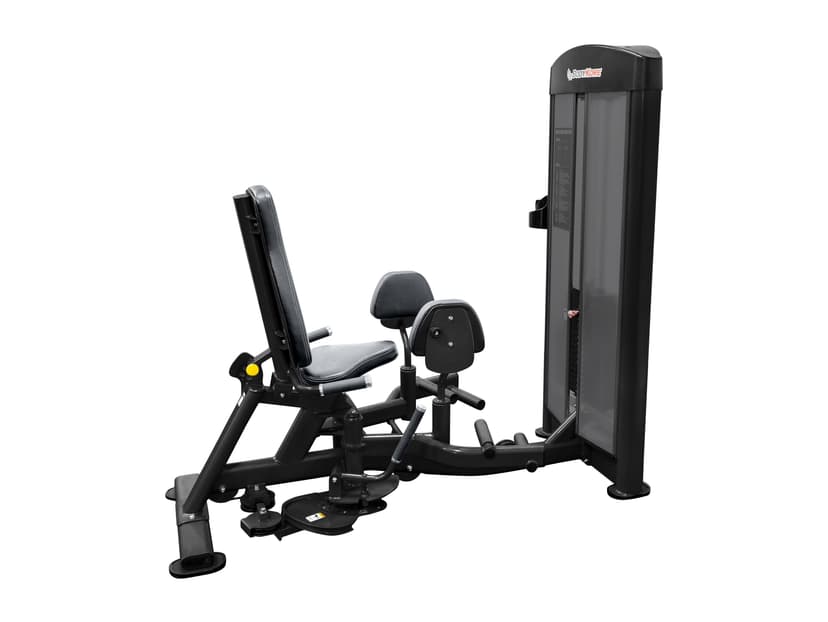
Hip Adductor/Abductor (GR632): Two movement patterns, one seat, no cable change required. The GR632 handles both hip abduction and adduction with six range-of-motion adjustments, swiveling knee pads through the full arc, plus a 220lb stack (upgradeable to 340lb) that makes sustained progressive overload achievable over months of training. Abduction mode trains gluteus medius and minimus: the muscles responsible for hip width and pelvic stability. Adduction mode loads the adductor magnus, longus, brevis, plus the gracilis (inner thigh muscles that compound leg work compresses under load but never truly isolates).
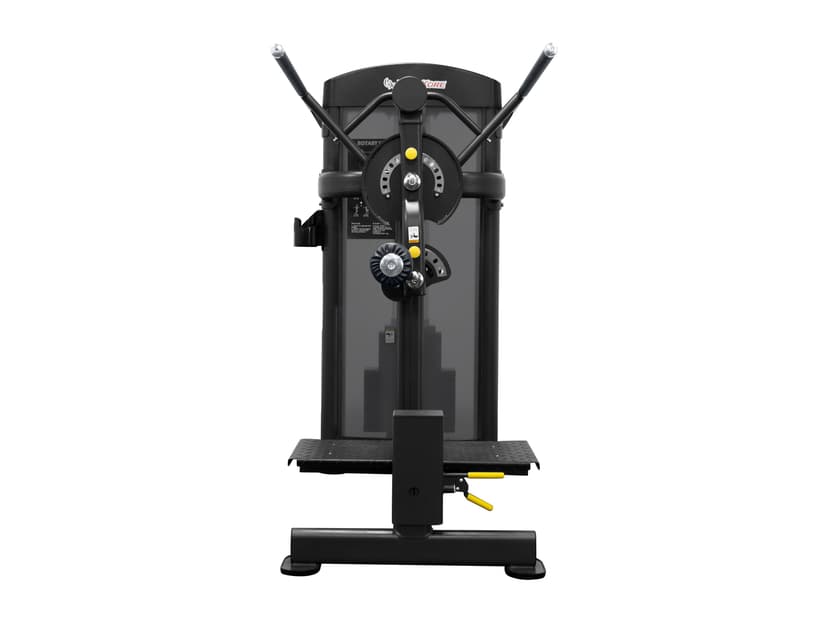
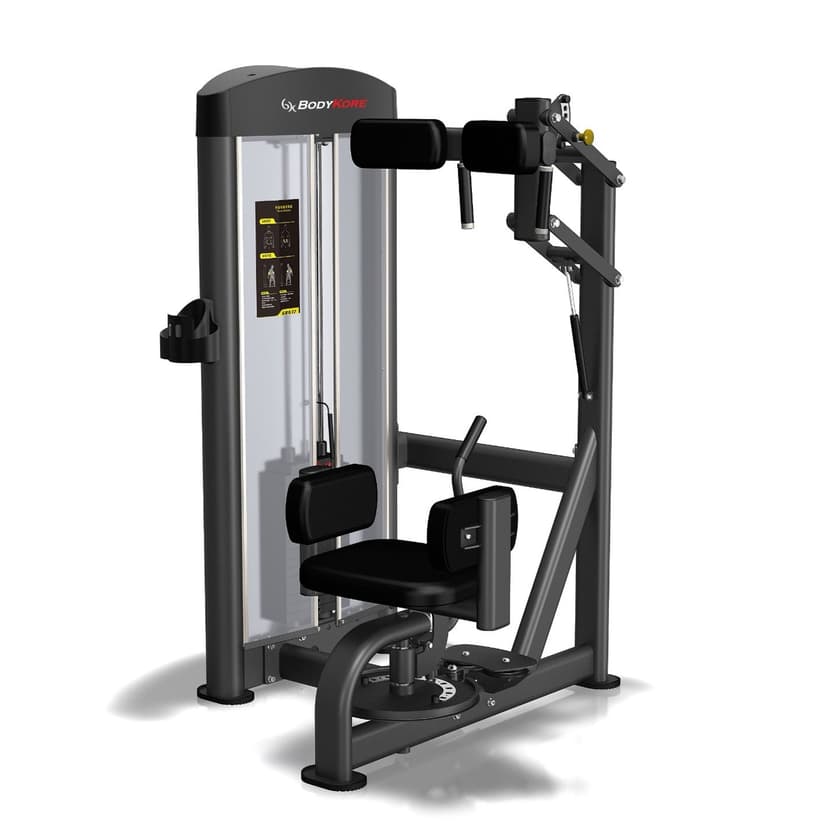
Selectorized Rotary Hip (GR635): Hip rotation is the movement plane almost every gym skips entirely, and it's where the mechanical precursors to knee drift, IT band overuse, plus hip impingement tend to accumulate quietly in athletes who do plenty of extension but zero rotation work. The GR635 targets internal and external hip rotators through a converging and diverging motion that follows the natural rotation path of the femur in the acetabulum. Independent arm movement allows unilateral loading where one side is weaker than the other, which is common and rarely addressed. Stack: 220lb, upgradeable to 340lb.
Rear Kick Machines (GR618 and GR810): Two options depending on training preference. The GR618 Selectorized Rear Kick is a single-leg extension machine that isolates each gluteus maximus unilaterally (one leg drives back against up to 220lbs while the other rests), making it ideal for addressing strength asymmetries and for hypertrophy work at higher rep ranges. Stainless steel guide rods resist rust, a 5-position pad adjusts for user height, plus the 1,000lb-rated frame handles commercial volume without frame flex. The GR810 Plate Loaded Rear Kick from the Stacked Series is the heavy version with unlimited plate-loaded capacity for strength-sport athletes who've outgrown a 220lb selectorized ceiling.
Every machine above maps to a real anatomical need. Here is the breakdown that most equipment pages skip.
Gluteus maximus: The hip extensor. Generates peak force at full hip extension, which is why it responds better to hip thrusts than squats, since the squat reaches peak loading at the bottom where the glute is in a poor force-production position. EMG research consistently shows peak glute activation during the hip thrust is 172% of maximal voluntary isometric contraction. The GR624, FL1844, CF8131, GR618, and GR810 all train this muscle through extension.
Gluteus medius and minimus: Pelvic drop on the unsupported side during single-leg movement is the signature of weak gluteus medius. These two muscles attach from the ilium to the greater trochanter and fire during every step of gait. Weakness also produces knee valgus during squats, plus IT band strain during running. Abduction machine work on the GR632 is the most direct loading method for both.
Hip adductors: Five muscles on the inner thigh, ranging from the thin gracilis to the thick adductor magnus that also functions as a hip extensor. Adductors are compressed under load during wide-stance squats but never isolated. The adduction side of the GR632 loads them directly through their full range of motion.
Hip internal and external rotators: A group of 6 deep muscles (piriformis, obturators, gemelli, quadratus femoris) plus contributions from the glutes. These produce and control femoral rotation during compound lifts. Loaded rotation on the GR635 is the only way to train them with progressive resistance; no barbell exercise replicates the movement pattern.
Space is the constraint most home gym builders face, so the first question is which hip movement pattern matters most for their goals.
For glute hypertrophy as the primary goal, the GR624 is the most space-efficient selectorized option. A selectorized stack means no plates to store nearby, weight adjustments take seconds between sets, plus the footprint is smaller than the plate-loaded alternatives. Lifters who have already built a decent plate collection and want a second hip thrust option with unlimited capacity should look at the FL1844, which runs on Olympic plates already in the gym.
Hip abduction work at home is genuinely underserved by free weights. Side-lying cable abduction requires a cable setup. Banded work provides tension only at one point in the range. The GR632 gives constant resistance across the full arc, which produces more consistent gluteus medius activation per set than band or cable alternatives. Worth considering for any home gym where the builder runs, plays field sports, or has knee tracking issues that trace back to weak hip stabilizers.
The MX1162 Universal Trainer handles cable-based hip work including pull-throughs, cable kickbacks, hip abduction from the low pulley, plus standing hip flexion, all through one dual pulley system. For a home gym under 150 square feet, the Universal Trainer plus the GR624 covers hip extension, selectorized glute isolation, cable-based stabilizer work, plus unilateral hip flexion in two pieces of equipment.
Worth noting for apartment and basement gym builders: selectorized machines produce less noise per rep than plate-loaded ones, since there are no impact sounds from plate movement. The GR624, GR632, GR635, and GR618 all run quieter than loading the FL1844 with four 45lb plates per side.
A complete commercial hip section is four stations minimum. Not three.
Most facilities get this wrong. They stock one hip thrust machine, one adductor/abductor, then assume the squat rack covers everything else. That leaves hip rotation and unilateral isolation untrained, which matters because members with hip instability tend to regress on compound lifts before anyone notices why.
The four-station floor plan that covers the full hip complex: the GR624 for selectorized hip extension, the GR632 for abduction and adduction, the GR635 for loaded hip rotation, plus either the GR618 or GR810 for unilateral rear kick work. Each station trains a distinct movement pattern that the others do not replicate. Placed together, they form a hip zone that guides members through complete hip development rather than just variations on a single theme.
The CF8131 Glute Press is worth adding to facilities with members who are serious about glute development. The combination of leg press and hip thrust in one patented machine does something no other station can do: sequential loading of the hip in two distinctly different positions without standing up between exercises. Athletic performance centers, sports rehabilitation facilities, plus high-end boutique gyms have responded well to it for exactly this reason.
For hospitality fitness centers and corporate wellness rooms with limited floor area, the GR632 adductor/abductor is often the most practical single hip machine because it covers two movement patterns from one seat. BodyKore offers full hospitality fitness equipment packages with custom upholstery plus coordinated powder coating for branded property spaces.
Pre-orders are accepted on out-of-stock items, and financing is available for multi-machine commercial orders.
Trainers argue about this more than the data warrants. The practical answer is more straightforward.
Barbell hip thrusts produce slightly higher peak gluteus maximus activation in EMG studies, approximately 18% higher peak gluteus maximus output in concentric phase compared to machine equivalents. The reason is stabilizer demand: the barbell requires core and hip control that a machine does not, which adds total muscle recruitment.
Machines produce more consistent load through the movement arc, since the bar path is fixed and the resistance does not shift with foot position or bar roll. For hypertrophy-focused training, where total mechanical tension across the full range matters more than peak force, machines produce comparable results to free weights with less technical input per session. Members who lack barbell hip thrust proficiency produce better glute activation on a machine than they do with a poorly executed barbell version.
The more useful framing for commercial facilities: barbell hip thrusts work well for members who already know how to do them. Machines work well for everyone, require zero coaching for first-time users, plus keep setup time under 30 seconds between members. A full squat cage handles barbell hip thrusts for members who prefer free weight training; the GR624 and FL1844 handle machine work for the rest.
Hip training produces the best results when it is sequenced with the compound lower body work that surrounds it.
Placed after heavy compound lifting (squats, leg presses, Romanian deadlifts), hip machines function as finishers that accumulate volume at lighter loads on pre-fatigued glutes. Placed before compound work, they function as activation tools that pre-load the gluteus maximus and medius before the bigger patterns. The order is a programming choice; the point is that hip machines belong in a planned relationship to the rest of the lower body work, not as standalone afterthoughts at the end of a session.
For posterior chain programming, the hip machines in this collection pair with the lower back category to build the full posterior chain from the lumbar extensors through the glutes. Back extensions and hip thrusts train adjacent structures that reinforce each other: stronger erectors support hip extension, and stronger glutes stabilize the pelvis during loaded spinal work.
The glute machines category covers additional glute-specific equipment beyond what is listed here, including further plate-loaded glute options. The leg machines collection covers the quad-dominant work that rounds out a complete lower body program.
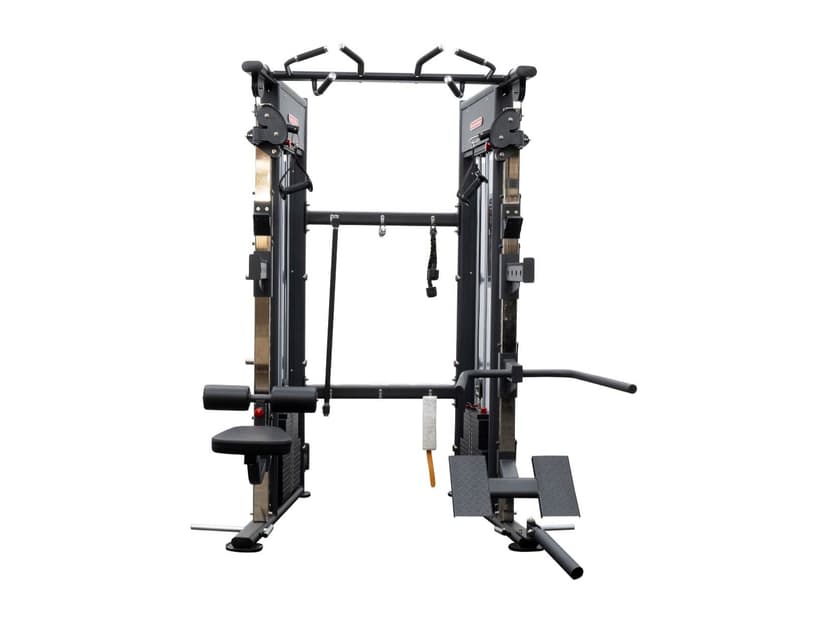
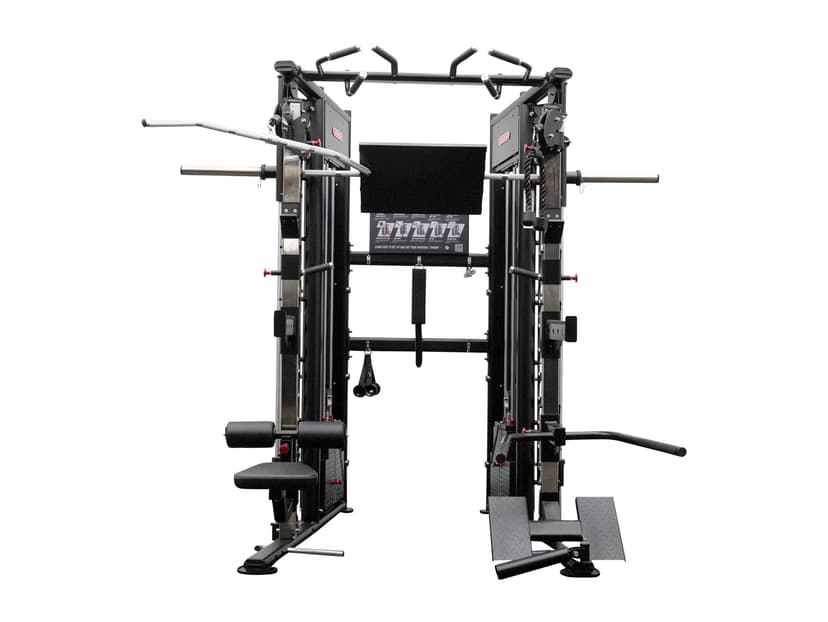
Cable-based hip work through the MX1161 Functional Trainer or G502 Cable Crossover complements machine work with standing, unilateral, multi-plane, plus resisted hip flexion patterns that selectorized machines do not replicate, including cable pull-throughs, standing hip flexion, single-leg cable deadlifts, plus lateral band walks with cable tension.
Hip machines take more daily sessions than almost any other station on a commercial floor, because glute training has grown significantly in popularity over the past decade. The GR624 alone in a busy gym might see 40 to 60 sessions per day during peak hours. The materials spec has to match that.
Frame construction: 11-gauge steel tubing with electrostatic powder coat across the Isolation Series. Frame flex under loaded hip thrusts creates a wobbly movement arc that undermines bar path consistency. The 1,000lb-rated frame rating on machines like the GR618 reflects this: a 200lb user driving against 150lb of resistance generates force multiples above both figures through the frame joints.
Pivot bearings on the GR624: The back pad pivots on every single rep. Over 50 sessions a day, that is thousands of pivot cycles weekly. Oversized bearing points distribute load across a larger surface area, slowing the wear rate relative to the movement volume.
Seat belts and padding: The FL1844's padded waist belt is the contact point between the user and the weight. It needs to hold its shape under 360lbs of load per session without the foam compressing permanently. High-density foam under a durable vinyl cover is the commercial spec.
No-cable-change design on the GR632: Switching between adduction and abduction on a machine with cable changes requires the user to stop the set, reconfigure the cable routing, then restart. The GR632's no-cable-change design keeps both movement modes accessible from the same seat without interrupting training. A detail worth calling out because competitors skip it.
Hip machines ship out of our California warehouse, palletized, via LTL freight. Standard transit runs between 3 and 14 days depending on destination. Local pickup is available by appointment at any warehouse location, plus our showroom and dealer network spans nationwide.
Pre-orders are accepted on out-of-stock items so commercial operators planning a facility opening can lock in pricing. Cancellations are accepted any time before shipment; once freight is booked, LTL charges apply.
Depends on how far the training goes. For most users, the GR624 Selectorized Hip Thrust gives the cleanest glute stimulus with the simplest setup. Advanced lifters who want to load beyond a 220lb stack should look at the FL1844, which handles 360lbs of plate loading with full spinal support. For a machine that also handles leg pressing in the same footprint, the CF8131 Glute Press is the only option on the market.
The abduction movement trains gluteus medius and minimus, the outer glutes responsible for hip width, pelvic stability during walking, plus knee alignment during single-leg movements. The adduction movement loads the five adductor muscles of the inner thigh that compound leg work rarely isolates. The GR632 handles both from one seat without cable changes.
Squats do not train loaded rotation. The hip rotates internally and externally during the squat descent, but resistance acts vertically, perpendicular to the rotation direction. The GR635 applies resistance directly in the rotation plane, which is the only way to progressively overload the piriformis, obturators, gemelli, plus quadratus femoris through their actual function.
The GR618 Selectorized Rear Kick suits most home gym users plus commercial members who prefer quick weight adjustments between sets. The GR810 Plate Loaded Rear Kick suits strength athletes who have outgrown a 220lb ceiling and want unlimited progressive capacity. Both train the same movement; the difference is purely in loading format.
Yes. Barbell hip thrusts on a full squat cage with a flat bench cover the hip extension pattern. Cable pull-throughs from a low pulley handle hip extension with constant tension. Dedicated machines accelerate development specifically because they reduce setup time, provide guided form, plus allow more consistent progressive overload per session than freeweight alternatives.
Lifetime on machine frames, 5 years on parts, with product-level coverage detailed on each listing.
The glutes are the largest muscles in the body. Training them with one or two machines designed for hip extension while ignoring abduction, rotation, plus unilateral isolation is leaving real development on the table.
Browse the full BodyKore hips lineup above to compare selectorized hip thrust stations, the plate-loaded FL1844, the patented CF8131 Glute Press, the dual-function GR632 adductor/abductor, the GR635 rotary hip, plus both rear kick options. Whether you're building a home setup that covers every hip movement in limited square footage, or outfitting a commercial floor with a full four-station hip zone, our team can help spec the right combination. Financing keeps commercial-grade hip equipment accessible at the home gym level, plus our nationwide dealer network means there's likely a showroom within range.
Train the biggest muscle in the body like it actually is the biggest muscle in the body.