The Quick Rundown
Selectorized means a weight stack and a pin: a pin changes the resistance in seconds, which keeps the station safe and approachable for beginners, with no loose plates to trip over. It is the default for high-traffic, mixed-ability rooms.
Plate-loaded means lever arms and Olympic plates: you get higher resistance ceilings and a free-weight feel, with natural strength curves, traded against slower weight changes and plates to manage.
Each wins on different ground: selectorized on speed and user safety, plate-loaded on peak load and a lighter maintenance burden.
Cost runs in opposite directions: selectorized costs more upfront because every station carries its own stack, whereas plate-loaded costs less per station yet needs a plate inventory and more floor labor.
Maintenance favors plate-loaded: with no weight stack and no cable-and-pulley system, far less can wear out and need repair.
Most facilities need both: a common commercial rule of thumb is roughly 60% selectorized and 30% plate-loaded, with the last 10% in free weights, then tuned to your members.
Every strength-equipment purchase eventually hits the same decision: selectorized or plate-loaded? The two categories cover the same exercises and build the same muscles, yet they train differently, cost differently, age differently, and suit different rooms. Buy on price alone and you can end up with a floor that frustrates your members and clutters your space, or runs up your maintenance costs. Buy with the full picture in view, and you build a strength floor that fits how your facility gets used.
This guide weighs selectorized against plate-loaded equipment on every dimension a buyer cares about: how each feels to train on, loading capacity, safety, footprint, cost, maintenance, and member throughput. After that comes the part most articles skip, which is matching the equipment to the room, because for most facilities the honest answer is a blend of both.
What Each Type Actually Is
The differences in feel and cost all trace back to how each machine creates resistance, so it pays to be precise about the mechanics before weighing one against the other.
Selectorized machines
A selectorized machine has an enclosed weight stack built into the frame. The user slides a pin into the stack to pick a load, then trains. Behind the panel, a run of cables and pulleys routes the resistance, while cams shape how heavy the movement feels through its range. Many cable-based units use a 2:1 ratio, where 100 pounds on the stack delivers about 50 pounds at the handle, and most fixed-path machines run 1:1. First sold in the 1970s, selectorized stations now make up close to 45% of the resistance machines in large commercial gyms. In one 2023 survey, roughly 70% of first-time members rated them the safest, easiest equipment to start on.
Plate-loaded machines
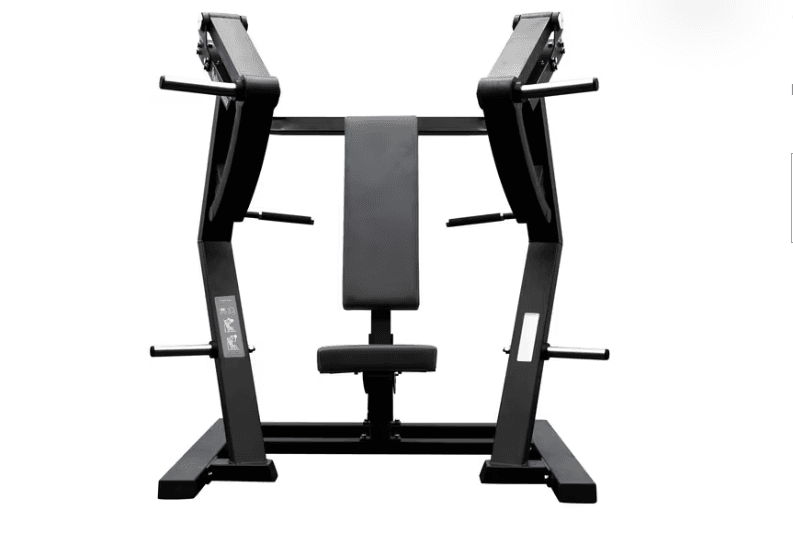
A plate-loaded machine, sometimes called lever-style equipment, has no stack. The user hangs standard or Olympic plates on weight horns, and lever arms translate that load into resistance along an engineered movement path. Because the weight is set plate by plate, the ceiling climbs as high as the frame allows. A commercial plate-loaded leg press can often carry more than 800 pounds per side, well past what any stack reaches. Many models add independent left and right arms for unilateral work, plus band pegs for accommodating resistance.
How They Feel to Train On
Most comparisons stop at convenience. The more interesting split is biomechanical, and it shapes who gravitates to each type. How a machine builds resistance decides whether a movement feels smooth and controlled or heavy and free.
Selectorized machines run on a fixed, guided path. That predictability is the whole point. The movement stays controlled and the load stays consistent, so a newcomer cannot easily reach a position that hurts them. It also makes drop sets effortless, since pulling and resetting the pin takes a second, which is why these stations are a favorite for hypertrophy work taken to failure.
Plate-loaded machines feel closer to free weights. Lever arms can converge or diverge through the rep, which more closely matches the body’s natural strength curve, and the load shifts and settles the way a barbell does, rather than gliding on a cable. Independent arms force each side to work on its own, which exposes and corrects strength imbalances. For an experienced lifter chasing progressive overload, that open-ended loading is the appeal. The tradeoff is that the same freedom gives a solo beginner less protection.
The Head-to-Head Comparison
Across the dimensions a buyer actually weighs, both categories trade wins. Neither is better in the abstract; each is better at specific jobs.
Factor | Selectorized | Plate-loaded |
Weight change | Seconds, with a pin | Slower; load and unload plates |
Loading ceiling | Capped (often ~150-250 lb upper body, ~300 lb leg) | Very high (800+ lb per side on a leg press) |
Ease for beginners | High; intuitive and guided | Moderate; more setup and skill |
Safety when unsupervised | High; enclosed stack, controlled path | Moderate; loose plates and heavier loads |
Feel | Smooth and machine-like | Free-weight-like, natural strength curve |
Throughput at peak | Fast turnover between users | Slower; users stay longer |
Footprint and clutter | Self-contained, tidy | Needs nearby plate storage |
Upfront cost | Higher (a stack on every machine) | Lower per station |
Maintenance | More (cables, pulleys, bearings) | Less (no stack or cables) |
Best for | Mixed-ability, high-traffic rooms | Serious lifters and performance training |
Two rows repay a closer look. Throughput matters more than it sounds. Because plate-loaded users have to load and unload plates, and often walk them back and forth, they sit on a station longer, which builds queues at peak hours in a busy gym. Selectorized turnover keeps users cycling through. Clutter is the quieter cost of plate-loaded gear, since loose plates left on the floor are both a tripping hazard and a steady re-racking chore for your staff.
Cost and Total Cost of Ownership
Sticker price tells only part of the story. A full commercial strength line of 12 to 18 machines typically runs $40,000 to $120,000, and the split between the two types pushes that figure in opposite directions over the years that follow.
Selectorized equipment costs more upfront for a plain reason: every machine carries its own dedicated weight stack, and you pay for that steel on each station. It also carries the heavier maintenance load, because cables stretch and fray over time, and the pulleys and bearings behind the panel need periodic service. When you buy selectorized, treat the warranty on cables and pulleys as a real line item, and look for at least 3 years of coverage so a worn cable does not become a surprise repair bill.
Plate-loaded equipment is cheaper per station and cheaper still to maintain, since it has no stack and no cable-and-pulley system to wear out. The offsetting costs are a plate inventory, because the machines need plates to work at all, and the soft cost of floor labor and space for re-racking and storage. Net it out and plate-loaded tends to win on total cost of ownership for a strength-focused facility, while selectorized earns its premium in a high-traffic room where speed and low injury risk protect the member experience.
Which Is Right for Your Facility
The right answer depends more on your members than on the machines. Here is how the decision tends to break down by facility type.
Commercial gyms and big-box clubs
Lead with selectorized. A membership of every age and ability needs equipment almost anyone can use safely and quickly, and fast turnover keeps machines free at peak. Then add a focused set of plate-loaded stations, especially lower-body presses and rows, to serve your stronger lifters and give the floor credibility with the serious crowd.
Unstaffed amenity gyms
In an unstaffed hotel or corporate fitness room, go almost entirely selectorized, or use functional trainers. These rooms serve guests and employees with no instruction on hand, so the enclosed stack and controlled motion, with no loose plates to manage, are exactly what the setting calls for. Plate-loaded gear adds clutter and injury risk that an unsupervised amenity cannot police.
Performance and athletic facilities
Lead with plate-loaded. When the room serves athletes and competitive lifters, the high loading ceiling and free-weight feel are the point, along with unilateral training, and users accept the slower weight changes as part of serious work. Selectorized stations still earn a place for accessory work and the occasional drop set.
Personal training studios and rehab
Favor selectorized and guided motion. A coach is present, yet clients are often beginners or returning from injury, and the controlled path and quick load changes keep sessions safe and efficient. A few plate-loaded pieces then support clients who progress toward heavier, free-weight-style training.
Home and garage gyms
Plate-loaded usually makes more sense here. A single user on a budget gains from the lower price and minimal upkeep, plus the chance to reuse the plates already bought for the barbell, and throughput is irrelevant with one lifter. A selectorized unit or functional trainer becomes the upgrade for anyone who prizes the convenience of a stack.
The blended answer most facilities land on
For all but the most specialized rooms, the real question is what ratio to buy them in. A widely used commercial starting point is roughly 60% selectorized and 30% plate-loaded, with the last 10% in free weights, then nudged toward selectorized for a more general membership or toward plate-loaded for a stronger, more athletic one. Sourcing both categories from one coordinated line is worth doing where you can, since it keeps parts and service simple and the floor visually consistent, rather than a patchwork of mismatched machines.
What to Look for When You Buy
Once the ratio is set, a short spec checklist separates equipment that lasts from equipment that disappoints.
Selectorized buying checklist
Weight-stack range that fits your users: at least 200 lb for general stations, and 300 lb for leg press and chest press serving stronger lifters.
Smooth progression, with 10 lb increments and add-on weights for finer jumps.
Quality cables and pulleys: aluminum pulleys and sealed bearings cut friction and last longer, so confirm at least a 3-year warranty on these wear parts.
The right resistance ratio for the application, since functional trainers often run 2:1.
Plate-loaded buying checklist
A load rating and a frame that comfortably exceed your strongest users’ needs, with margin for progression.
Enough weight horns to hold the plates a heavy movement requires, plus convenient onboard plate storage.
Independent arms where unilateral training matters, and band pegs if you want accommodating resistance.
A footprint and plate-storage plan that keeps the surrounding floor clear and safe.
Putting It All Together
Selectorized and plate-loaded equipment work as specialists rather than rivals. Selectorized is built for speed and safety, with almost no learning curve, which makes it the core of any room serving a broad, mixed-ability crowd without much supervision. Plate-loaded is built for heavy load and durability, with a free-weight feel, which makes it the pick for serious lifters and the cheaper long-run option on a strength-focused floor.
Start from your members and your staffing rather than the brochure. Work out how much of your floor needs to be fast and forgiving against how much should run heavy and free, set a ratio to match, then buy both types from one coordinated line so the room works as a single system. Do that, and the selectorized-versus-plate-loaded choice turns into something simpler: a strength floor your members actually use.
Frequently Asked Questions
Is selectorized or plate-loaded better for a commercial gym?
For most commercial gyms, selectorized should be the larger share, because it is fast and safe for a mixed membership and keeps machines turning over at peak. Add plate-loaded stations, particularly lower-body presses, to serve stronger lifters. A common starting mix is roughly 60% selectorized and 30% plate-loaded, with the last 10% in free weights.
Which is cheaper, selectorized or plate-loaded?
Plate-loaded is cheaper per station upfront, because there is no weight stack to pay for on each machine, and it is cheaper to maintain since it has no cables or pulleys to wear out. Selectorized costs more at purchase and over its life, though it earns that premium through speed and low injury risk. A full commercial line of 12 to 18 machines typically runs $40,000 to $120,000.
Can you build more muscle on one type than the other?
No. Both build muscle and strength well; what differs is how they get you there. Selectorized makes drop sets and high-volume hypertrophy work easy, while plate-loaded offers a higher loading ceiling and a free-weight feel for progressive overload. The better choice depends on the lifter and the goal rather than on one type being superior.
Why does plate-loaded feel more like free weights?
Plate-loaded machines use lever arms in place of cables and pulleys, so the load shifts and settles the way a barbell does, and the engineered path can follow the body’s natural strength curve. Independent arms also make each side work on its own, much like dumbbell training. Selectorized machines deliver a smoother, more consistent resistance by comparison.
Do I really need both types?
Most facilities do. Each type is better at different things, so a blend covers more members and more goals than either alone. The exceptions are specialized rooms: an unstaffed hotel or corporate gym can run almost entirely selectorized, while a dedicated performance facility can lead heavily with plate-loaded.
Trending Now
25 Best Functional Trainer Exercises for a Full-Body Workout
Functional Trainer Leg Exercises: The Complete Guide
Beginner Cable Machine Workout Plan: 8 Weeks
Newsletter
Enter your email and be the first to get the latest blog posts, news, product launches and more from BodyKore.
Stay in the Know
Enter your email and be the first to get the latest blog posts, news, product launches and more from BodyKore.