$3,599.00
Financing options...
Note: Limited Availability - Inquire to Order.
$3,649.00
Financing options...
Note: Limited Availability - Inquire to Order.
Floor crunches are not a progression model. A lifter can do 200 bodyweight crunches a day and still be working at the same intensity they were on day one, because there is no way to add load systematically. Increasing reps past a certain point builds endurance at low resistance, not strength at progressive resistance. The rectus abdominis, obliques, and deep transverse abdominis respond to progressive overload the same way any other muscle group does: you have to increase the challenge over time.
That's where dedicated ab equipment changes the outcome. A selectorized crunch machine starts at a weight the user can control with perfect form, then moves up 10 pounds at a time. A rotary torso station isolates the obliques through resistance that bodyweight twists cannot match. A plate-loaded ab bench takes the basic decline crunch and turns it into a loaded compound movement.
Our abdominal machines collection is built around that principle. Every piece in this category adds resistance to core training, so lifters can actually progress rather than just accumulate more reps of the same movement.
The lineup covers six distinct movement patterns across selectorized, plate-loaded, and bodyweight-assisted designs. Each one fills a gap in the core training spectrum that the others don't cover.
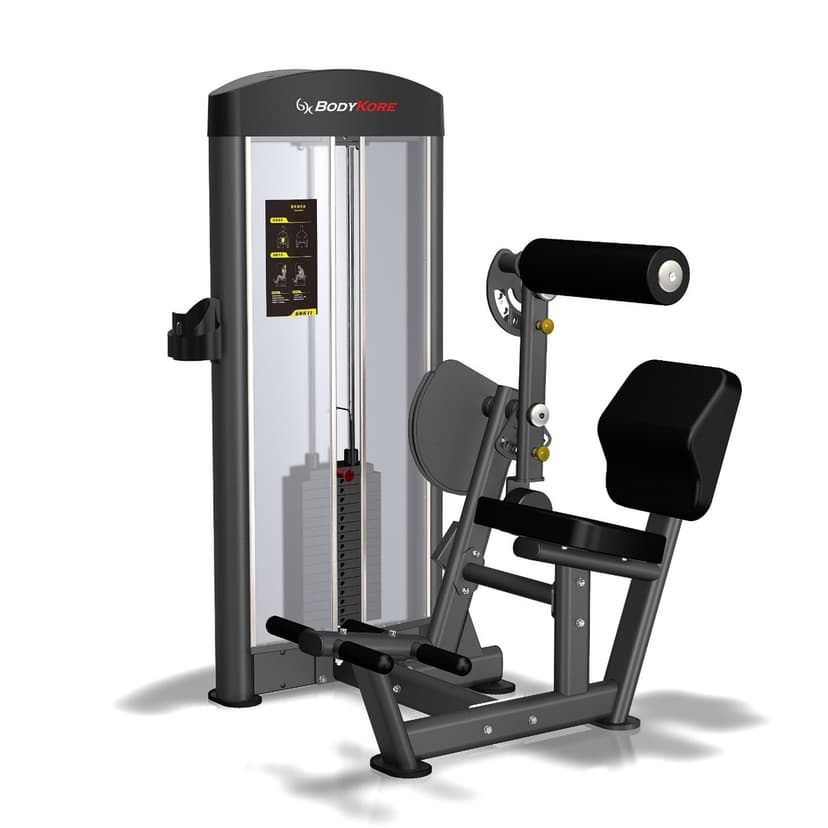
GR611 Selectorized Abdominal Crunch: The GR611 is a seated, pin-loaded crunch machine with a 220lb weight stack (upgradeable to 340lb). The movement mimics the mechanics of a cable crunch but from a stable seated position, driving the upper body forward against resistance while the lower body is anchored. Six adjustable starting positions fit users from around 5'0" to 6'5" without putting the spine in a compromised position between reps. For commercial facilities, the selectorized stack means members change weight in seconds, keeping turnover fast during peak hours.
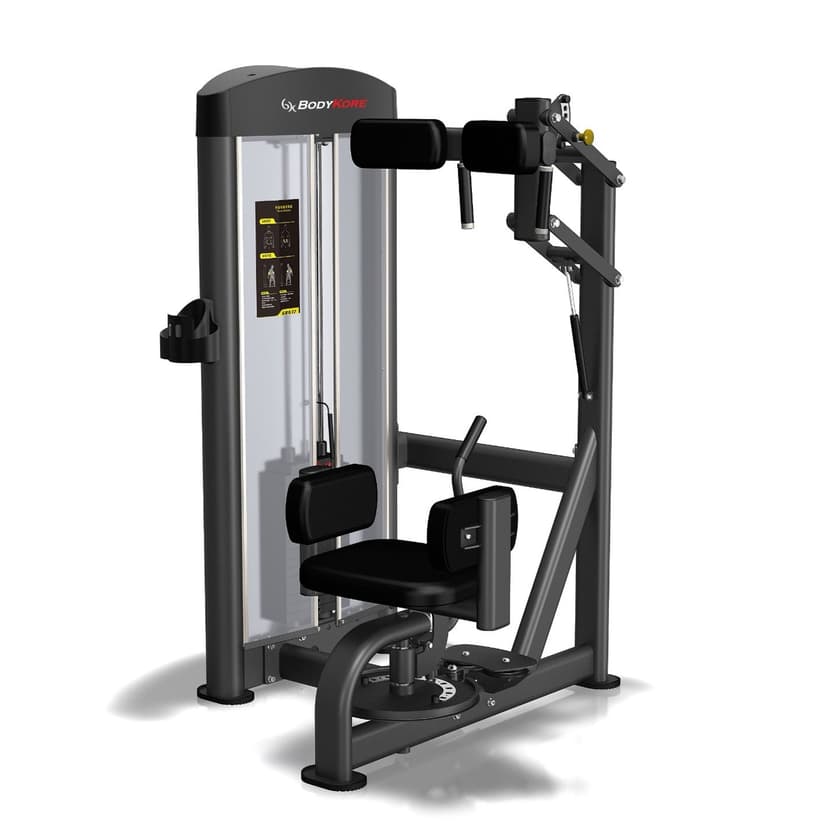
GR617 Selectorized Rotary Torso: The GR617 is the oblique specialist in the lineup. The rotating base pivots through six adjustment points so users can start the rotation from different positions, then drive through the obliques against a 220lb stack. This is the machine most gym floor programs skip, which is exactly why it matters. The obliques are the muscles that produce rotational power in any sport and maintain lateral spinal stability in every pressing or pulling lift. Training them through a full range of loaded rotation, rather than just through side bends or crunches, is what builds functional core strength.
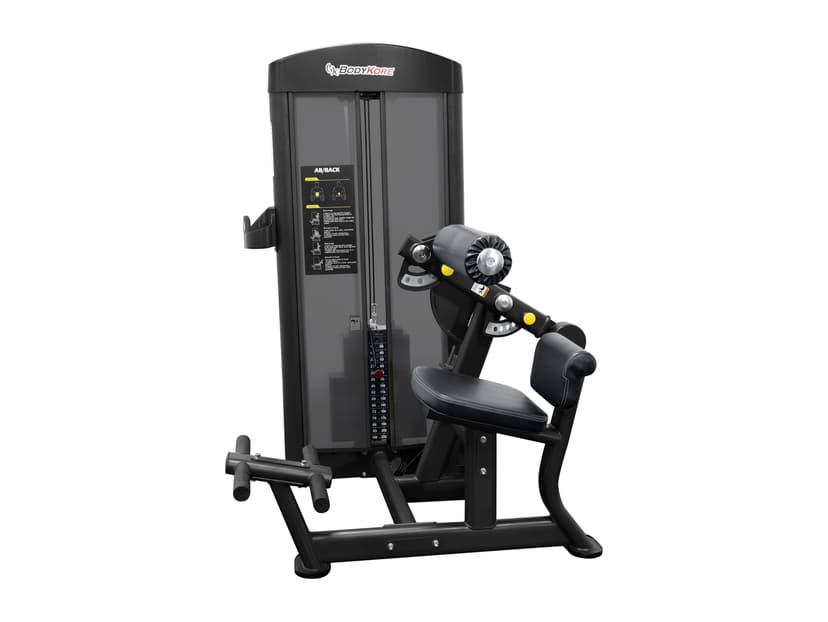
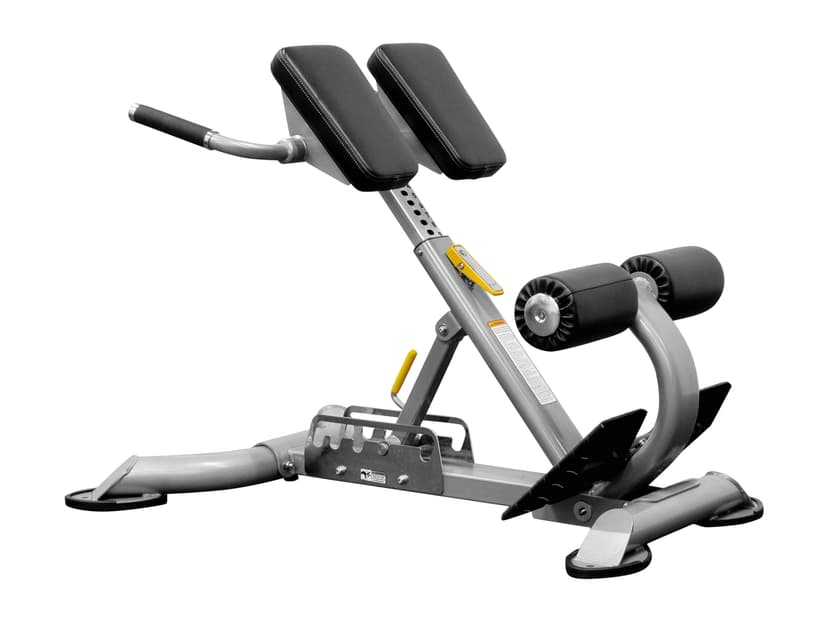
GR637 Abdominal and Back Extension Combo: The GR637 is the rare machine that handles both sides of the core in one footprint. The front handles the selectorized ab crunch, the back converts to a back extension position. A core trained only on its anterior side develops the muscle imbalance that leads to poor posture plus increased lower back injury risk. This dual station eliminates that by making posterior chain work a built-in part of ab day rather than an afterthought.
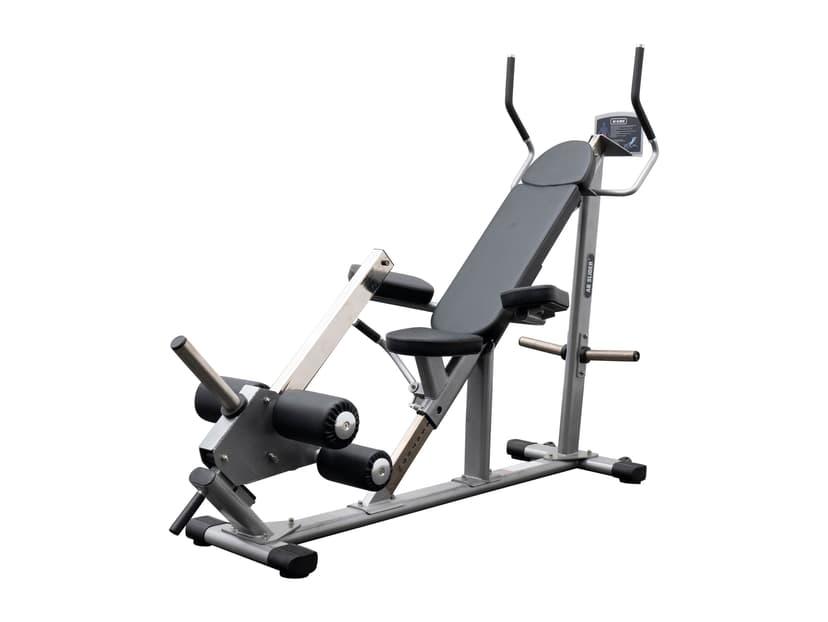
G278 Ab Slider: The G278 is BodyKore's patented design, created by Torrey Vaughns. The user reclines on the bench, then drives a weighted sled carriage up a sliding rail using their legs. The movement is a controlled, loaded leg raise pattern that directly targets the lower abdominals and quads without putting the lumbar spine into the compromised extension position that floor leg raises create. The carriage accepts up to five 45lb Olympic plates from the weights catalog, and 10 seat height adjustment points cover every user height across a commercial facility. No other machine in the category trains the lower abs this way.
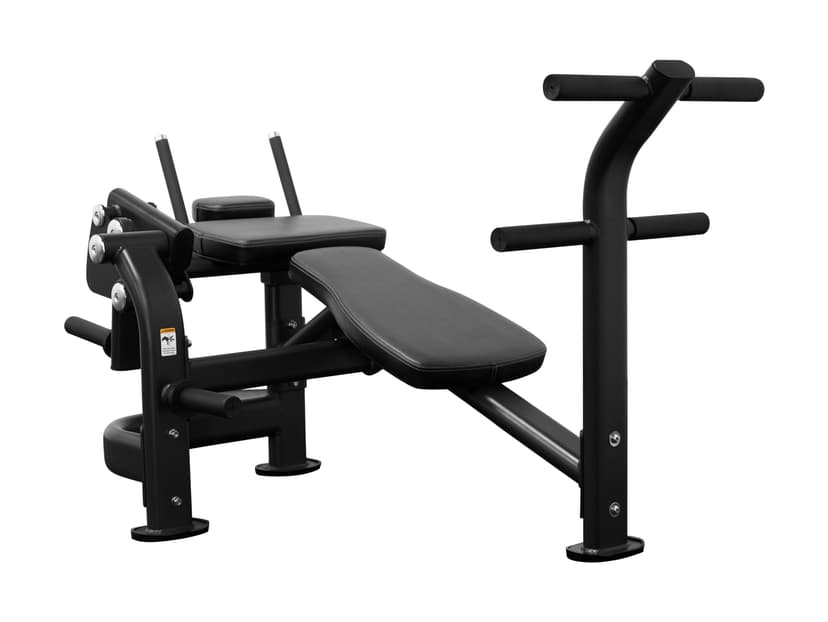
G208 Plate Loaded Ab Bench: The G208 uses a unique floating pivot point that guides the spine through the crunch arc without forcing it to jam at the top. Olympic plates stack directly onto the bench, so load increments follow the user's strength rather than a fixed weight stack ceiling. The floating pivot also reduces neck and shoulder strain compared to a standard decline bench, making it a solid option for users who find floor crunches hard on the cervical spine.
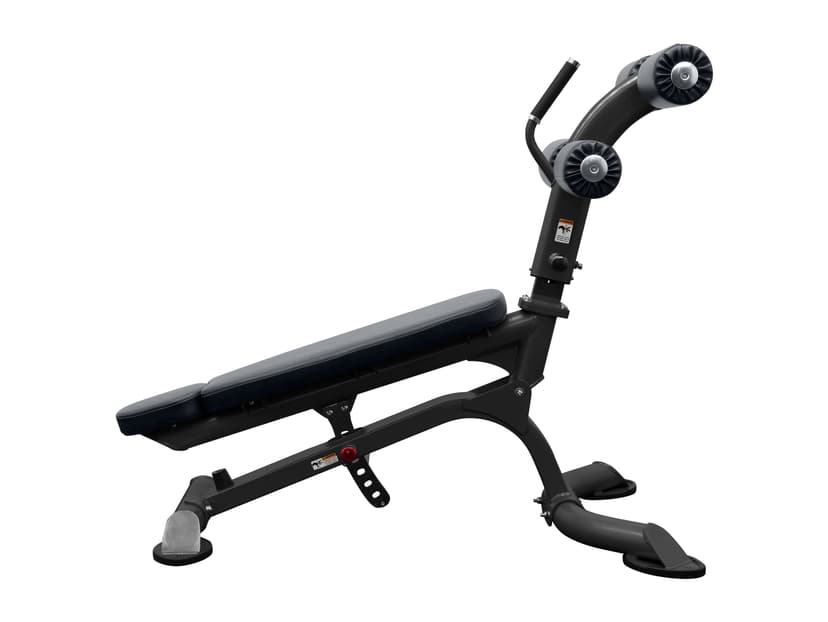
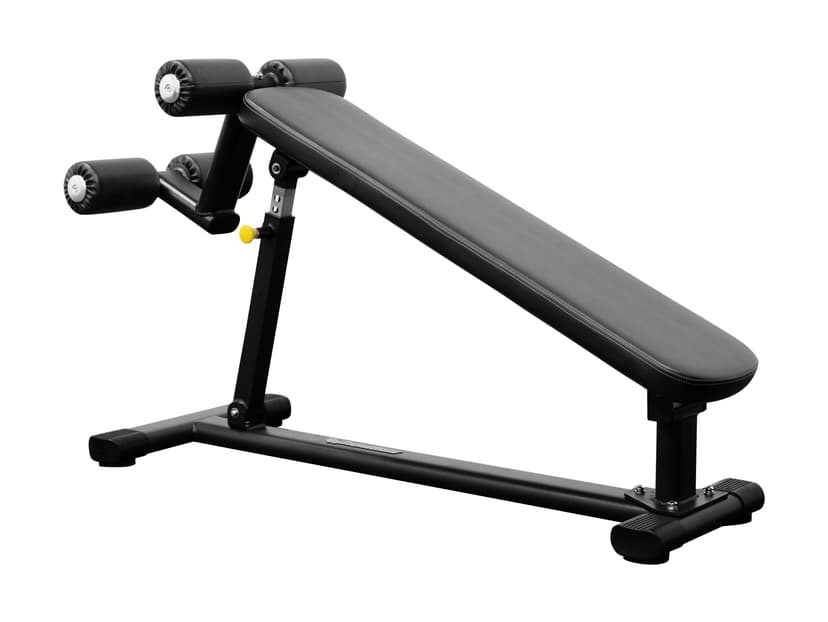
G205 Adjustable Ab Bench: The G205 covers the full spectrum of decline angles, from nearly flat up to 45 degrees. At flat or low incline, it handles decline sit-ups and leg lifts. As the angle increases, it progressively loads every repetition. For home gym builders who want one bench that covers decline ab work, leg raises, plus accessory movements, this is the most versatile entry-point option in the lineup at $672.
CF2103 Adjustable Ab Crunch Bench: The CF2103 is the Elite Series version, commercial-grade construction rated to over 1,000lbs, with adjustment points that span from 180 degrees flat through 45-degree maximum incline. The incremental angle adjustment means a facility can set this bench to different positions for group class programming, moving from bodyweight sit-ups at low angles to loaded decline crunches at high ones across the same session.
CF2107 Vertical Knee Raise: The CF2107 is a Captain's Chair station: forearm pads, grip handles, and a back pad that lets users hang their lower body freely. From that position, knee raises target the lower abs and hip flexors, while leg raises with straight legs extend the range and difficulty. The vertical knee raise is one of the few movements where the lower abdominals are trained through their full range of motion with the spine in a neutral position.
The "core" is not one muscle, and that's the mistake most ab programs make by treating it like it is.
Rectus abdominis: The front-of-stomach muscle that produces spinal flexion, meaning the crunch movement. Runs vertically from the pubic bone to the ribcage. Responds well to loaded flexion through a crunch machine or weighted decline bench. This is the muscle that makes the six-pack visible when body fat is low enough, though its function is far more important than its appearance.
External obliques: Wrap diagonally across the outer abdomen. Contract on one side to produce lateral flexion, on both sides to produce trunk flexion. Responsible for rotational power. The rotary torso machine trains them through loaded rotation in a way that cable woodchoppers approximate but with less stability demand.
Internal obliques: Sit deeper and run at a right angle to the external obliques. Function similarly but rotate the trunk toward the same side rather than away. Both oblique groups are trained through the GR617 Rotary Torso, with the machine's six starting positions allowing users to bias different fiber angles.
Transverse abdominis: The deepest layer, running horizontally around the trunk like a belt. Its job is intra-abdominal pressure, the tension that braces the spine during heavy lifting. It's activated during nearly every ab exercise but responds best to movements that require prolonged tension, like the vertical knee raise hold or the controlled eccentric phase of a crunch machine rep.
A complete core program needs flexion work for the rectus, rotation work for the obliques, plus anti-rotation and stability work for the transverse. An ab machine collection that only includes a crunch station trains one quarter of the muscle group. The BodyKore lineup covers all four movement patterns across its eight stations.
Home ab setups typically come down to a choice between a bench and a machine. Both are right for different priorities.
An ab bench like the G205 or G208 handles decline sit-ups, leg raises, plus any bodyweight-loaded crunch movement. They're compact, require no stack servicing, and pair with Olympic plates already in the weights catalog. The G208 specifically accepts plate loading directly onto the bench, so a home gym with plates already has the resistance system built in. At $760, it costs less than most selectorized stations.
A selectorized crunch machine like the GR611 adds the ability to move through a guided arc with precise, repeatable weight increments, which matters most for lifters who find it difficult to feel the abs working on a bench or who have neck and shoulder tightness that floor crunches aggravate.
For lower ab development specifically, the G278 Ab Slider is genuinely different from everything else on the market. Most home gym programs skip the lower abs entirely because the options for loading that zone are limited. The slider's patented carriage system fills that gap with up to 225lbs of plate-loaded resistance, 10 seat height adjustments, plus elbow rests that eliminate shoulder compensation during the movement.
Noise matters in home and apartment gym setups. Selectorized stacks are quieter than plate-loaded systems during use, since the weight increments are pre-stacked and don't require plates to be moved between sets. If quiet operation is a priority, the GR611 and GR617 run noticeably smoother than loading plates onto a bench.
For lifters wanting ab training without a dedicated ab machine, the MX1162 Universal Trainer runs cable crunches, woodchoppers, Pallof presses, and cable rotations through its dual adjustable pulley system. The MX1161 Functional Trainer does the same, and the G502 Cable Crossover extends that range further for commercial floors.
A commercial ab section needs to handle different users back to back, which means every adjustment point must be fast, every surface must clean easily, and the resistance range must span from a deconditioned beginner through a competitive athlete.
Most commercial floors allocate three to four stations to core work. A practical configuration starts with the GR611 Selectorized Ab Crunch as the primary machine, since the pin-loaded stack is the fastest to adjust and the seated position suits members at every fitness level. The GR617 Rotary Torso handles oblique work in a second station. A vertical knee raise station like the CF2107 covers lower ab and hip flexor work. The GR637 Ab and Back Extension Combo consolidates anterior and posterior core into one footprint.
The G278 Ab Slider is worth considering for facilities that cater to athletes or serious strength trainees. No competitor makes anything like it. When a member walks in and sees a machine they haven't seen anywhere else, that generates engagement. The 10 height adjustment points also make it genuinely fast to set up between users.
Hospitality fitness centers, hotel gyms, and corporate wellness rooms typically need ab coverage in a tight footprint. The GR637 combo covers two of the four core movement patterns in one station. The CF2103 plus a vertical knee raise round out a three-piece ab section that fits into most hospitality floor layouts. BodyKore offers full hospitality fitness equipment packages with custom upholstery plus coordinated powder coating.
Pre-orders are accepted on out-of-stock items, so facility operators planning a gym opening can lock in pricing without waiting on restock timelines. Financing is available across the lineup with monthly payment plans sized for multi-station commercial orders.
Ab machines fail in ways that leg and chest machines don't, because the load is relatively light but the movement volume is high. Members perform 3 to 4 sets of 15 to 20 reps on a crunch machine, which adds up fast across a busy commercial facility. The wear points that kill cheap ab equipment are the pivot bearings, the seat upholstery, plus the cable routing on selectorized machines.
Pivot bearings: The crunch arc on a selectorized machine runs through a pivot point on every single rep. Oversized pivot points, used across the BodyKore selectorized ab lineup, spread that load over a larger surface area, reducing the rate of bearing wear. Smaller pivot points concentrate load and start developing slop in the movement path within a year of commercial use.
Upholstery durability: Ab benches take sweat, chalk dust, plus weight plate contact at the hip crease during loaded sit-ups. The upholstery on BodyKore ab benches uses high-density foam under a durable seat cover rated for commercial use. Thin foam compresses permanently and tears at the stress points where weight plates contact the bench.
Frame construction: The 11-gauge steel framing used across the Isolation Series and Stacked Series resists flex under load plus holds its geometry over years of use. Lighter gauge steel deflects under repeated loading, which changes the feel of the movement arc and introduces vibration that accelerates wear at every joint in the frame.
Plate storage on loaded benches: The G208 and G205 both include storage for plates on or near the bench rather than requiring users to fetch plates from a separate tree for every set. That one detail cuts loading time per set significantly on a busy floor.
Different movements build different parts of the core, and the machines in this collection split cleanly across those movements.
Loaded flexion for the rectus abdominis: GR611 Ab Crunch, G208 Ab Bench with plates, and CF2103 on the decline setting. Run 3 to 4 sets at 10 to 15 reps, adding weight whenever a full set can be completed with tempo control on the way back up.
Loaded rotation for the obliques: GR617 Rotary Torso at moderate weight, 12 to 15 reps per side. The obliques respond well to slightly higher rep ranges, since their primary role is endurance-based stabilization during compound lifts. Cable woodchoppers on the G502 Cable Crossover or the MX1161 Functional Trainer provide a complementary diagonal movement pattern.
Lower ab and hip flexor work: G278 Ab Slider for plate-loaded lower ab training, CF2107 Vertical Knee Raise for bodyweight or weighted knee raise patterns. Both movements load the lower abdomen through hip flexion rather than trunk flexion, which is the distinguishing factor from crunch-based movements.
Posterior core balance: GR637 back extension position for erector spinae and glute work. Run this at the end of an ab session to offset the repeated anterior loading from crunches and leg raises. A 2:1 ratio of ab-to-back extension sets is a reasonable starting point for most lifters.
Full-core anti-rotation and stability: Cable Pallof presses, half-kneeling cable chops, plus standing cable rotations on the MX1162 Universal Trainer or G502 Cable Crossover. These aren't on the ab machines page, but they belong in any complete core program as the movement patterns that tie direct ab work to functional strength output.
Abdominal equipment ships out of our California warehouse, palletized, via LTL freight. Standard transit runs between 3 and 14 days depending on destination. Local pickup is available by appointment at any of our warehouse locations, plus our showroom and dealer network spans nationwide.
Pre-orders are accepted on out-of-stock items. Financing is available through our standard application, with monthly payment plans designed to keep multi-machine orders manageable on a build-out budget.
Cancellations are accepted any time before shipment. Once an order ships LTL, freight charges apply, so timing matters for order changes.
The right answer depends on where the training gap is. For upper and mid-ab development, the G208 Ab Bench or G205 covers decline sit-ups and leg raises with plate-loaded resistance at a lower price point than a selectorized stack. For lower ab development specifically, the G278 Ab Slider does something no other home gym piece does: loaded lower ab training from a reclined carriage position. For lifters who want guided, stackable resistance on the crunch arc, the GR611 handles that with a 220lb stack.
A complete commercial ab section runs a selectorized crunch machine, a rotary torso machine, a vertical knee raise, plus either an ab/back combo or standalone ab bench. The GR611, GR617, CF2107, and GR637 cover that configuration across four stations.
The G205 is the Signature Series version, rated at $672, with angle adjustments from flat through 45 degrees. The CF2103 is the Elite Series version at $800, with the same angle range but heavier commercial-grade construction. For a home gym, the G205 is the more practical choice. For a facility handling 50 or more users per day, the CF2103's construction holds up longer under that volume.
Yes. The MX1162 Universal Trainer and MX1161 Functional Trainer both run cable crunches, woodchoppers, cable rotations, plus Pallof presses through their pulley systems. A G256 Full Squat Cage handles hanging leg raises from the pull-up bar. Dedicated ab machines accelerate progress through guided form and precise load increments, but they're not a requirement for complete core training.
Abs respond to progressive overload like any other muscle, but the load range is lower than chest or leg work. On the GR611 crunch machine, most intermediate lifters work between 40 and 100lbs across 10 to 15 reps. On the GR617 rotary torso, 30 to 80lbs at 12 to 15 reps per side covers most users. The G278 slider accepts plate loads up to 225lbs, which is relevant for advanced athletes treating it as a leg-press-style lower ab movement.
The BodyKore warranty is lifetime on machine frames and 5 years on parts, with product-level coverage detailed on each listing. Ab benches carry the same frame warranty as the broader Signature and Elite Series lineup.
The core is the muscle group that takes the most abuse in any gym program and gets the least systematic training. Every barbell squat, overhead press, and deadlift loads the core under tension. Training it on its own terms, with progressive resistance through a dedicated range of movements, is what builds the foundation those lifts depend on.
Browse the full BodyKore abdominal machine lineup above to compare selectorized crunch stations, the patented G278 Ab Slider, rotary torso machines, ab benches, plus the ab/back combo. If you're a home gym builder working out how to cover all four core movement patterns in a limited footprint, or a commercial operator building out a full ab section from scratch, our team is ready to help spec the right combination. Financing makes commercial-grade equipment manageable at the home gym budget level, plus our nationwide dealer network means there's a showroom nearby for most US buyers.
Train your core like it matters. Because the 400lb squat depends on it.