Plates are the most underestimated decision in any gym build. Buyers agonize over the rack, the bar, the bench, then grab whatever plates happen to be on sale. Six months later, they wonder why their floor is dented, why their bar sleeves stick, why deadlift sets sound like a car crash.
A plate isn't just weight. It's the part of the bar that touches the floor, the part that absorbs the drop, the part that gets dragged across rubber tile a thousand times a year. Material, hub design, coating, weight tolerance: all of it shapes how a session feels and how long a set holds up.
Our plates are built around one belief that runs through every BodyKore product. Commercial-grade construction belongs in home gyms too. A garage owner shouldn't have to choose between gym-quality plates and a price that makes sense, and a 24-hour facility manager shouldn't have to replace plates every two years because the cheap option finally cracked.
Different lifts ask different things of a plate. Our weights catalog reflects that, with every plate tier built to commercial spec and backed by a 5-year warranty.
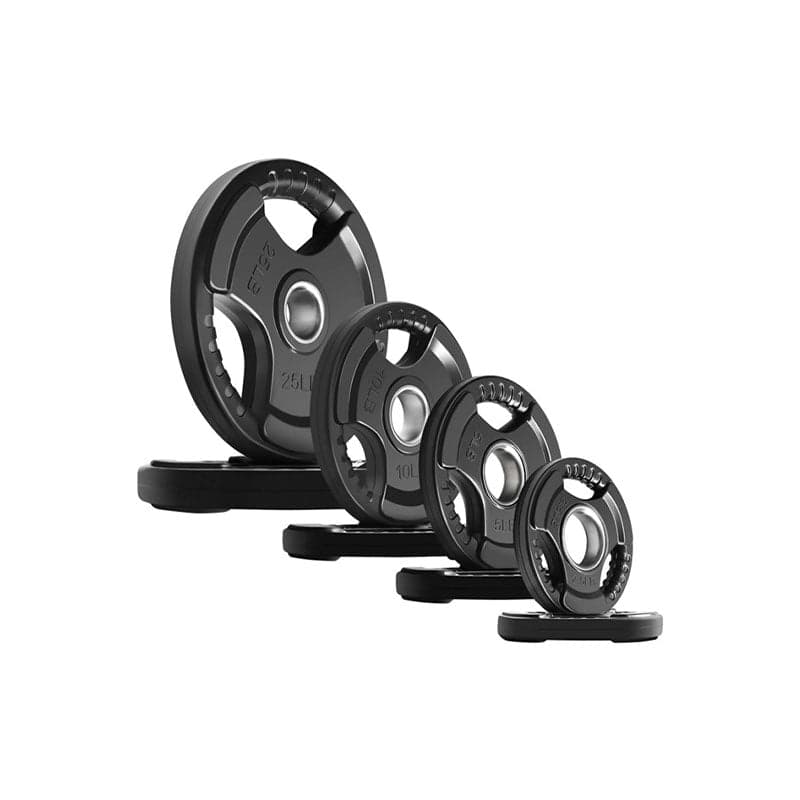
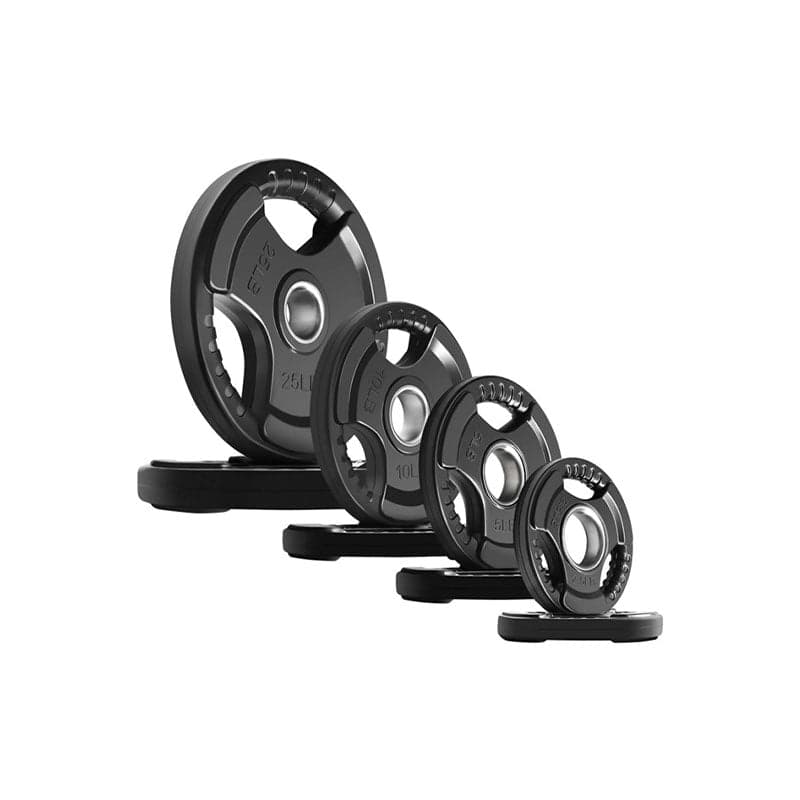
Rubber Olympic grip plates: Cast iron core, rubber-encased shell, with a tri-grip cutout for easy handling off the rack. Each plate is finished in a rust-resistant jet-black coating and uses a stainless steel center insert that slides cleanly onto a 2-inch sleeve. Best for general strength training, machine loading, accessory work, plus any movement where you're not dropping the bar from overhead. Singles like the 25lb Olympic Rubber Grip Plate are sold individually so you can build by the pound rather than by the prepackaged set. Lighter 10lb, 5lb, and 2.5lb singles cover the small jumps that intermediate lifters need for progressive overload, while the 35lb and 45lb singles handle heavy work.
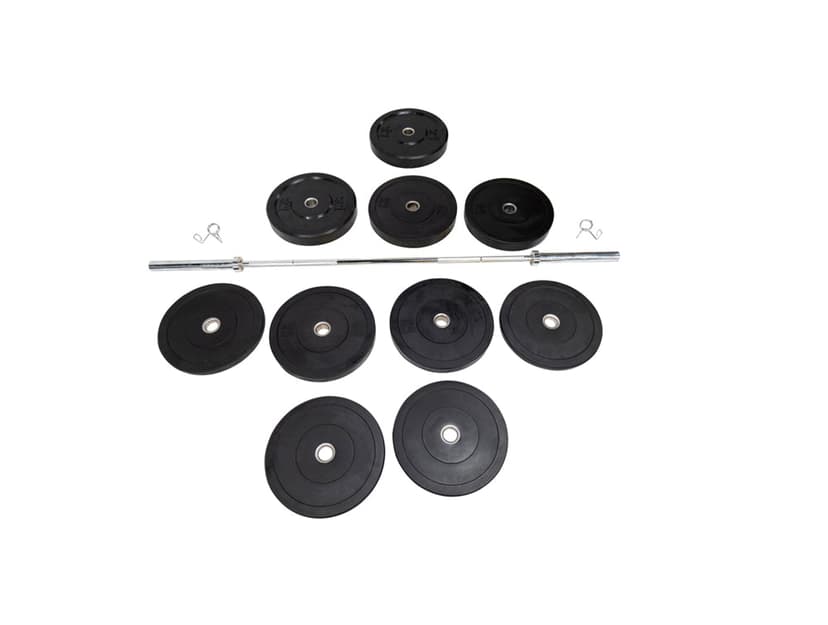
Bumper plates and bar packages: The 260lb Bumper Plate and Bar Package pairs solid rubber bumpers with an Olympic bar plus collars, so a CrossFit box, an Olympic lifting facility, or a serious home lifter walks in with a complete drop-ready setup. Bumpers absorb impact, protect floors, kill noise on contact, and keep the bar sitting at the same height regardless of how light the load is, which matters when athletes are learning a clean off the floor. Browse the full bumper plates sub-category for additional configurations.
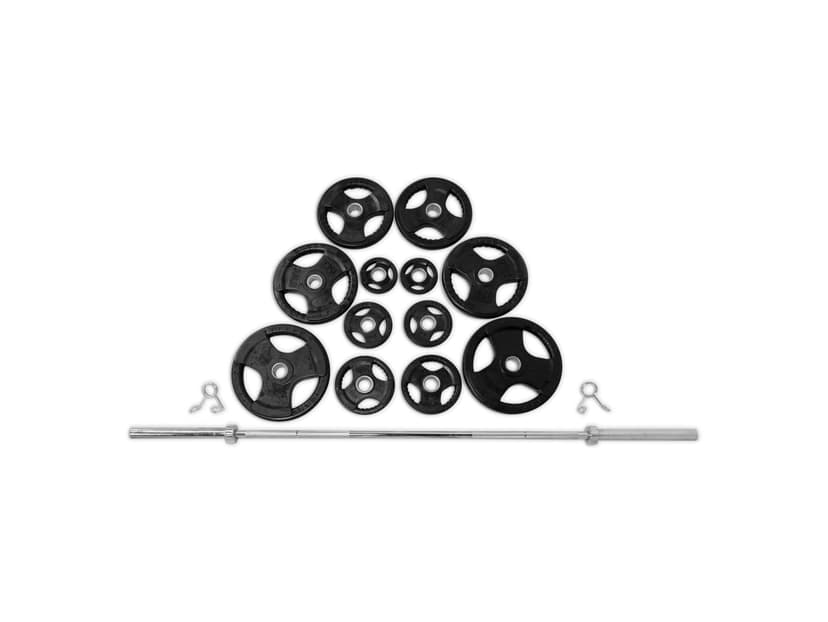
Olympic weight sets: The 300lb Olympic Weight Set is the workhorse. Six pairs of grip plates (2.5, 5, 10, 25, 35, and 45lb), spring collars, and a hard-chrome 7-foot bar with medium-depth diamond knurling and bearing-mounted sleeves. Every plate carries the rust-resistant coating along with the carry-handle design. See the full Olympic plates collection for additional set sizes and pricing tiers.
Plate accessories: The Olympic Plates Weight Extender Pin is the kind of small tool that quietly upgrades an entire gym. Drop it into any pin-loaded machine, load 2-inch Olympic plates onto it, and you've just added unlimited capacity to a stack that maxed out at 200 pounds. Case-hardened steel pin, room for two 45lb plates, universal fit. For commercial facilities running selectorized circuits at high volume, the 340lb Weight Stack Upgrade is another option, adding 8 steel plates plus an extension rod that takes a stack from 235lb to 340lb.
A note on pricing tiers. Grip plate sets such as the G234 start at around $360, while the 300lb Olympic Set lands near $900. Bar packages and commercial bulk orders go higher, with financing available across the lineup so larger purchases can be spread across monthly payments.
Lifters often ask what kind of plate to buy first. There's no single right answer, only a right answer for how someone trains. Here's the practical version.
A cast iron disc wrapped in rubber, with grip handles cut into the face. These are the most versatile plates BodyKore makes. They protect floors better than bare iron, they're quieter on contact, plus the grip cutouts mean lifters can carry plates one-handed without fishing for a finger hold.
Use them for squats, presses, deadlifts that aren't being slammed, plate-loaded machine work, farmer carries, plus accessory lifts. They're the right pick for general fitness, bodybuilding, plus most home gym buildouts. Hospitality and corporate fitness rooms also lean heavily on rubber-coated plates because the noise reduction matters in shared buildings.
What they're not built for: repeated overhead drops. The rubber coating on a grip plate is thinner than a bumper, plus the iron core wasn't designed to land from eye level.
Solid rubber, steel center insert, same diameter at every weight. Bumpers exist because Olympic lifts end with the bar on the floor, sometimes from overhead. A snatch isn't gentle. A clean and jerk gets racked, then dropped. Iron plates would chip, crack, or shatter.
Bumpers are required equipment for Olympic weightlifting, CrossFit-style training, plus anyone who wants to attempt a lift without worrying about the consequence of a missed rep. They also keep the bar at the right starting height for deadlifts even when the load is light, which is huge for new lifters drilling form with just 95 pounds on the bar. Commercial gyms that program group classes around Olympic lifting almost always default to bumpers across the entire facility.
The trade-off: bumpers are thicker than iron plates of the same weight. If a lifter is loading more than 405 pounds on a bar regularly, bumpers can fill the sleeves before the load is heavy enough.
The original. Slim, dense, easy to load deep. Iron plates excel at heavy powerlifting work, where total bar weight matters more than drop-resistance. Squats and deadlifts loaded into the high triple-digit range are where iron earns its place. Bench presses follow the same logic.
What iron isn't good at: drops, garage-floor protection, noise. Iron rings. Iron chips concrete. Iron rusts if it's left in a humid garage.
For Olympic lifters and CrossFit boxes: bumper plates, every time.
For powerlifters and strength-sport athletes chasing high totals: cast iron or steel.
For home gym owners doing general strength training: rubber-coated grip plates do almost everything competently.
For shared spaces, apartments, basements with thin floors, or any setup where noise carries: rubber-coated or bumper plates protect what's underneath.
For hospitality fitness facilities, corporate wellness rooms, and 24-hour gyms: a mix, weighted toward rubber-coated for the variety of users who'll walk in.
A home setup is often built one piece at a time, which means plates need to be flexible enough to grow with the rest of the gym.
The Home Gym Package is one of the most efficient ways to start. It bundles a G256 Squat Rack Power Cage, the MX1161 dual adjustable pulley system, a multi-adjustable bench, the 300lb rubber Olympic weight set, plus a 5-50lb rubber hex dumbbell set with rack. That's a near-complete strength gym in 200 square feet. Buyers wanting to start smaller can begin with the Free Weight Package and add plates over time.
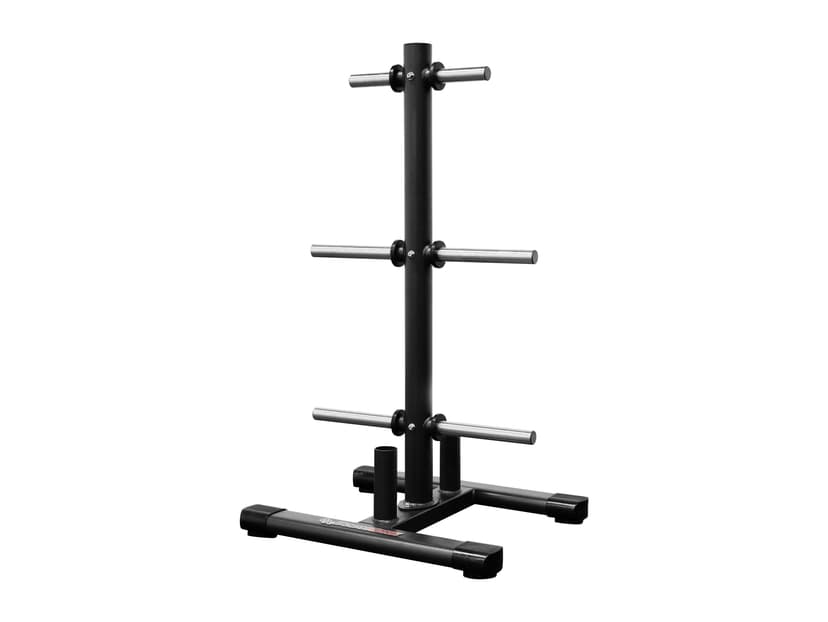
Plate storage matters more in home gyms than people expect. A 300-pound set takes up real estate, and plates left on the floor get tripped over. The CF2134 Weight Plate Tree holds over 1,000 pounds across 12 pegs and tucks against a wall, while the full storage racks collection covers vertical and horizontal options.
Floor protection still matters even with rubber-coated plates. A 45-pound plate dropped from 6 inches will mark concrete and dent vinyl. Rubber gym tile, horse stall mats, or interlocking puzzle mats add a cheap layer of protection that pays for itself the first time someone fails a lift.
Commercial buyers are buying for volume, not personal use. The plates that work in a garage may not survive 6 group classes per day, 7 days a week, for 5 years.
A few things that change at the commercial level. First, plate quantity. A facility running concurrent stations needs enough plates that no member is ever waiting on the next 25lb pair. Second, durability budget. The total cost of replacing cheap plates twice in 5 years usually exceeds the cost of buying commercial-grade plates once. Third, integration with the rest of the floor. Plates have to match plate-loaded machines, Smith machines, squat cages, plus storage solutions sized for high-traffic use.
BodyKore offers hospitality fitness equipment packages with custom upholstery and powder coating for hotels and corporate gyms that need plates and machines coordinated with brand colors. The same dealer support is available to commercial gyms, training studios, plus military and rehab facilities.
Buyers planning a facility opening can pre-order out-of-stock plates to lock in pricing without waiting for restocks, plus financing terms make large orders manageable on a build-out budget.
Most plate marketing focuses on weight numbers. The boring details are where plates actually win or fail.
Steel center inserts: A plate slides onto a barbell sleeve hundreds of times across its life. A cheap plastic or composite insert deforms, sticks, plus wallows out the hole over time. Stainless or hard-chromed steel inserts stay tight to the bar's tolerance and don't rust from sweat or chalk. Every BodyKore plate uses a steel insert.
Rust-resistant coating: Iron and humidity don't get along. A jet-black powder-style coating shields the metal core, prevents flaking, plus stops the orange dust that ruins gym floors. This is also why our plates handle garages, basements, plus outdoor patios better than uncoated alternatives.
Weight tolerance: For most home gym work, plates within 2 percent of stated weight are accurate enough. Powerlifters near competition standards may want tighter, but for hypertrophy, conditioning, plus general strength work, 2 percent is invisible to the lifter. Our plates fall comfortably inside that window.
Hub depth and collar fit: Plates with shallow inserts wobble on the bar. Deeper inserts grip the sleeve, reducing rattle plus protecting the bar's chrome from scratching. Combined with included spring collars, a properly inserted plate stays planted through every rep.
This trips up new gym builders constantly. The instinct is to buy six 45lb plates and call it done. That's wrong for almost everyone except an experienced powerlifter.
A starter setup for most lifters looks closer to this. Two 45lb plates, two 25lb plates, two 10lb plates, two 5lb plates, two 2.5lb plates. That's the spread inside the 300lb Olympic Weight Set, and it's not an accident. With a 45lb bar plus those pairs, a lifter can load anywhere between 50lb and 295lb in 5-pound jumps, which covers warmups through a heavy single for the vast majority of intermediate lifters.
A serious strength athlete adds four more 45s, bringing total capacity past 500 pounds. An Olympic lifter swaps grip plates for bumpers in the same weight breakdown plus adds technique plates (5lb and 2.5lb bumpers) for training drills with light loads.
Commercial gyms calculate differently. A rough rule for a typical strength floor: enough plates so that no two lifters compete for the same weight at peak hours. That usually means 4 to 6 sets of 45s per rack station, with smaller plates scaled accordingly.
The point worth remembering: small plates matter as much as big ones. Progressive overload happens 2.5 pounds at a time, not 45 pounds at a time. A gym without small plates is a gym where lifters stall.
Plates work hardest when they're matched to the right gym setup. Some pairings worth considering as the gym fills out.
For barbell training, the G256 Full Squat Cage gives plates a home with 8 built-in storage pegs, eliminating the need for a separate tree if floor space is tight. For lifters wanting Smith-machine work alongside free weights, the Smith machines collection covers home and commercial models that accept the same plate sets.
For dumbbells, the dumbbells category covers everything from a 5-50lb rubber hex dumbbell set for compact home gyms up to 5-100lb sets for serious lifters and commercial floors. Pairing dumbbells with plate-loaded movements gives lifters a complete strength workout from a single equipment family.
For storage that scales with the plate collection, the storage racks selection includes plate trees, barbell racks, plus dumbbell racks built to commercial spec.
Plate orders ship out of our California warehouse, palletized, via LTL freight. Standard transit runs between 3 and 14 days depending on destination. Local pickup is available by appointment at any of our warehouse locations, plus our showroom and dealer network spans nationwide.
Pre-orders are accepted on out-of-stock items so commercial buyers planning a facility opening can lock in pricing without waiting for restocks. Financing is available through our standard application, with monthly payment plans designed to keep large set purchases manageable.
Cancellations are accepted any time before shipment. Once an order ships LTL, freight charges apply, so timing matters.
Olympic plates have a 2-inch center hole and fit Olympic barbells along with most pin-loaded machines. Standard plates have a 1-inch hole and fit smaller, lighter bars typically used by beginner setups. BodyKore plates are all Olympic-sized.
Yes. Bumpers fit the same 2-inch sleeves as iron and rubber-coated plates. The main consideration is sleeve length, since bumpers are thicker, so you'll fit fewer pounds on a bar before running out of room.
Rubber-coated grip plates are the most versatile pick for home use. Quieter than iron, kinder to floors, easier to grip, plus built for the mix of squats, presses, deadlifts, and rows that fill most home gym programs. Add bumpers if Olympic lifting or CrossFit is part of the plan.
A commercial floor usually mixes both. Rubber-coated grip plates handle the majority of strength training stations, while bumpers go on the platforms reserved for Olympic lifts and CrossFit-style programming. Volume matters more than variety, since busy facilities need enough plates that members aren't waiting on the next pair.
Both. Many plates including the 25lb Olympic Rubber Grip Plate are sold as singles, with full Olympic sets (300lb plus 260lb bar packages) available for buyers wanting a complete starter kit.
Two options. The Olympic Plates Weight Extender Pin solves it for pin-loaded selectorized machines: insert it into the stack, then load 2-inch Olympic plates onto the pin. For a more permanent solution, the 340lb Weight Stack Upgrade adds 8 steel plates plus an extension rod, taking a stack from 235lb to 340lb.
Plates carry a 5-year warranty. The broader BodyKore warranty philosophy is lifetime on machine frames and 5 years on parts, with plate-specific coverage detailed at the product level.
Plates aren't sexy. Racks get the photos, bars get the brand loyalty, but plates are what every set is loaded with, dropped on, dragged across, and stored next to. The right plates outlast the rack, the bar, plus probably the gym they sit in.
Browse the full BodyKore plate lineup above to compare grip plates, bumpers, full Olympic sets, plus accessories. If you're a home gym builder spec'ing the right combination for your space, or a commercial operator outfitting a facility from scratch, our team is ready to walk through it. Financing makes commercial-grade plates accessible at the home gym budget level, plus our nationwide dealer network means there's a showroom not far from most US zip codes.
Train heavier. Train longer. Start with plates that won't quit before you do.