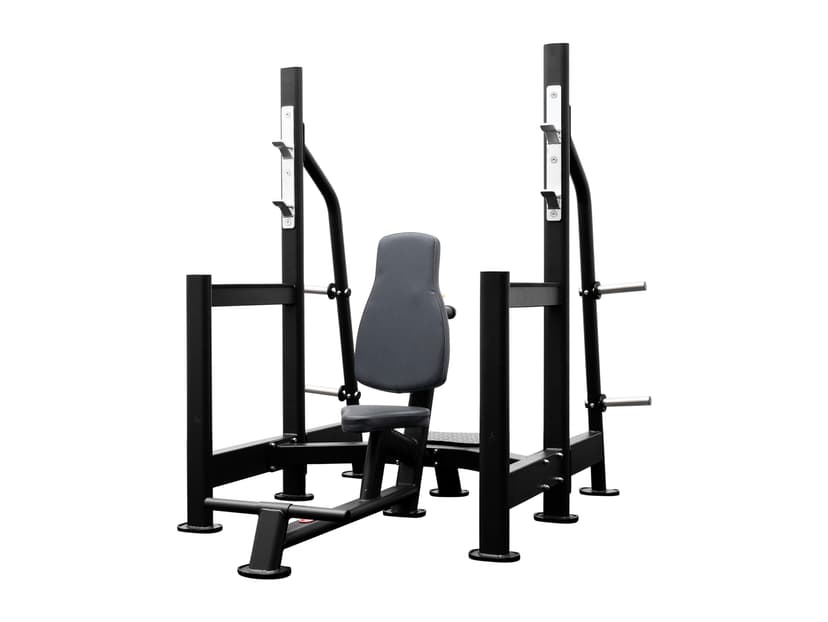
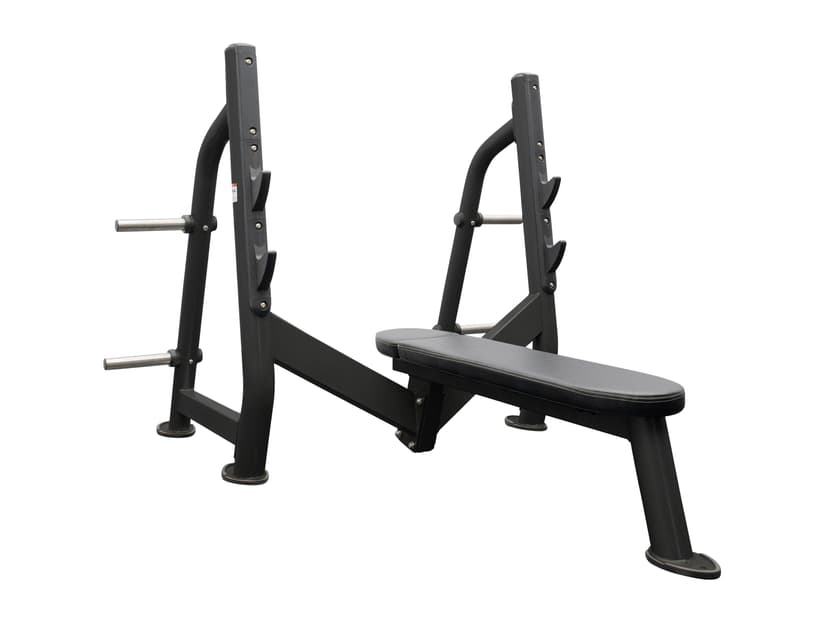
$1,800.00
Financing options...
Note: Limited Availability - Inquire to Order.
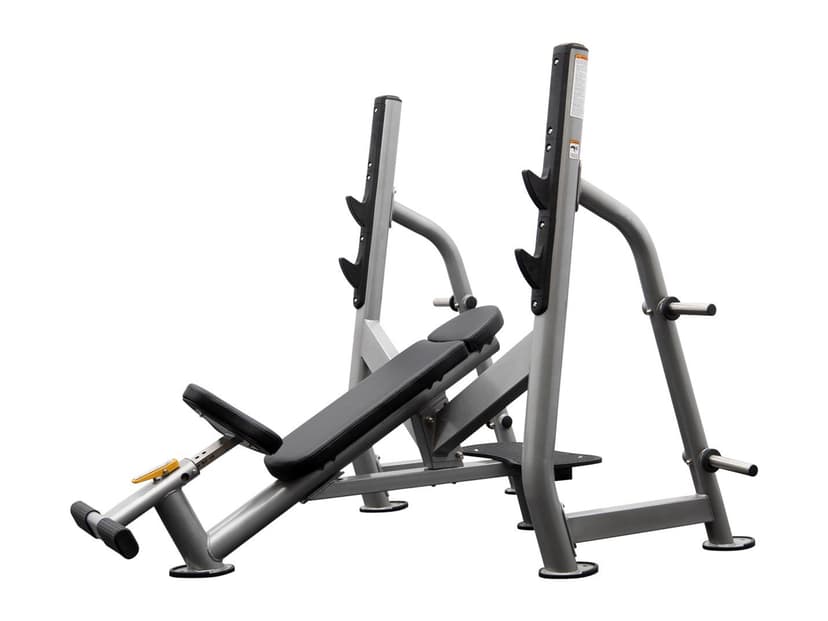
$1,980.00
Financing options...
Note: Limited Availability - Inquire to Order.
The bar and the plates get most of the credit. The bench gets almost none.
But ask anyone who's pressed on a cheap bench with soft padding, wobbly uprights, or bar hooks that flex under load: they'll tell you the bench matters. Pad density decides whether your back is supported or sinking by the third set. Upright height determines whether you're unracking the bar cleanly or pressing it over your face first. Footprint width determines whether the whole station rocks when you drive hard off the bottom.
Pressed too high or too low on a flat bench, a lifter's bar path drifts. Pressed on pad that compresses mid-rep, shoulder positioning breaks down. On a quality Olympic bench, none of that comes into play. The mechanics stay consistent, set after set, which is what allows progressive loading to actually work.
Our Olympic benches collection covers flat pressing stations, incline configurations, decline benches, plus two build levels, so a home gym builder or commercial operator can match the bench to the training environment rather than making do with whatever happens to fit the budget.
Most lifters know the flat bench works the chest. Fewer know how much the angle changes the stimulus, or why that matters for programming.
A 2020 PMC study across five bench inclinations measured EMG activity in all three pectoralis major portions. The flat bench (0°) produced the highest activation across both the middle and lower portions of the pec major simultaneously. An inclination of 30° produced the greatest activation of the upper pectoralis major (clavicular head) while reducing activity in the lower portions. Past 45°, the anterior deltoid increasingly took over the press, reducing chest involvement.
Decline pressing, by contrast, loads the lower pectoralis major and sternal fibers more directly than flat pressing, while placing significantly less stress on the rotator cuff. Most lifters can also press 10 to 15% more weight on a decline than a flat bench because the shorter range of motion reduces the mechanical disadvantage at the bottom position.
What this means for equipment selection: a facility that only stocks flat benches is training one portion of the chest consistently. A complete pressing setup needs flat for mass, incline for clavicular head development, plus decline for lower pec volume at reduced shoulder stress. The BodyKore lineup covers all three angles across both Signature and Elite build levels.
Six benches across two series. The choice between them comes down to build preference, volume tolerance, expected daily load, plus budget rather than function: all six train the same movement patterns.
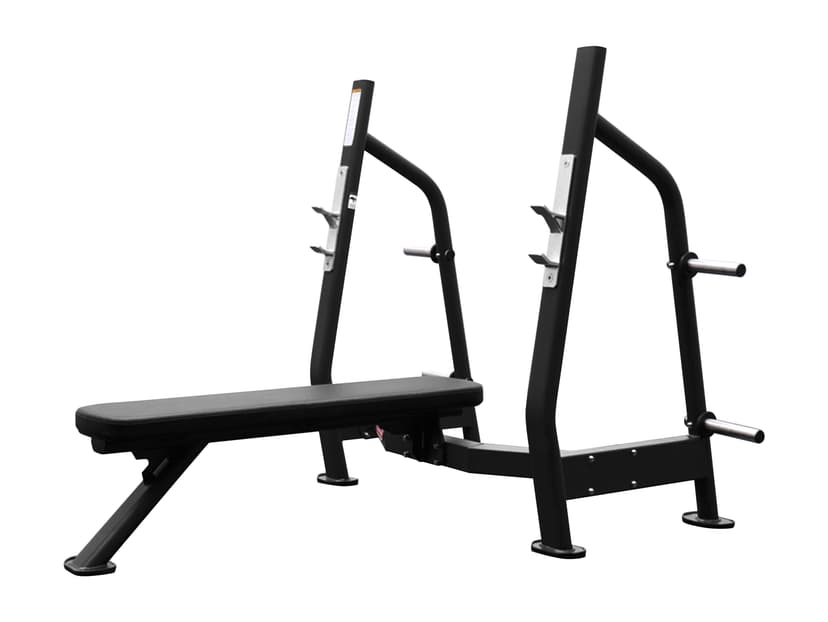
G251 Olympic Flat Bench (Signature Series): A commercial club-standard flat bench with zinc-coated steel bar hooks, an A-frame base for lateral stability, four plate storage pegs, rubber floor feet, and a 1,000lb weight rating. Built for standard 7-foot Olympic bars. The G251 is the baseline flat press station for home gyms that want commercial-quality construction at the Signature price point.
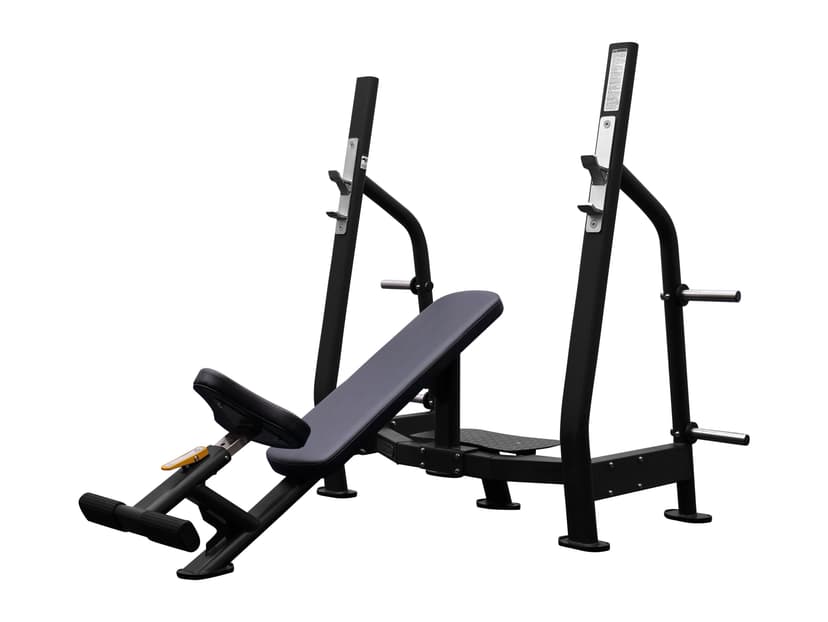
G252 Olympic Incline Bench (Signature Series): The G252 adds a spotter platform to the incline configuration, which matters more on an incline than a flat bench because failed incline reps tend to pin the bar at shoulder height where spotters have less mechanical advantage. Zinc-coated bar hooks, A-frame base, adjustable seat height, plate storage pegs, 1,000lb-rated.
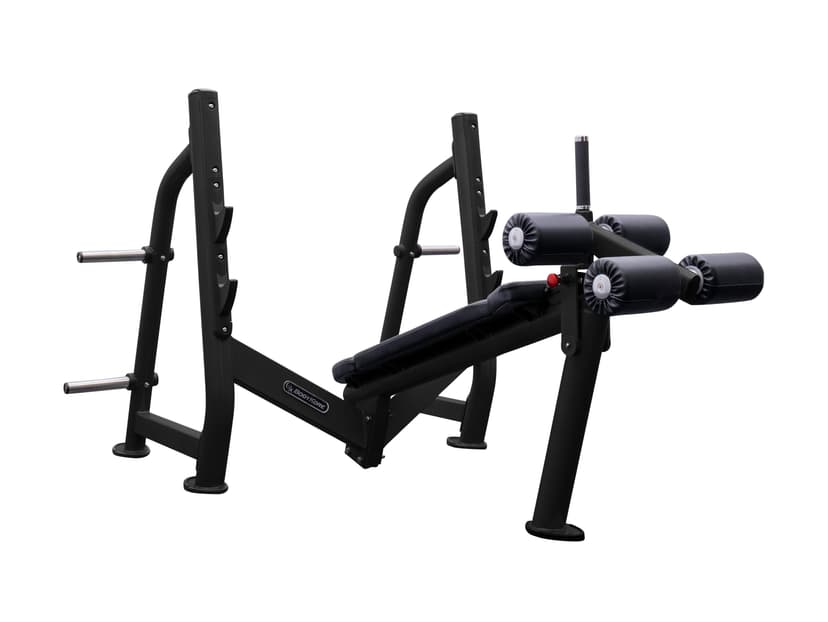
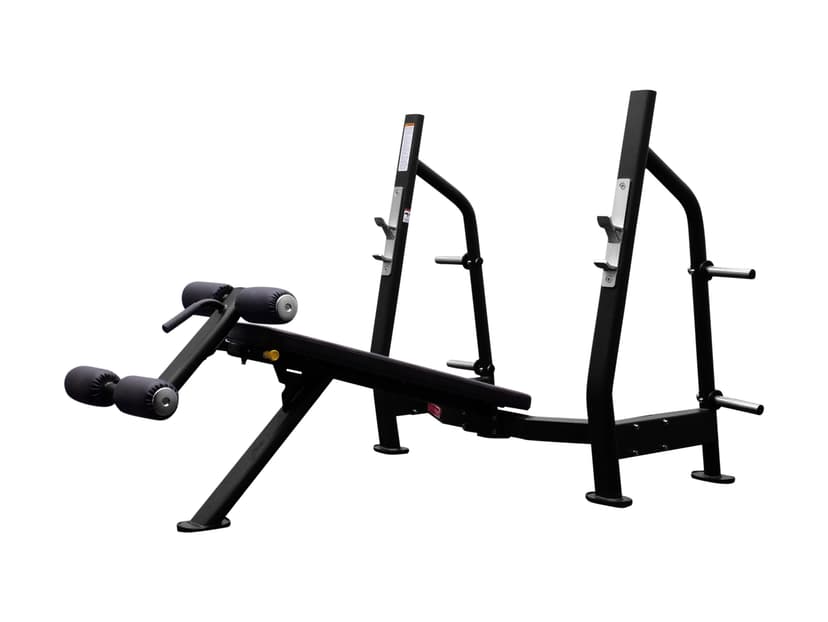
G253 Olympic Decline Bench (Signature Series): Decline is the least-stocked bench in most commercial facilities, which makes the G253 a differentiator for gyms that want to cover the full pressing spectrum. The decline angle reliably loads the sternal fibers and lower pec without the rotator cuff demand of overhead pressing, making it a common recommendation for lifters managing shoulder issues. Ankle pads secure the lifter through the inverted position, bar hooks rated to the same 1,000lb standard as the rest of the Signature line.
CF2151 Olympic Flat Bench (Elite Series): Where the G251 uses zinc-coated hooks, the CF2151 uses polyurethane bar holder protectors that absorb bar impact, distributing force away from the upright welds, resist corrosion from chalk and sweat, plus stay quiet under load. Dimensions: 51" x 55" x 52", weighing 220lbs, with an E-wide A-frame base that widens the stability footprint beyond the Signature Series. Available in black or silver, both with a powder coat finish. The thick wide pad and ergonomic headrest make it noticeably more comfortable for high-rep volume work.
CF2152 Olympic Incline Bench (Elite Series): The CF2152 brings the Elite Series polyurethane bar hooks and E-wide A-frame to the incline configuration. Holds up to 10 barbells in weight ranging from 20 to 110lbs on the rack, the widened base making it suitable for facilities where members frequently load and unload without a spotter present. Built in black or silver, 1,000lb-rated, powder coat finish with rubber floor protection.
CF2153 Olympic Decline Bench (Elite Series): The CF2153 is the Elite decline station: polyurethane bar protectors, E-wide base, rubber feet, powder coat finish. For a commercial facility building a complete pressing section, pairing the CF2151 flat with the CF2152 incline and CF2153 decline creates a visually matched set from the same series with consistent bar hook specifications, upright heights, pad construction, plus finish options across all three stations.
The two product lines train the same movements. The differences are in materials and footprint, which matter more at high volume.
Zinc-coated steel hooks on the Signature Series are durable and cost-effective. At moderate training volumes, they hold up well and the zinc coating resists the rust that forms where chalk dust meets moisture. Polyurethane bar holders on the Elite Series absorb the mechanical shock of repeated bar contact, keeping force away from the welds. Over thousands of unracking cycles in a busy commercial facility, that difference accumulates. Polyurethane also resists corrosion from chalk, alcohol cleaning wipes, plus humidity better than metal coatings.
The E-wide A-frame base on the Elite Series widens the stance compared to the Signature A-frame. Worth noting for high-volume commercial settings: a wider base reduces the chance of lateral tipping when a lifter shifts weight during a failed rep, which matters more in a facility with members of varying experience levels than it does in a home gym where the lifter knows the equipment.
Pad construction is thicker on the Elite Series. Pad compression is the detail buyers notice after six months of daily use but rarely think about at purchase time. A pad that compresses 20% under bodyweight changes the lifter's position relative to the bar hooks. The Elite pads are designed to maintain loft under commercial volume without the same compression rate.
For home gyms, the Signature Series is the right starting point for most buyers. For facilities running 50-plus members per day across the bench stations, the Elite Series is worth the step up.
Space and pairing logic determine which Olympic bench a home gym actually needs.
A flat bench is the starting point. Flat pressing builds the broadest pec mass, allows the heaviest loads across the chest press pattern, plus works alongside a squat cage for nearly every barbell upper body movement. The G251 pairs directly with the G256 Full Squat Cage, which includes built-in safety arms, a pull-up bar, plus storage for bars and plates, turning two pieces into a complete pressing and pulling station.
Incline work is the second priority for most home gym builders because it is the angle most likely to produce visible results in the clavicular head that flat pressing systematically underloads. A 30-degree incline, achievable on both the G252 and the MX1169 adjustable FID bench, is the EMG-validated sweet spot for upper chest activation without anterior deltoid dominance.
Some home gym builders skip the dedicated decline bench entirely, reasoning that decline work can be approximated on an adjustable FID bench set to a mild negative. That works for dumbbell work. For heavy barbell decline pressing, though, a dedicated station with proper ankle supports, set bar hook height, plus a wide base is meaningfully safer than improvising with an adjustable bench. The G253 fills that need without requiring a large footprint.
For lifters who want flat, incline, plus decline capability in one footprint, the MX1169 Universal Bench (FID) offers 7 backrest positions spanning decline through 90 degrees. Its accessory system includes leg extension/curl and preacher curl add-ons, making it a multi-function piece for home gyms under 200 square feet. The trade-off against dedicated Olympic benches: adjustable FID benches do not include integrated bar hooks or spotter platforms, so they work best alongside a squat cage rather than as standalone press stations.
Plate storage affects home gym usability more than people expect before buying. All Signature and Elite benches include four storage pegs, which keeps 8 to 10 plates accessible at the bench without pulling from a separate tree. For a home gym where the plates live on a single storage unit, this eliminates most of the between-set friction that makes training feel slower than it should.
Commercial operators think in throughput, not just function. Every design detail that slows a member down between sets reduces how many sessions the station runs per hour.
Polyurethane bar hooks on the Elite Series contribute to throughput in a specific way: they absorb bar contact quietly, without the metallic clang that zinc-coated steel produces. In a commercial facility with 30 people pressing simultaneously, that noise reduction is worth noting, particularly in boutique gyms or hotel fitness centers where the acoustic environment matters to the guest experience.
A fully matched Elite Series pressing section (CF2151, CF2152, CF2153) gives a commercial floor visual coherence that members and prospective members notice. Matching equipment in the same series, same finish, same upright height, signals investment in the space. Hospitality fitness centers, hotel gyms, plus corporate wellness rooms benefit from this specifically, since the equipment reflects on the broader property brand.
BodyKore offers hospitality fitness equipment packages with custom upholstery plus coordinated powder coating, so a property can match the bench pads and frame color to its brand palette. The same customization applies to the Olympic bench lineup, which is the kind of option boutique facilities and hotel brands ask about more often than equipment catalogs suggest.
For facilities planning a press section, the Olympic benches pair naturally with the chest machines category for selectorized and plate-loaded alternatives, plus the shoulders machines category for overhead press stations that use the same plate system as the benches.
Pre-orders are accepted on out-of-stock items so commercial buyers planning a facility opening can lock in pricing. Financing is available through our standard application for multi-bench orders.
Olympic benches fail at three points: the bar hooks, the pad, plus the frame welds near the uprights. Each one warrants a direct look.
Bar hooks: The bar gets set into and lifted out of the hooks dozens of times per session. Zinc-plated steel hooks on the Signature Series hold their shape well but develop surface scratches that can accelerate corrosion in humid environments. Polyurethane on the Elite Series is quieter, gentler on bar knurling, plus does not scratch. The practical difference: Elite Series hooks tend to look better and function more consistently after two years of daily commercial use.
Pad construction: High-density foam under water-resistant vinyl. The vinyl specification on BodyKore benches uses commercial upholstery rated for repeated contact with chalk, sweat, alcohol-based sanitizer sprays, plus daily cleaning cycles. Consumer-grade bench pads use thinner vinyl that splits at stress points within 12 to 18 months of heavy use. The headrest on the CF2151 and CF2152 provides cervical support that reduces neck strain during high-rep sets, a detail most budget benches skip.
Frame welds: 11-gauge steel tubing across both Signature and Elite Series. The A-frame is welded at the uprights and the base crossbar, with rubber feet absorbing vibration at the floor contact points. The 1,000lb rating means a 220lb lifter pressing 300lbs still sits at less than 53% of the rated frame capacity, leaving margin for the eccentric loading plus explosive concentric phases that exceed static barbell weight.
Benches work hardest when matched to compatible equipment across the pressing station.
For barbell work, the weights catalog covers Olympic plates sized for the 2-inch sleeve standard that all six BodyKore Olympic benches are built around. The standard 7-foot Olympic bar fits the upright spacing on both the Signature and Elite Series benches. Running mismatched bar lengths or plate hole sizes on a rated Olympic bench is one of those things that looks fine until it does not.
For lifters who want to supplement barbell bench pressing with cable fly work, the MX1162 Universal Trainer adds dual adjustable pulleys, a counterbalanced Smith machine, plus a leg press attachment to the same footprint as a press station. For home gyms that can only allocate one area to upper body work, the Universal Trainer beside a flat bench covers pressing, cable flies, overhead work, plus lat training across roughly 60 square feet combined.
The benches category covers the full BodyKore bench lineup beyond Olympic benches, including adjustable benches, ab benches, utility benches, hyperextension benches, plus specialty pieces like the preacher bench and stretch bench.
Olympic benches ship out of our California warehouse, palletized, via LTL freight. Standard transit runs between 3 and 14 days depending on destination. Local pickup is available by appointment at any warehouse location, plus our showroom and dealer network spans nationwide.
Pre-orders are accepted on out-of-stock items. Cancellations are accepted any time before shipment; once freight is booked, LTL charges apply.
Both series train the same movements and carry the same 1,000lb frame rating. The Signature Series uses zinc-coated steel bar hooks and a standard A-frame base. The Elite Series uses polyurethane bar holder protectors, an E-wide A-frame base with a broader stability footprint, thicker pads with an ergonomic headrest, plus availability in both black and silver finishes. For home gyms, the Signature Series is the practical choice. For high-traffic commercial facilities, the Elite Series holds up better over years of daily volume.
For complete pectoral development, yes. The flat bench trains the full chest mass, hitting mid and lower pec. The incline at 30° produces the highest upper pectoralis major (clavicular head) activation of any bench angle per EMG research. The decline targets lower pec fibers while reducing rotator cuff demand compared to overhead pressing. Lifters who only use a flat bench tend to develop visible mid-chest mass but a less-developed upper chest shelf.
All six BodyKore Olympic benches are built for standard 7-foot Olympic bars with 2-inch sleeve diameter. Shorter power bars fit with some upright adjustment. EZ bars and specialty bars are not appropriate for use with the spotter hooks.
Per a 2020 peer-reviewed EMG study published in PMC, an inclination of 30° produces the greatest upper pectoralis major (clavicular head) activation. Past 45°, anterior deltoid activity increases significantly while chest activation decreases. The G252 and CF2152 both accommodate the 30° sweet spot within their fixed incline geometry.
The flat and decline benches include bar hooks positioned for solo training at moderate loads. For maximal-effort sets without a spotter, a squat cage with properly set safety arms is the safer option for any bench variation. The G252 and CF2152 incline benches include a dedicated spotter platform to support assisted lifts.
Lifetime on machine frames and 5 years on parts, with upholstery warranty terms detailed at the product level on each listing.
A bench is the most-used piece of equipment in most gyms. It is also the piece most buyers underspec. The station that fails first, the one with the wobbly uprights or the pad that compresses under bodyweight, is usually the one that looked fine on a spec sheet but had not been built for the volume it ended up seeing.
Browse the full BodyKore Olympic bench lineup above to compare Signature and Elite Series flat, incline, plus decline stations. Whether you're building a home setup where one bench covers the pressing program, or outfitting a commercial floor with a matched pressing section across all three angles, our team can help spec the right combination. Financing keeps commercial-grade benches accessible at the home gym level, plus our nationwide dealer network means there's likely a showroom nearby to see the benches in person before committing.
Press with confidence. Build on a bench that earns it.