$3,599.00
Financing options...
Note: Limited Availability - Inquire to Order.
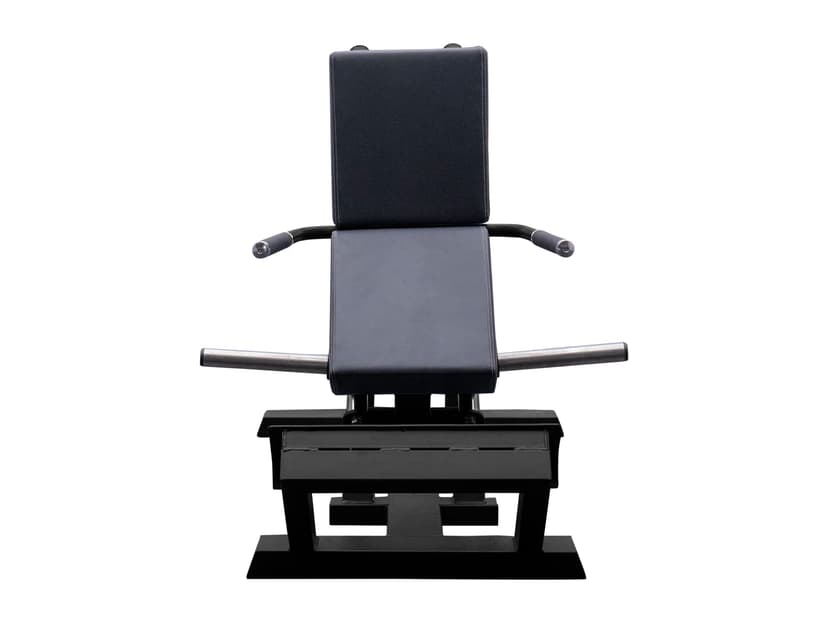
$3,119.00
Financing options...
Note: Limited Availability - Inquire to Order.
Calves are built differently from every other muscle in the lower body. The gastrocnemius and soleus contain a higher proportion of slow-twitch muscle fibers than the quads or hamstrings, which means they're already conditioned to endure long periods of low-intensity work just from walking. To force growth, the training stimulus has to be heavier, more frequent, or both.
The second problem is range of motion. A calf raise done through only the top half of the movement, where most people perform them, never fully stretches the muscle at the bottom. No full stretch means reduced time under tension, which is one of the key drivers of hypertrophy. Most bodyweight calf work in a squat cage produces exactly this half-range pattern.
Dedicated calf machines solve both problems. They anchor the load at the right position to allow a full heel-below-platform stretch, and they let lifters add weight progressively in small increments, which is the only reliable way to force a muscle with high endurance capacity to keep growing.
Our calves category covers standing raises, selectorized seated stations, plate-loaded benches, plus leg press and calf combo units, so whether you're building a single-purpose calf station or outfitting a full leg section, the right piece is here.
One machine is never enough for complete calf development. The two muscles that make up the calf complex behave differently from each other, attach at different joint crossings, plus respond to entirely different training positions.
Gastrocnemius: The large, two-headed muscle at the back of the lower leg. It crosses both the knee and the ankle, which means it only reaches full length when the knee is straight. Standing calf raises load the gastrocnemius through its full range because the leg stays extended throughout the movement. This muscle contains more fast-twitch fibers than the soleus, so it responds to heavier loads at lower reps, roughly 6 to 12, alongside explosive tempos on the push phase. The gastrocnemius is responsible for the height and visible shape of the calf from the back.
Soleus: Lies beneath the gastrocnemius, running from just below the knee down to the Achilles tendon. Because it only crosses the ankle joint (not the knee), it stays active regardless of knee angle. Seated calf raises load it most directly because the bent-knee position slackens the gastrocnemius and forces the soleus to carry the load. The soleus is almost entirely slow-twitch, which is why it responds better to higher rep ranges, 15 to 25 per set, with moderate loads. Its development determines the fullness of the lower calf from the side.
Training one without the other produces an imbalanced lower leg, stronger in one plane of movement and prone to the ankle instability that eventually shows up as Achilles tendon problems. A complete calf section needs at least one standing machine and one seated or bent-knee machine.
Five products cover the full range of calf training positions, from pure standing gastrocnemius work through seated soleus isolation to the leg-press calf combo that lets lifters add calf volume to the end of a leg session.
GR613 Selectorized Calf Raise: The GR613 is a seated, pin-loaded calf station with a 220lb stack (upgradeable to 340lb). Pivoting arms allow full plantar flexion through the movement, with the stack accessible from the seated position for quick weight changes between sets. For commercial facilities, the selectorized format is the right choice: no plates to move, no collars to manage, and members of different strengths can follow each other on the station without any setup time. For home gyms, the 220lb stack handles virtually every user short of an advanced athlete with unusually strong calves.
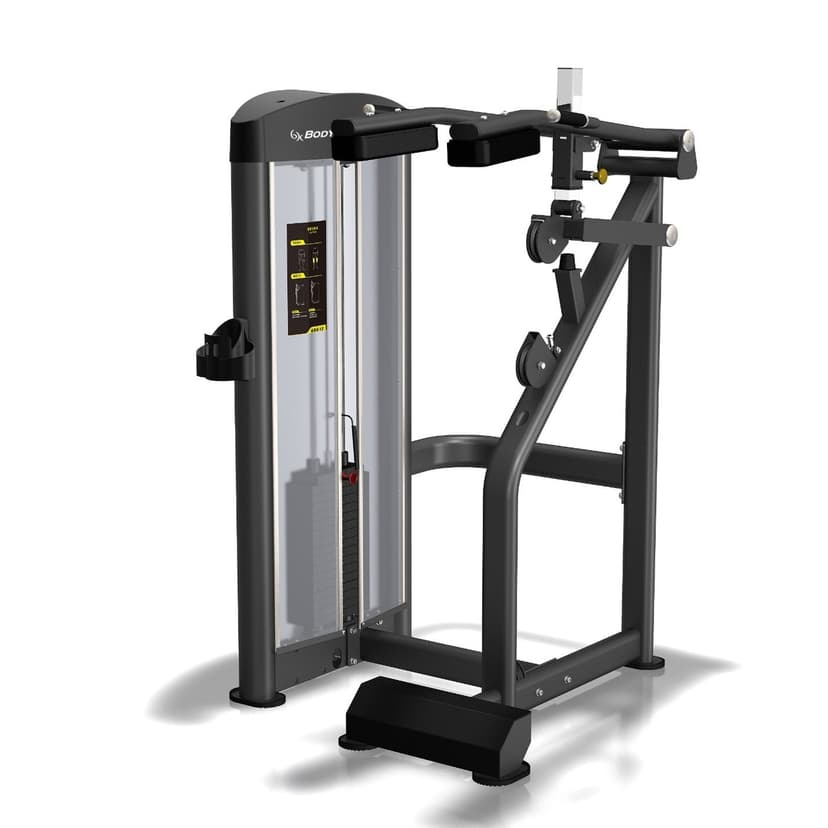
GR809 Standing Calf Raise: The GR809 is a plate-loaded commercial standing calf raise built for club use. The standing position keeps the knee extended, which places the gastrocnemius under full load through a complete range of motion. Olympic plates load directly onto the machine, so capacity is unlimited for lifters who press beyond what a standard selectorized stack can offer. The GR809 is the dedicated gastrocnemius machine in the lineup, the piece that builds the visible height and belly of the calf muscle.
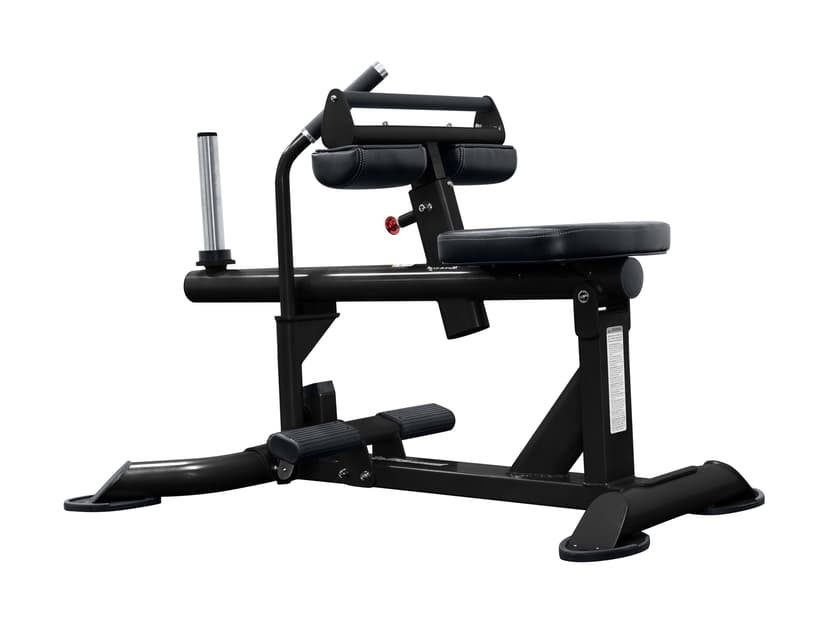
CF2172 Plate Loaded Seated Calf Raise: The CF2172 is a plate-loaded seated calf bench rated to over 1,000lbs. The seated position bends the knee, reducing gastrocnemius contribution and shifting the load almost entirely to the soleus. Urethane mounting hooks protect the frame at the load point, rubber step padding keeps feet secure during the movement, and stainless steel hardware throughout prevents rust on a machine that will absorb sweat from thousands of sessions. This is the direct soleus builder in the lineup.
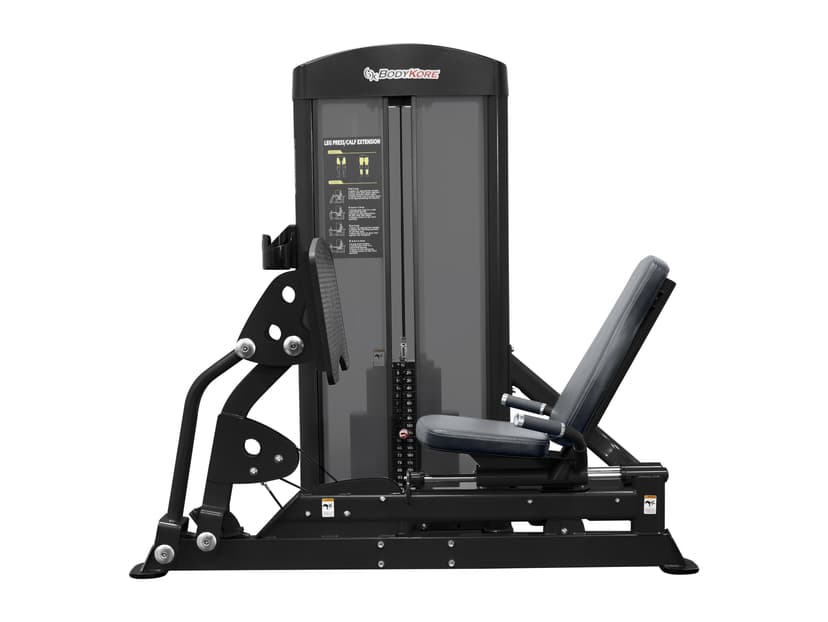
GR631 Leg Press and Calf Extension Combo: The GR631 combines a horizontal selectorized leg press with a hinged press plate that converts the same movement into a calf extension at the end of each rep. The 220lb stack covers both leg pressing and calf work from one station. Stainless steel guide rods ensure smooth operation under load, and the foot plate's non-slip surface holds foot position during the ankle flexion at the end of a set. For home gyms with limited floor space, this combo eliminates the need for a separate calf station. For commercial floors, it places calf work at the end of a leg press station without requiring members to move to a different piece of equipment.
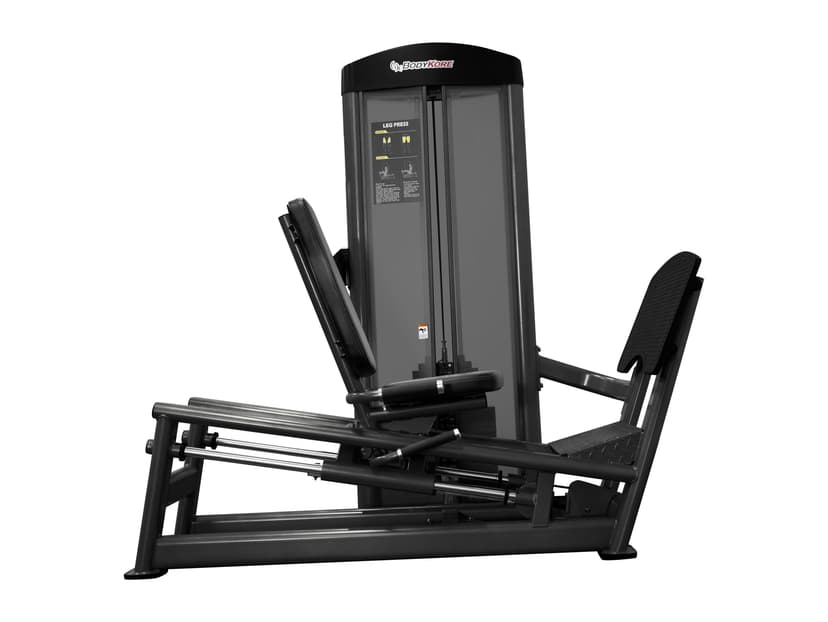
G277 45-Degree Leg Press: The G277 is a plate-loaded 45-degree leg press built from 11-gauge commercial-grade oval steel. While its primary purpose is leg pressing, the angled footplate position allows calf raises at the end of a press set, the same way a traditional 45-degree press platform does. Athletes chasing heavy-load calf work respond well to calf raises on a 45-degree platform because the angle places more total load on the Achilles than a seated bench, without the spinal compression of a standing barbell movement. Pair it with Olympic plates for progressive loading.
Floor space is the deciding factor for most home calf setups. A dedicated standing machine plus a seated machine is the ideal configuration, but at 50 to 70 square feet combined, that's a real commitment in a garage or basement gym.
The most space-efficient starting point is the GR631 Leg Press and Calf Combo. One machine covers horizontal leg pressing, quad work, calf extensions, plus hamstring loading from the same footplate, meaning a home gym gets calf training without allocating a separate station to it. The selectorized 220lb stack handles the majority of home users across all three movement patterns.
For lifters whose training is calf-focused or who have already maxed the leg-press calf movement and need more direct work, adding the CF2172 seated calf bench targets the soleus with plate-loaded precision. The CF2172's compact footprint sits alongside a cage or a bench with minimal intrusion, and it uses plates from the weights catalog already in the gym.
Calf training in home gyms also benefits from the MX1162 Universal Trainer. The Smith machine bar on the MX1162 accepts the Leg Press Plate attachment, converting the unit into a standing calf raise station using the Smith's counterbalanced bar for resistance. Athletes who own an MX1162 may not need a separate calf machine at all, since the attachment replicates the mechanics of a standing raise through the guided bar path.
For progressively heavier home calf work beyond what a 220lb stack allows, the 340lb Weight Stack Upgrade adds 8 precision-milled steel plates plus an extension rod to any selectorized machine, pushing maximum stack resistance to 340lb. Strong lifters who can press 300lb on a leg press tend to handle 160 to 200lb on seated calf raises, meaning the upgrade becomes relevant faster for calves than for most other muscle groups.
Calves are the muscle group most members train at the tail end of leg day, which means calf stations see concentrated use during a narrow window. A facility that provides only one calf machine will have members waiting during that window, which reduces session satisfaction regardless of how well the rest of the floor is equipped.
A practical commercial calf section needs two stations minimum: a standing machine for gastrocnemius work and a seated or selectorized station for soleus work. The GR809 Standing Calf Raise and GR613 Selectorized Calf Raise cover that pairing cleanly, with the selectorized format on the GR613 keeping turnover fast between members.
For facilities running circuits or HIIT-format leg programs, the GR631 Leg Press and Calf Combo integrates calf work into the leg press station, keeping members moving without requiring a separate machine stop. Adding one to the leg section means calf volume is programmed in rather than left to members who skip it.
The GR631 fits naturally alongside a broader leg machine section. See the full leg press machines collection plus the leg machines category for standing, seated, extension, curl, plus glute options that pair with a calf section on a complete lower body floor.
Hospitality fitness centers and corporate wellness rooms typically allocate one or two stations to the lower leg. The GR613 Selectorized Calf Raise fits that need well: compact footprint, fast weight adjustment, and no loose plates to manage in a high-traffic space. BodyKore offers hospitality fitness equipment packages with custom upholstery plus powder coating matched to property branding.
Buyers planning a facility opening can pre-order out-of-stock calf equipment to lock in pricing, plus financing is available through our standard application for multi-station commercial orders.
These three positions aren't interchangeable. Each one loads the lower leg in a way the other two can't fully replicate.
Standing calf raises keep the knee extended, stretching the gastrocnemius through its full length on every rep. The muscle's cross-joint attachment means it only reaches peak tension in this position, which is why standing raises build the most visible upper calf bulk. Foot positioning further refines the target: toes pointed forward recruits both heads of the gastrocnemius evenly, toes turned slightly outward shifts emphasis toward the medial (inner) head, toes turned inward shifts it toward the lateral (outer) head. The GR809 Standing Calf Raise is built around this mechanics, with the load distributed across the shoulders through a padded yoke at the right position for a full heel-drop below the step.
Seated calf raises bend the knee to roughly 90 degrees, which slackens the gastrocnemius. The soleus, crossing only the ankle, takes over most of the load. Seated work tends to allow heavier absolute weight on the knees than standing work allows on the shoulders, which is one reason the soleus (despite its slow-twitch dominance) can still be trained at moderate to heavy loads. The CF2172 and GR613 both work through this bent-knee position, with the choice between them coming down to plate-loaded capacity versus selectorized convenience.
Leg press calf raises are performed at the end of a press set, with feet positioned at the base of the footplate and the knees in partial extension. The angle of the load differs from both standing and seated positions, providing a stimulus that neither fully replicates. The GR631 combo lets users move seamlessly from a full leg press rep into a calf extension at the top, turning a single machine into a two-movement lower body station.
The right calf program uses at least two of these positions within the same training week. Standing for gastrocnemius, seated for soleus, with leg press raises as a volume finisher.
Calf machines fail at predictable stress points. The pivot bearings wear first on selectorized stations because the movement is high-rep and repetitive. The frame flexes at the load attachment on plate-loaded benches under heavy loads. The step platform degrades where the ball of the foot contacts it repeatedly.
Pivot system: The GR613's pivoting arm design spreads load across an oversized bearing point, which extends bearing life under commercial-volume use. Smaller pivot points on budget machines create a looser, sloppier movement arc as the bearing wears, which changes how the exercise feels before the machine officially fails.
Step surface: Rubber step padding on the CF2172 plus non-slip plating on the GR631 and GR809 hold foot position during the ankle plantarflexion phase. Smooth metal step surfaces let the foot creep forward during a set, shortening the effective range of motion as fatigue builds.
Frame construction: 11-gauge steel tubing across the Isolation Series and Stacked Series handles repeated loading at the load attachment points without developing frame flex. The CF2172 specifically uses urethane mounting hooks at the load plate horn, which absorb the impact of plates being added rather than transmitting it directly to the frame weld.
Hardware: Stainless steel nuts and bolts on the CF2172 resist the rust that forms on bare steel hardware exposed to chalk dust plus sweat over years of use. Rusted hardware makes maintenance harder than it needs to be, particularly on machines that are adjusted frequently.
Calves are trained most effectively at higher frequencies than most lifters use. Two to three sessions per week, with 48 hours between them, outperforms one heavy calf day because the slow-twitch fiber dominance of the soleus means recovery is faster than for larger muscle groups.
A practical two-days-per-week program splits standing work from seated work. Day one runs standing raises on the GR809 or its equivalent in 4 sets of 8 to 12 reps with heavy load, emphasizing the gastrocnemius. Day two runs seated raises on the GR613 or CF2172 in 3 to 4 sets of 15 to 25 reps at moderate weight, emphasizing the soleus. The GR631 combo can replace either day or serve as a third calf movement appended to a leg press session.
Range of motion is more important than load at low range. A full heel drop below the step platform at the bottom of each rep, paused briefly to eliminate the stretch reflex, produces more hypertrophic stimulus than bouncing heavy weight through a short arc. Many lifters who stall on calf development are training heavy at half-range. Cutting load by 20 to 30 percent and adding a full stretch at the bottom typically restarts progress within 4 to 6 weeks.
Tempo matters more for calves than for most other muscle groups. A 2-second push, 1-second pause at the top, 3-second controlled descent gives the soleus (with its slow-twitch dominance) the time under tension it needs to generate a growth stimulus. Faster reps short-circuit that for this specific muscle group.
Calf machines ship out of our California warehouse, palletized, via LTL freight. Standard transit runs between 3 and 14 days depending on destination. Local pickup is available by appointment at any warehouse location, plus our showroom and dealer network spans nationwide.
Pre-orders are accepted on out-of-stock items so commercial buyers planning a facility opening can lock in pricing before restock. Financing is available through our standard application, with monthly payment plans sized for both single-machine home gym purchases and multi-station commercial orders.
Cancellations are accepted any time before shipment. Once freight is booked, LTL charges apply, so order changes are best made promptly after placing.
Standing raises keep the knee extended, placing full load on the gastrocnemius through its complete range. Seated raises bend the knee, reducing gastrocnemius involvement and shifting most of the work to the soleus. Both movements train the calf, but they target different muscles. A complete calf program needs both.
The GR631 Leg Press and Calf Combo is the most space-efficient starting point, since it covers leg pressing plus calf extensions from one station. Lifters who want dedicated calf training can add the CF2172 seated bench for soleus work and pair the G277 45-degree leg press for heavier plate-loaded calf volume.
A standard commercial calf section runs the GR809 Standing Calf Raise plus the GR613 Selectorized Calf Raise as the core pairing, with the GR631 combo providing a third calf training option at the leg press station.
The gastrocnemius responds well to heavier loads at 6 to 12 reps on standing machines. The soleus responds better to moderate loads at 15 to 25 reps on seated or selectorized stations. Most lifters underload their calf work. If 20 reps feel easy, the weight is too light. If range of motion shrinks past 10 reps, the weight is too heavy.
Yes. The MX1162 Universal Trainer includes a leg press plate attachment that converts the Smith machine bar into a standing calf raise station. It's a practical solution for home gym builders who want calf training without a dedicated calf machine.
The BodyKore warranty is lifetime on machine frames and 5 years on parts, with product-level coverage detailed on each listing. The CF2172 seated calf bench and GR809 standing machine both carry the same frame warranty as the broader commercial lineup.
Calves resist training. They are designed for endurance, not growth, which means the lifters who skip them are reinforcing that endurance adaptation rather than overriding it. The ones who make real progress do it with dedicated machines, full range of motion, and progressive loading spread across multiple sessions per week.
Browse the full BodyKore calf machine lineup above to compare selectorized stations, plate-loaded benches, standing machines, plus leg press combos. If you're a home gym builder trying to cover both the gastrocnemius and soleus in limited floor space, or a commercial operator building out a full lower body section, our team can help spec the right combination. Financing makes commercial-grade calf equipment manageable at the home gym budget level, plus our nationwide dealer network means there's a showroom nearby for most US buyers.
Train the muscle everyone skips. Build the lower leg that holds the rest of the work up.